
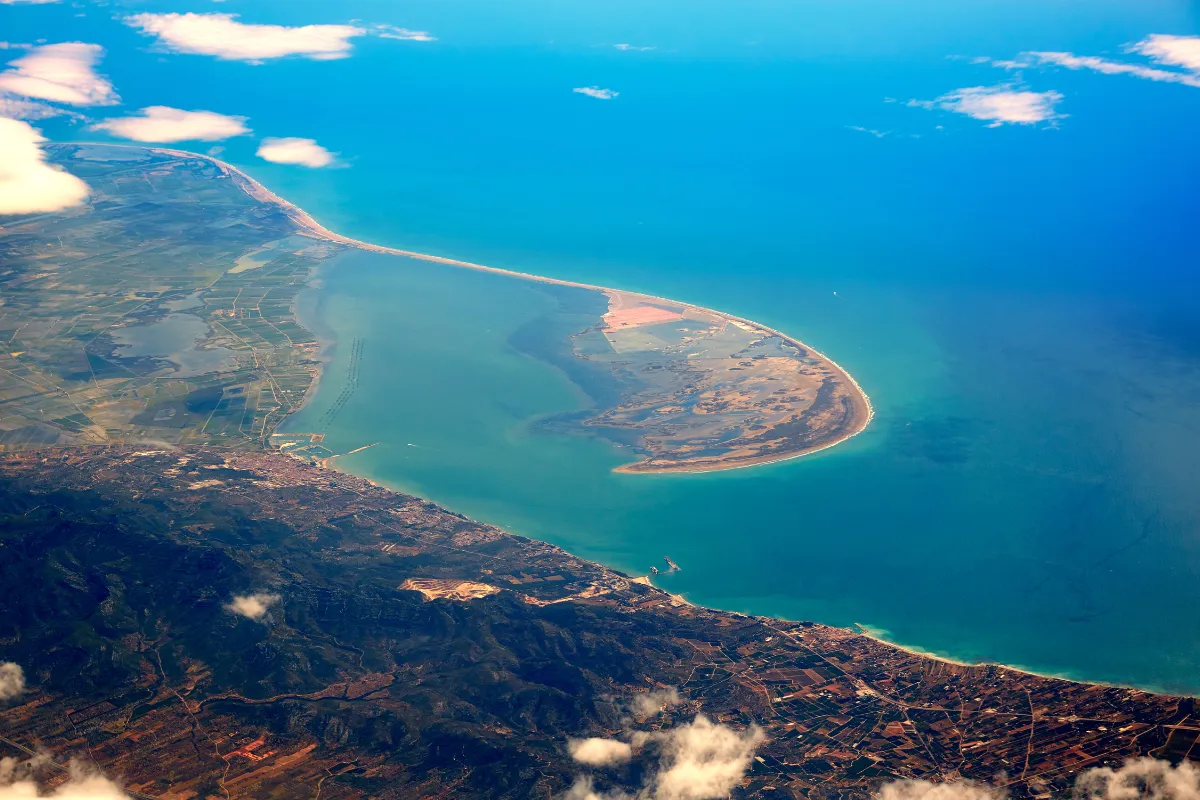

Two hours south of Barcelona, the Ebro Delta holds something almost impossible to find in the western Mediterranean: 320 km² of wetland, flamingo colonies that breed here year-round, and beaches so undeveloped they have no restaurants, no sun loungers, and no crowds. It’s one of the few places in Spain where the loudest sound on a summer afternoon is still birdsong.
Most Barcelona visitors have never heard of it. The ones who go rarely go just once.
Quick Answer: What is the Ebro Delta and how do you get there from Barcelona? The Ebro Delta (Delta de l’Ebre) is Catalonia’s largest wetland — a UNESCO Biosphere Reserve since 2013 with over 300 bird species and Spain’s only breeding flamingo colony outside Andalusia. It’s 180km from Barcelona via the AP-7 motorway, approximately 2 hours by car. The Tancada Lagoon has the highest flamingo density in the park. Trabucador Beach is a 6km sand spit with Mediterranean on one side and a sheltered bay on the other. A car is essential for seeing the best spots.
Is the Ebro Delta Worth a Day Trip from Barcelona?
Yes — but only if you go with the right expectations.
The Ebro Delta is not a conventional beach day. It’s not a theme park, a wine region, or a historic town. It’s a working wetland that happens to be one of the most biodiverse corners of the western Mediterranean. What it offers — flamingos at dawn, deserted beaches, rice fields that change color with every season, a silence that feels almost anachronistic this close to a major European city — doesn’t exist anywhere else within two hours of Barcelona.
If you’re looking for a beach with a chiringuito, a sunbed, and easy parking, this isn’t the right destination. If you want something genuinely unlike what most day trips from Barcelona offer, it’s hard to match.
Quick Decision: How Should You Visit?
| Your situation | Best approach |
|---|---|
| Have a car, want flexibility | Drive yourself — full access to all lagoons and beaches |
| No car, birdwatching focus | Train to L’Aldea + bike rental package (limited range) |
| No car, want the full experience | Organized day tour from Barcelona |
| Staying 2 days | North delta day 1, south delta day 2 |
| Only 1 day | South delta: Tancada lagoon + Trabucador beach |
How to Get There from Barcelona
By Car (The Only Way to See It Fully)
180km via the AP-7 motorway toward Tarragona, continuing south. Journey time: approximately 2 hours in normal traffic. The key exits depend on which part of the delta you’re targeting:
- Exit 39 (L’Ampolla) → North delta: Punta del Fangar, Riumar, Deltebre
- Exit 40 (L’Aldea) or Exit 41 (Amposta/Sant Carles de la Ràpita) → South delta: Tancada Lagoon, Trabucador Beach, Alfacs Bay
A car isn’t optional for seeing the flamingo viewpoints and wild beaches — the distances between sites exceed what public transport can connect.
By Train (Possible, Limited)
Renfe’s R16 line connects Barcelona Sants to L’Aldea-Amposta-Tortosa in 1h 27min (long-distance/Talgo, €24–28) or 2h 15min (regional, €10–14). From L’Aldea you need a taxi or rental bike to reach viewpoints and beaches. Some packages combine train tickets with bike rental at the destination — the most coherent car-free option, though it limits your range considerably.
Organized Day Tours
Specialist agencies run full-day tours (10–12 hours) from Barcelona with private transport, an ornithological guide, and in some cases a gastronomic boat experience. The best option for those who want to see the key spots without navigating the logistics independently.
Where to See Flamingos: The Four Key Spots
The greater flamingo (Phoenicopterus roseus) has stable breeding colonies in the Ebro Delta — the only location in Catalonia where they nest. Flamingos are present year-round, with larger populations in winter when individuals from other Mediterranean regions come to shelter. Peak breeding counts have recorded over 4,000 nesting pairs in a single season.
Timing matters more than location: dawn and dusk are when flamingos are most active and closest to shore. At midday they retreat to the center of the lagoons, away from viewpoints. Binoculars are essential — distances between hides and flocks are considerable.
Tancada Lagoon — the highest flamingo density in the park. A dirt path circles the lagoon with several strategically positioned hides. First recommended stop for anyone arriving via the south delta. Free access, open 24 hours. Located between Poblenou del Delta and the Trabucador sandbar.
Riet Vell Reserve (managed by SEO/BirdLife) — a private estate combining organic rice farming with active lagoon conservation. Has a public bird observatory considered by ornithologists to be one of the Delta’s best spots for bird photography. Guided visits only; advance booking required.
Encanyissada Lagoon — the largest lagoon in the Delta, home to flamingos, purple herons, glossy ibis, and multiple duck species. The Casa de Fusta on its shore serves as an information center and ornithological museum with an exhaustive collection on the wetland’s species.
Port Illa de Mar Viewpoint (Fangar Bay) — one of the least-visited spots in the north delta. Simultaneous views of flamingos, mussel farming platforms, distant mountains, and the blue of the gulf. The silence here is the main argument for the detour.
Observation protocol: complete silence, neutral-colored clothing, no feeding or attempted approach. Disturbance of nesting flamingos can cause nest abandonment.
The delta is disappearing, and the dams are why
The Ebro Delta is losing ground to the sea — and has been for decades. The cause is technical: the Mequinenza, Ribarroja, and Flix dams, built in the 1960s and 70s, trap the sediments the river used to carry to the delta. Annual sand input has dropped to around 30,000 m³ — far below what’s needed to offset marine erosion. The result is visible along the coastline: retreats of up to 50 meters in some areas after major storms.
Punta del Fangar in the north delta receives over 95% of the sediment still arriving, and is growing. The south delta is left unprotected and retreating.
Trabucador Beach has an ecological significance beyond tourism: it’s the barrier protecting Alfacs Bay from the open sea. Inside that bay lives one of the last viable populations of the noble pen shell (Pinna nobilis) in the Mediterranean — the largest bivalve in European waters, now critically endangered due to the Haplosporidium pinnae parasite. If Trabucador is breached in a major storm, the parasite enters the bay.
This fragility is the real reason behind the UNESCO Biosphere Reserve designation in 2013, and the reason behind the access restrictions visitors encounter.
The Beaches: What to Expect at Each One
Ebro Delta beaches are categorically different from the Costa Daurada resorts an hour north. No bar every kilometer, no sun lounger rental, no shower facilities at most points. Fine sand, mobile dunes, and minimal infrastructure — which explains both the appeal and the need to bring everything you need.
Trabucador Beach — the most iconic. A 6km sand spit separating the Mediterranean from Alfacs Bay. You can swim on both sides: the open sea to the east (more waves) and the bay to the west (warm, shallow water, ideal for families). Sunsets here merge sky and water in two directions simultaneously. Toll access from July 1 — bookable at lotrabucador.cat. Vehicle access regulated 6:00–23:00. Kitesurfing on the bay side.
Punta del Fangar — the wildest. Accessible only on foot from Marquesa Beach — 4km walk through mobile dunes to the Fangar Lighthouse. No services of any kind. One of the few completely virgin sand beaches left on the Spanish Mediterranean coast. Between April and August, cordoned zones are closed to protect nesting tern colonies.
Riumar Beach — the most complete. The only Delta beach with a Blue Flag rating. Wooden boardwalks between the dunes, lifeguard service, bars, and a departure point for river cruises and kayak rental. The adjacent lagoon has flamingo sightings.
Els Eucaliptus Beach — 6km of firm sand with shallow depth, ideal for families. Campsites nearby allow overnight stays in the natural setting.
Serrallo Beach — the most deserted. Over 3km with no tourist facilities. Frequented by naturists. For those seeking absolute solitude.
| Beach | Access | Facilities | What makes it special |
|---|---|---|---|
| Trabucador | Car (toll from July) | Picnic area | 6km, sea on both sides |
| Punta del Fangar | On foot only (4km) | None | Lighthouse, virgin dunes |
| Riumar | Car | Blue Flag, kayak | Lagoon flamingo views |
| Els Eucaliptus | Car | Campsites | 6km, shallow water |
| Serrallo | Car + track | None | Naturism, total solitude |
The Rice Fields as Landscape and Habitat
Rice isn’t just the Delta’s economy — it’s the architect of the landscape and a critical habitat for birds. The agricultural cycle transforms the territory four times a year:
April–May (flooding): Fields fill with river water, creating reflective surfaces that double the horizon. Most valued by landscape photographers. Nesting birds arrive in thousands.
June–August (growth): Plants cover the water with deep green. Also peak mosquito season — repellent is essential, especially at lagoon viewpoints at dawn and dusk.
September (ripening): Grain takes on golden and ochre tones just before harvest. High concentrations of birds preparing for post-breeding migration.
November–March (dry): Dry fields with stubble. Maximum visibility — the Els Ports mountains visible clearly from the flat plain.
The rice fields function as an artificial wetland that partially compensates for the loss of original natural habitats. Without them, many of the species that make the Delta an international ornithological reference would have nowhere to feed.
Beyond Birdwatching: Other Things to Do
Cycling — the Delta is flat across its entire extent. The network of tracks between lagoons, rice fields, and beaches is the most coherent way to move at your own pace. Routes range from 25 to 43km. Bike rental available in Deltebre and at L’Aldea station with GPS route packages. E-bikes compensate for the northerly wind (Mistral) that’s common in the area.
River cruises — boats depart from Deltebre and Sant Jaume d’Enveja for the final stretch of the river to where it meets the Mediterranean. These allow access to the Buda Island — the most pristine part of the Delta, with restricted access, where traditional fishing and farming practices survive alongside purple herons and kingfishers in the reedbeds.
Mussel farm visits — in Alfacs Bay, guided tours of mussel and oyster farming platforms (bateas) via water taxis from La Ràpita. The experience ends with a tasting of freshly harvested product. €36 per person (visit + tasting), available March–October.
MónNatura Delta (Tancada Salt Pans) — interpretation center with recreation of traditional salt harvesting, a 360° viewpoint with telescopes, and a demonstration of barca de perxa — traditional Delta navigation using a long pole.
What to Eat in the Delta
Rice is the foundation, but the Delta’s cuisine extends beyond the rice fields.
Blue crab — an invasive species that threatens native mollusks — has been incorporated into local cooking as a high-value ingredient. Catching and using it gastronomically helps balance the ecosystem while creating income. It’s the most cited case study of environmental management through gastronomy in the region.
Eel is prepared as suquet (stew) or xapadillo (split and sun-dried). Sant Carles de la Ràpita prawns and mantis shrimp give depth to fish broths. Black rice, soupy rice with prawns, and rice with duck are the most representative dishes.
Poblenou del Delta — the most charming village for lunch, with whitewashed houses and interior courtyards. Casa Nuri in Deltebre — the reference for soupy rice. Sant Carles de la Ràpita — the Delta’s gastronomic capital with the highest concentration of quality restaurants.
One-Day Itinerary from Barcelona
7:00 — Leave Barcelona via AP-7 southbound.
9:00–10:00 — Arrive south delta. First stop: Tancada Lagoon viewpoints for morning flamingos.
10:30–12:00 — Walk the perimeter path around Tancada Lagoon. Continue to Encanyissada Lagoon if time allows.
13:00 — Lunch in Poblenou del Delta or Sant Carles de la Ràpita.
15:00–17:00 — Trabucador Beach. Swim in the bay (calm water) or Mediterranean side.
17:30–19:00 — Return to Tancada viewpoints for golden hour. Flamingo silhouettes against the sunset is the Delta’s most photographed image.
20:00 — Return to Barcelona.
For a weekend: Second day covers the north delta — Punta del Fangar (start early to walk the 4km before heat builds), Riumar, Riet Vell Reserve, and a river cruise to the mouth.
Mistakes to Avoid
Arriving mid-morning expecting to see flamingos close up. By 10:00 they’ve moved to the center of the lagoons. Dawn viewings are a completely different experience from mid-morning ones.
Going in July or August without pre-booking Trabucador access. The toll system fills up quickly in peak summer. Book at lotrabucador.cat before you leave Barcelona.
Attempting Punta del Fangar without water and sun protection. Four kilometers through open dunes with no shade and no services. People underestimate it regularly.
Forgetting mosquito repellent. The lagoon viewpoints at dawn in summer are beautiful and genuinely miserable without it.
Visiting without binoculars. The distances at the flamingo viewpoints make the difference between seeing “pink shapes in the distance” and actually watching flamingos. A basic pair (8×42 or 10×42) transforms the experience entirely.
Best Time to Visit
October–March: Largest flamingo populations as winter visitors join the resident colonies. Dry rice fields give maximum visibility. Mild temperatures (10–18°C), no crowds. The best window for birdwatching.
April–May: Rice fields flooded, extraordinary landscape photography. Flamingo breeding season. Maximum bird diversity. Some beach access restrictions around nesting zones.
June–September: Trabucador and Riumar at their beach best. More visitors, toll access to Trabucador from July. Mosquitoes at lagoon viewpoints — repellent non-negotiable.
The honest verdict: for birdwatching and landscape, October to May is superior. For beach experience combined with flamingos, June–September works well if you time the lagoon visits for dawn and dusk.
FAQ
How long does it take to get to the Ebro Delta from Barcelona?
About 2 hours by car via the AP-7 motorway (180km). By train: 1h 27min (long-distance) or 2h 15min (regional) to L’Aldea-Amposta, then taxi or bike rental. A car is essential for reaching the flamingo viewpoints and wild beaches independently.
What is the best time to see flamingos at the Ebro Delta?
Flamingos are present year-round — the Delta is the only place in Catalonia where they breed. Populations are largest in winter (October–March) when migrants join the resident colony. The best viewing time is always dawn or dusk; at midday they retreat to the center of the lagoons.
Does Trabucador Beach have a toll?
Yes, from July 1. Book vehicle access in advance at lotrabucador.cat. Access by vehicle is permitted 6:00–23:00. Outside the July–September period, access is free.
Can you visit the Ebro Delta without a car?
Partially. The train reaches L’Aldea-Amposta in under 1h 30min from Barcelona Sants. From there, bike rental packages cover a reasonable range. The wildest beaches (Punta del Fangar, Trabucador) and best flamingo viewpoints require a car or long cycling distances. Organized tours from Barcelona are the most practical car-free option for a full-day visit.
What should you bring to the Ebro Delta?
Binoculars (essential for birds), mosquito repellent (critical at lagoon viewpoints in summer), sunscreen and plenty of water (no shade at beaches or viewpoints), neutral-colored clothing for birdwatching. At the wild beaches there are no services — bring everything including food and drink.
Is the Ebro Delta good for families with children?
Yes, with the right spots. Els Eucaliptus and the bay side of Trabucador have very shallow, calm water suitable for young children. Riumar has lifeguards and facilities. The flamingo viewpoints at Tancada are accessible and short. Punta del Fangar (4km walk) is best for older children and adults.