
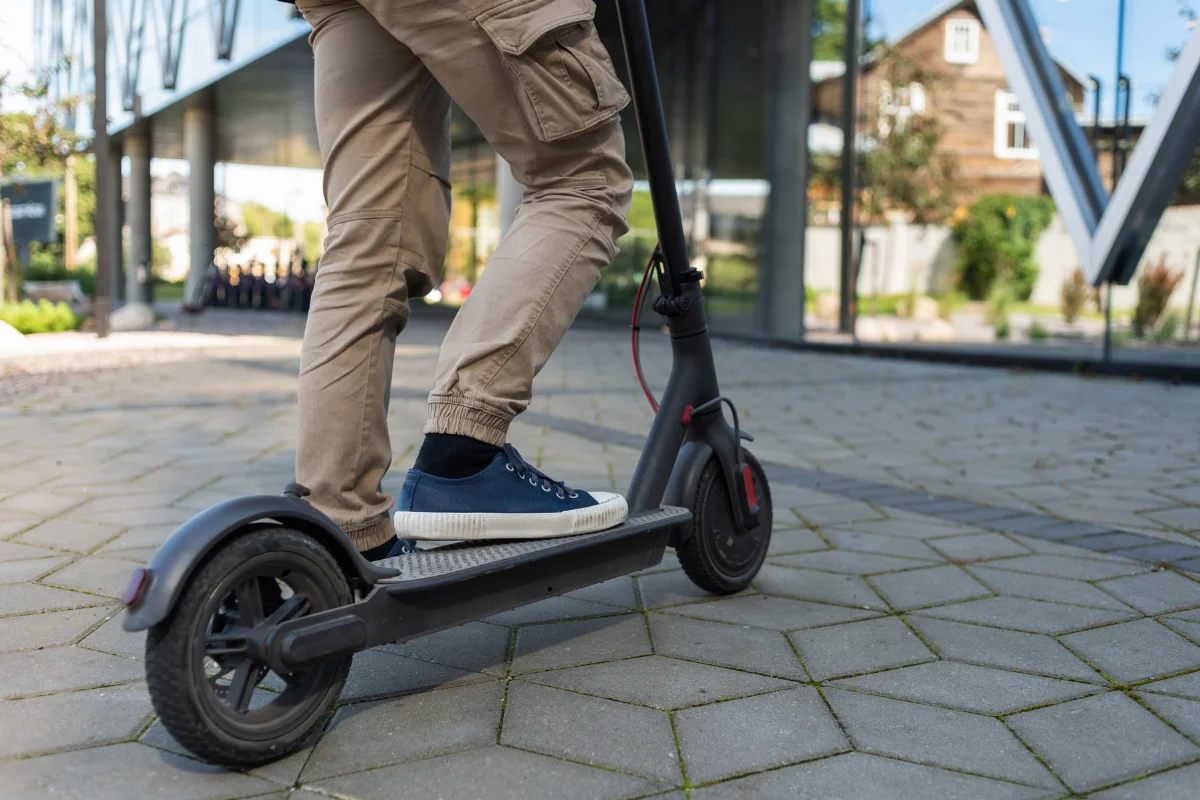

Barcelona is one of Europe’s strictest cities for electric scooters — not because of the volume of rules, but because the enforcement is real. The Guardia Urbana actively patrols the Eixample, Barceloneta and Gothic Quarter. A €500 fine for riding on the pavement is not a theoretical number. And unlike Paris, Barcelona made a deliberate decision not to allow free-floating scooter sharing services like Lime or Bird — a policy that remains in place with no reversal in sight.
If you’re visiting and want to rent one, or if you’re a resident trying to understand what’s changed with the 2026 regulations, this is the practical breakdown — legal zones, actual fines, and the rental companies that operate with a licence.
Where can you ride an electric scooter in Barcelona? On bike lanes (200+ km across the city) at a maximum of 25 km/h on the road and 10 km/h on pavement-level cycle paths. On zona 30 streets and shared-priority streets. In parks on designated routes at maximum 10 km/h. Prohibited on pavements (€500 fine), streets with 50 km/h+ limits, tunnels, motorways, and all public transport including metro and buses (€200 fine).
Quick Decision
- Renting for a tourist day in the city centre → Jetscoot (El Born, from €10/hour online) or Taller del Patinete (Provença 544, near Sagrada Família) — both include helmet and lock
- Need rental with full insurance included → Fisa Rentals with premium Inokim scooters — comprehensive insurance, helmet, lock and phone mount included
- Cheapest option with an app → Voi — the only legally operating sharing app in Barcelona, pay-per-minute or monthly subscription, unlock with QR code
- Regular commuter use as a resident → Bicing electric with €50/year flat-rate annual pass — first 30 minutes costs €0.40, 500+ stations across the city
- Weekly or monthly rental with maintenance covered → Inokim subscription (Calle Casanova, 220) — includes servicing, puncture repair, insurance and replacement vehicle
- Travelling with teenagers aged 12–15 → conventional bike or Bicing only — electric scooters require a minimum age of 16
- Planning to ride along the waterfront → RSB Vila Olímpica (Salvador Espriu, 63) — continuous bike lane from Port Olímpic to the Fòrum, rentals from €4/hour for bikes and €30/day for scooters
Where You Can and Can’t Ride
The bike lane network in Barcelona exceeds 200 kilometres — this is the primary infrastructure for electric scooters. If a bike lane exists on your route, you’re legally required to use it. It’s not optional.
Permitted zones and speed limits:
- Bike lane on the road → up to 25 km/h
- Bike lane on the pavement → maximum 10 km/h
- Zona 30 streets → up to 25 km/h, riding on the right lane
- Shared-priority streets and ciclocarrils → pedestrian priority, maximum 10 km/h
- Parks on designated routes → maximum 10 km/h, absolute pedestrian priority
The Eixample has one of the densest bike lane networks in the city — the superblocks programme has expanded cycle routes through all inner streets of the residential blocks. Barceloneta has a continuous seafront lane, and the waterfront path from Port Olímpic to the Fòrum runs uninterrupted. For route planning, the cycling routes in Barcelona guide covers the main axes, all of which are also valid for electric scooters.
The Fine Schedule — Real Numbers
These aren’t theoretical — the Guardia Urbana actively enforces them, particularly in the Eixample, Barceloneta and Gothic Quarter.
| Offence | Fine |
|---|---|
| Riding on pavement or pedestrian zone | €500 |
| Riding on streets with 50 km/h+ limits | €500 |
| Speeding | €200 |
| Rider under 16 years old | €200 (applied to responsible adult) |
| Attempting to board public transport | €200 |
| No rear light at night | €200 |
| No helmet | €100 |
| Two people on one scooter | €100 |
| No front light | €100 |
Why the Metro Is Not an Option
The ban on electric scooters in Barcelona’s public transport is indefinite and has been since 2022. The cause was a lithium battery explosion in an FGC train carriage in November of that year. The ATM (Autoritat del Transport Metropolità) responded by prohibiting scooters — folded or unfolded — from all metro, bus, FGC, tram and Rodalies services and their stations.
The fine for attempting to board with a scooter is €200, applied at the point of entry into any transport installation — including platforms and ticketing areas beyond the barriers.
The official workaround for intermodal travel is Bicibox — secure parking modules managed by the AMB at major metro and commuter rail stations:
| Type | Conditions | Annual cost |
|---|---|---|
| Free | Maximum 24-hour stay | €0 |
| Flexible | Up to 72 hours | €20 |
| Full | Reserved regular spot | €40 |
Managed through the AMB Bicibox app with real-time availability. This makes electric scooters viable for point-to-point city trips, but not for combining with public transport across the network. For that, the Barcelona public transport guide covers the T-Casual, T-Usual and Hola Barcelona card options.
Why there is no Lime or Bird in Barcelona
The rules are easy to look up. The more useful thing is why they work the way they do — specifically, why there is no Lime or Bird here.
Barcelona made an explicit policy decision in 2019–2020 to reject free-floating scooter sharing after receiving applications from 25 operators. The city had already watched Paris, Brussels and other cities deal with abandoned scooters cluttering pavements and obstructing accessibility routes. The ban wasn’t reactive — it was preventative. Paris eventually banned shared scooters entirely in 2023. Barcelona’s approach avoided that outcome by never allowing the market to develop in the first place.
The result is that rental in Barcelona works through physical shops and a single licensed app (Voi), rather than the drop-anywhere model that tourists arriving from other European cities might expect to find.
Rental Companies Operating with a Licence
Jetscoot — El Born
Shop in the El Born neighbourhood. Rents scooters, bikes and kick scooters. From €10/hour online (€15/hour in person), with a €100 deposit. The location works well for routes toward Barceloneta, the Gothic Quarter and Parc de la Ciutadella.
Fisa Rentals
Premium Inokim scooters. Rental includes comprehensive insurance, helmet, lock and phone mount. The most complete package for anyone who doesn’t want to deal with unexpected complications during the day.
Taller del Patinete — Provença 544
Near the Sagrada Família. Includes free lock, phone mount for €1.50 extra, reflective vest for €2 extra. Charger included for 24-hour rentals — useful if the plan is a full day across the city.
RSB Vila Olímpica — Salvador Espriu 63
Scooters (125cc and 50cc), bikes, inline skates and longboards. Free hotel delivery for rentals of 3+ days. Wednesday 2-for-1 offers. Support in 7 languages — clearly oriented toward international tourism. From €4/hour for bikes and €30/day for scooters.
Voi — Sharing App
The only shared micromobility app operating legally in Barcelona. Pay-per-minute or monthly subscription. Download the app, locate the nearest scooter via QR code, pay when you end the ride. Approximate cost: €1 unlock fee plus €0.15/minute.
The 2026 Regulations — What Changed and What Changes in 2027
Law 5/2025 and Royal Decree 52/2026, in force since January 2026, introduced three mandatory requirements for all personal mobility vehicles (VMP) in Spain:
1. Mandatory third-party liability insurance Minimum coverage of €6.45 million for personal injury and €1.3 million for property damage. Standard home insurance does not cover this — a specific policy is required. Annual premiums: approximately €20–€100 depending on the rider profile.
2. National Light Vehicle Registry Mandatory registration with the DGT linked to an owner. The certificate must be carried at all times — physically or digitally. Riding without registration: fine of €202–€610 and possible vehicle immobilisation.
3. QR-coded identification plate Allows the Guardia Urbana to verify vehicle legality on the spot.
The 2027 deadline: 22 January 2027 marks the end of the grace period for vehicles purchased before January 2024. After that date, any scooter without DGT certification cannot legally operate. If you own an older scooter without certification, that’s the deadline for regularising or replacing it.
DGT-certified models confirmed: Xiaomi Electric Scooter 4 (Cert: B1010), Xiaomi Scooter 4 Ultra (Cert: B1011), Ninebot/Segway series 051201E (Cert: B1002), Cecotec Bongo D20 XL (Cert: A1099), Dualtron Popular (Cert: B1037).
Mistakes to Avoid
- Riding on the pavement in tourist areas — the Guardia Urbana specifically patrols La Barceloneta, the Gothic Quarter and the Eixample; €500 is the fine, not a warning
- Arriving at any metro station expecting to bring the scooter in — the ban applies even when folded, and includes the ticketing area before the barriers
- Booking a Purobeach-style day expecting to use shared scooters to get there — there are no free-floating services in Barcelona; rental requires going to a physical shop first
- Assuming home insurance covers third-party scooter liability — it almost certainly doesn’t meet the new €6.45M minimum personal injury requirement
- Riding on the Passeig de Gràcia pavement — it looks like a wide boulevard but it’s a designated pedestrian zone with active enforcement
Who This Is For
The tourist who wants to explore the waterfront → RSB Vila Olímpica or Jetscoot — both are close to the continuous coastal bike lane, the most straightforward and scenic route in the city for new riders.
The visitor staying in the Eixample who wants to cover more ground → Voi app — dense zona 30 street network, hundreds of pick-up points in the neighbourhood, no need to go to a shop.
The resident who commutes daily → Bicing electric (€50/year flat rate) or Inokim monthly subscription — both are cheaper than per-day rentals and include maintenance support.
The group with children aged 12–15 → Bicing conventional bikes only — electric scooters require 16 minimum, no exceptions.
For getting around Barcelona without a scooter, the Barcelona public transport guide breaks down which card to buy based on how many days you’re staying. For cycling specifically, the cycling routes in Barcelona guide maps the main bike lane axes with distances and points of interest along each route. And for anyone arriving at the airport and figuring out city transport before anything else, the Barcelona airport to city centre guide has current prices and travel times for every option.