

Updated: June 2026 — figures verified against Mossos d’Esquadra public statistics and the first-semester balance of the Pla Kanpai operation.
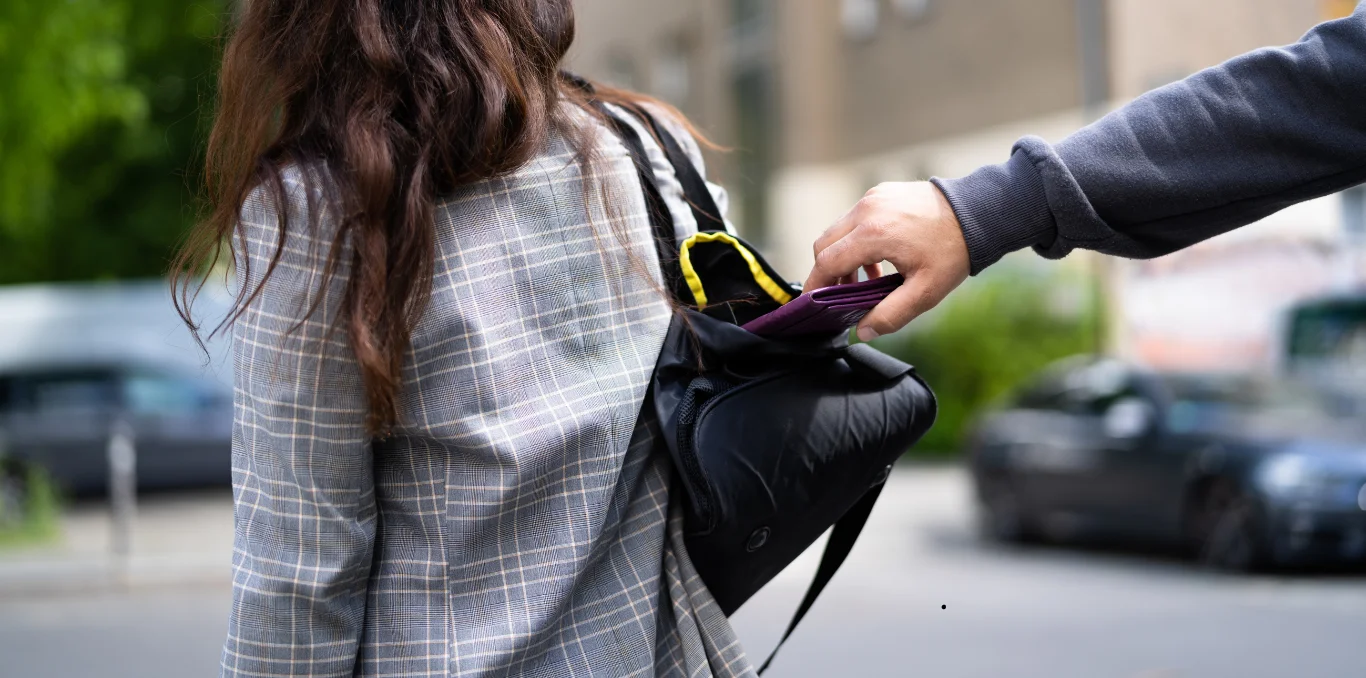
Barcelona has a real pickpocketing problem and it’s worth knowing about before you fly in. According to official Catalan police data, 99% of cases involve no violence and the situation improved sharply in 2026 — but the metro and the main tourist arteries still demand a different kind of attention than most travelers are used to.
Is Barcelona safe for tourists in 2026? Yes, with basic precautions. Pickpocketing in public transport dropped 40% in the first half of 2026 thanks to the Pla Kanpai, a joint operation between Mossos d’Esquadra, the Guardia Urbana, and TMB. Risk hasn’t disappeared — it’s concentrated in metro lines L1, L3, and L5 between 8:00-9:30 and 17:00-20:00, and in saturated tourist zones like La Rambla and Sagrada Família. With your backpack in front, phone out of back pockets, and zippers in sight, the trip passes without incidents for the overwhelming majority.
The honest 2026 verdict on Barcelona safety
The short answer is yes, Barcelona is safer than it was even two years ago. Pickpocketing is the only crime category that consistently affects tourists at scale, and the data shows it falling fast. According to the Mossos d’Esquadra, 85 multi-offenders with criminal records were detained between January and June 2026 alone — four times the figure from the same period in 2025.
The verdict is not “be paranoid” but “treat Barcelona like any major European capital with high tourist traffic.” Rome, Paris, and Madrid all have the same baseline issue. The difference in Barcelona is that the offenders specialize in metro doors and large tourist hubs, which means the risk is predictable. Predictable risk is manageable risk.
Where pickpockets actually operate
The zones aren’t a guess — they come from police reports and the Pla Kanpai’s biometric tracking. The pattern is consistent: pickpockets work where three conditions overlap, dense crowds, distracted tourists, and fast exits. Most central neighborhoods are safe. The hotspots below are.
| Zone | Main tactic | Peak risk hours | Top defense |
|---|---|---|---|
| Metro lines L1, L3, L5 | Door-push at stops | 8-9:30 and 17-20 | Backpack in front, hand on zipper |
| La Rambla | Distraction + phone grab | All day | No phone-walking on the strip |
| Mercat de la Boqueria | Open-zipper backpack | 11-14 | Crossbody bag worn front |
| Sagrada Família perimeter | Photo-moment grabs | 10-13 and 16-19 | Phone on lanyard or strap |
| Barceloneta beach & promenade | Towel theft while swimming | 13-18 (summer) | Leave valuables at the hotel |
| Plaça de Catalunya | Confused-tourist exploit | 9-11 and 17-19 | Never pull out a passport on the street |
The data here matches what the Barcelona safety guide by neighborhood documents in deeper detail. The cross-cutting insight is that 5 of the 6 zones are also the most photographed in the city — pickpockets follow tourists with phones in hand.
Who this guide actually serves best
Different traveler profiles need different defenses. The advice changes meaningfully depending on how you move through the city, how long you stay, and what time of day you’re out.
- First-time visitor staying 3-5 days → Walk the routes by day before using the metro at night
- Couple in central hotels (Born, Gothic Quarter) → Bag between feet at restaurants, never on the chair back
- Family with kids under 12 → Skip La Rambla at midday, prefer wider avenues with sidewalk space
- Solo backpacker on tight budget → Hostel locker for passport, single decoy card in pocket, real card hidden
- Senior traveler with a guided group → Stay with the guide near monuments — distraction tactics target stragglers
- Layover visitor with carry-on → Drop the bag at Bounce or Stasher, see the 8-hour layover guide
- Business traveler with laptop bag → Treat the laptop bag like a wallet, never let it touch the floor
The metro and the so-called Red Triangle
The Barcelona metro moves 1.5 million people daily across the metropolitan area, and concentrates the bulk of tourist pickpocketing. According to TMB and Mossos data, three lines absorb most cases: L1 (red), L3 (green), and L5 (blue) — because they connect the airport feeders, the historic center, and the main monument stops. Even with the 40% drop under Pla Kanpai, the line-level concentration of risk hasn’t shifted.
Critical hours mirror commuter peaks: 8:00-9:30 in the morning and 17:00-20:00 in the evening. If your itinerary lets you shift sightseeing transits to 10:00-12:00 or 14:00-16:00, the risk drops materially. Locals do this instinctively. Visitors usually don’t.
Best strategy by what time of day you’re out
The risk profile changes through the day and the smart move is to match your defense level to the moment. Travel experts who work with tour operators in Barcelona recommend three windows.
- Morning rush (8:00-9:30): Avoid the metro entirely if possible. Walk or use the Aerobús — the airport to city center transport options cover the alternatives
- Midday lull (10:00-16:00): Standard precautions apply. Bag in front in markets and on La Rambla, normal alertness elsewhere
- Evening peak (17:00-20:00): Same as morning. If you must use the metro, ride in the second-to-last carriage where the density is lower
Walking is always safer than the metro for short distances. Barcelona’s center is more compact than tourists assume — most main attractions sit within 2-3 km of each other.
Six rules that locals actually follow
These aren’t tourist-advice clichés. They’re the routines that residents internalize after living in the city for a few months. According to a senior security expert in TMB, all six together cut the practical risk by an estimated 80%.
- Backpack always in front: in the metro, on escalators, in markets, and in any dense crowd
- Phone out of back pockets: put it in an inside pocket with a zipper or in a crossbody bag worn in front
- Zipper visible and touchable: keep one hand on it during metro transits, especially at the doors
- Split your money: one card and small cash on you, the rest in the hotel safe
- Passport stays at the hotel: carry a phone photo or printed copy, never the original on the street
- Don’t broadcast lost-tourist energy: if you need to check the map, step into a shop or a corner away from the foot traffic
Mistakes that cost tourists money in Barcelona
Three habits show up over and over in police reports. Each one creates the moment the pickpocket needs.
- Phone in back pocket of jeans while walking on La Rambla. A bump from behind, a 2-second grab, and it’s gone
- Bag on the chair-back at terraces in the Gothic Quarter and El Born. A 5-second distraction at the table is all the team needs
- Pulling out the passport in public to register at attractions or tourist tax desks. Tells nearby pickpockets exactly what’s worth taking
A less visible but more expensive pattern is using public WiFi for banking apps in metro stations or at the airport. Cybersecurity experts strongly recommend mobile data for any payment or financial action while traveling. The Barcelona daily budget breakdown accounts for the small extra roaming cost — it’s far cheaper than a compromised account.
What to do if it happens to you
If you get pickpocketed, the first 15 minutes matter most. Acting in the right order minimizes financial damage and protects future claims.
- Block your cards immediately: through your bank’s app or the emergency phone on the back
- Activate phone tracking from another device: Find My iPhone or Find My Device for Android
- File a police report with Mossos d’Esquadra: at any station or by calling 112 — request a signed copy
- Notify your travel insurance within 24 hours: with the signed police report attached
Without an official police report, travel insurance, airlines (if luggage was involved), and card issuers won’t process claims. The police report is the most valuable document of the day, even if the items aren’t recovered.
How the Pla Kanpai plan affects pickpocketing
Barcelona is having its best year in public transport safety in a decade. The Pla Kanpai, launched in 2025 and extended to TMB buses in January 2026, cut pickpocketing in public transit by 40% in the first half of 2026. The strategy combines undercover Mossos and Guardia Urbana officers on lines L1, L3, and L5 with biometric identification of multi-offenders through metro cameras.
More than half of the 85 detainees in 2026 had prior records — some with up to 15 previous police entries. That means the operation is concentrating on removing the hard core of repeat offenders rather than chasing one-off thefts. For travelers, the practical effect is visible police presence at the critical stations and an objectively lower risk than in 2024. According to TMB security sources, the drop is expected to hold through 2026 with the bus network extension fully operational.
Common questions about Barcelona pickpockets
Where do pickpockets operate most in Barcelona?
The metro concentrates the highest density of pickpocketing, especially on lines L1, L3, and L5 with hotspots at Diagonal, Plaça Catalunya, Sants Estació, Sagrada Família, and Barceloneta stations. Above ground, La Rambla, the Boqueria market, the Sagrada Família perimeter, and the Barceloneta seafront top the list.
Is the Barcelona metro safe for tourists?
Yes, with basic precautions. Pickpocketing on TMB dropped 40% in the first half of 2026 thanks to the Pla Kanpai operation. Risk concentrates between 8-9:30 AM and 5-8 PM, when crowded platforms let pickpockets work in groups of 2-3 around train doors.
What should I do if I get pickpocketed in Barcelona?
Block your cards through your banking app, activate phone tracking from another device, and file a police report with Mossos d’Esquadra either at a station or by calling 112. Request a signed copy for your travel insurance, airline, or card company claim.
Are Barcelona beaches safe for valuables?
The water and beach zones have lifeguards, but valuables left on towels are the main target. Barceloneta pickpockets work in pairs, one distracts while the other grabs a phone or wallet. Leave passports and large amounts of cash at the hotel safe.
Pickpockets in Barcelona don’t pick the unaware traveler, they pick the relaxed one. Stay alert in five specific zones and the city stays yours.