
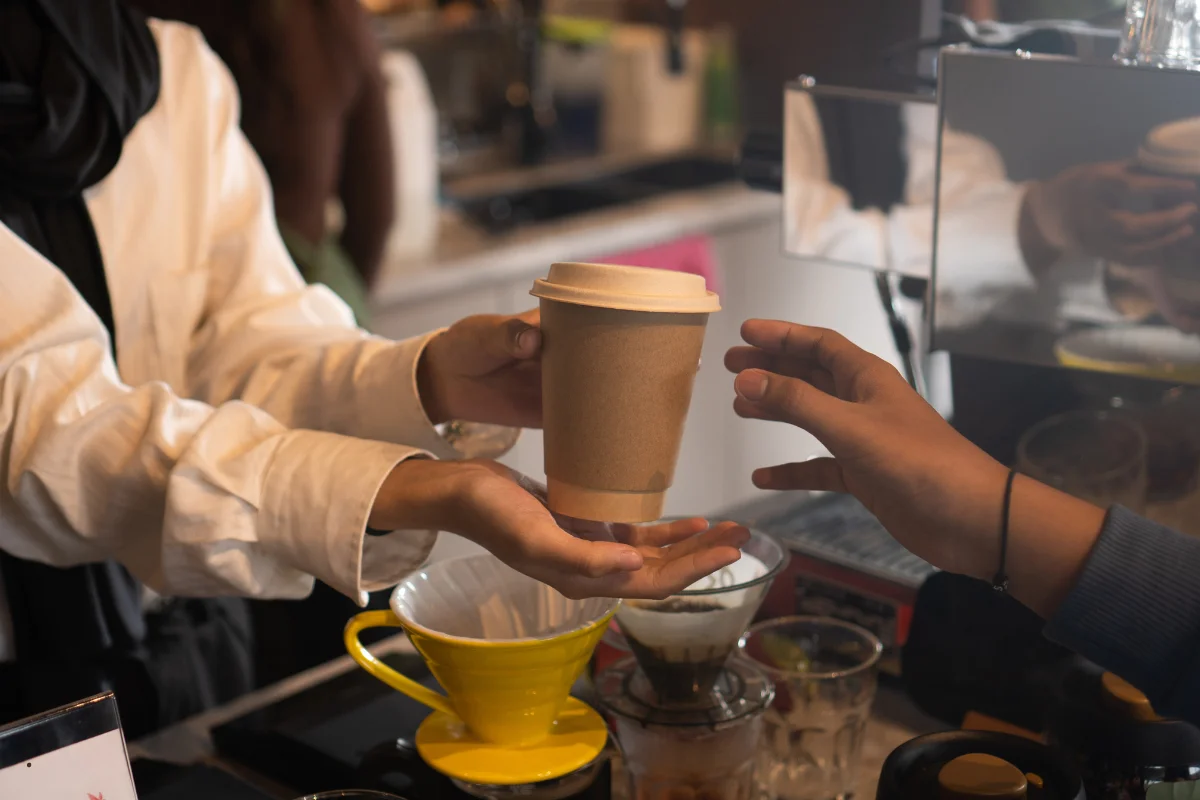

Barcelona’s specialty coffee scene is not what most travel guides describe. It’s not a handful of pretty cafés with latte art. It’s a network of roasters who export to 45 countries, compete at international SCA championships, and have built some of the most technically rigorous coffee programs in Europe — all within walking distance of the Gothic Quarter and Poblenou.
This guide is organized around decisions, not lists: which roaster to visit based on what you want, what to order if you’ve never had specialty coffee, and where to spend a morning if coffee is the actual point of the trip.
Quick Answer: Where is the best specialty coffee in Barcelona? For world-ranked quality: Nomad Coffee (Poblenou, ranked #16 globally). For purist technique and no-WiFi focus: Right Side Coffee (Gothic Quarter). For third-generation roasting history: Cafés El Magnífico (El Born). For a walkable coffee morning with multiple stops: the Poblenou corridor covers five top-tier options in 15 minutes on foot.
What “Specialty Coffee” Actually Means — and Why It Changes What You Order
Specialty coffee is a graded category, not a marketing term. To qualify, a coffee must score above 80 out of 100 on the SCA (Specialty Coffee Association) scale, evaluated by a certified Q-grader across acidity, body, aroma, sweetness, aftertaste, and absence of defects. The roasters in this guide regularly score between 85 and 90. Standard café coffee in Spain rarely clears 70.
What this means at the bar: no sugar needed, no bitterness from torrefacto (the Spanish-style roasting with added sugar that dominates most local bars), and flavor notes that change by origin — floral and fruity in washed Ethiopians, chocolatey in Colombian naturals, bright and citric in Kenyan lots.
Extraction methods and what to ask for
| Method | Result | Best for |
|---|---|---|
| Espresso | Concentrated, full body | Base for cortados, flat whites |
| V60 | Clean, bright, pronounced acidity | Ethiopian and floral coffees |
| Batch Brew | Balanced, consistent | Takeaway, high-volume service |
| Aeropress | Medium body, complex | Tasting different origins |
| Chemex | Silky, oil-free | Delicate washed coffees |
First-timer recommendation: order a flat white or cortado. It’s familiar in texture, the roast character comes through clearly, and no specialty café in Barcelona will judge you for adding milk.
The Own-Roaster Spots: Where the Coffee Is Made and Served in the Same Building
Nomad Coffee — the international benchmark
Founded in 2014 by Jordi Mestre, a champion barista, Nomad operates three distinct formats across the city. The original Coffee Bar on Passatge Sert (El Born) is a minimalist counter focused entirely on high-grade coffee — no kitchen, no distractions. Nomad Frutas Selectas (Carrer de Pujades, 95, Poblenou) is the flagship: larger space, a lunch menu, and pastries from Pa de Kilo. Petit Nomad (Eixample, near Plaça Catalunya) runs the Italian-style espresso bar format for fast, excellent coffee on the move.
Nomad exports to over 45 countries and holds B Corp certification. The Nomad Coffee Academy runs SCA-certified courses from beginner to sensory analysis, including full-day workshops covering extraction variables and equipment maintenance.
The distinction that decides where you go: Nomad is not one café — it’s three different experiences. If you want the origin-focused, conversation-with-the-barista visit, go to Passatge Sert. If you want to spend two hours with great coffee and a proper meal, go to Frutas Selectas.
Cafés El Magnífico — three generations in El Born
Salvador Sans runs what is probably the most historically significant coffee roaster in Barcelona. His family has been roasting on Carrer de l’Argenteria (64, El Born) since before the specialty coffee wave existed — a 30-kilo roaster operates across the street from the serving counter. The menu includes rotating Kenya, Colombia, and Ethiopia lots based on harvest availability.
This is not a design-forward space. It’s a working roastery that also serves coffee, and the local barista community consistently names it as the reference for continuity and rigor in the city.
Right Side Coffee — three national roasting championships, no WiFi
Joaquín Parra, three-time Spanish roasting champion, roasts three days a week at Right Side (Arc de Sant Ramon del Call, 11, Gothic Quarter) to guarantee maximum freshness — typically between 7 and 30 days post-roast. All sourcing is 100% Direct Trade with producer relationships built since 2013.
The rules posted on the wall have become part of the identity: no syrups, no decaf, no specialty milk alternatives, no WiFi. This was originally Satan’s Coffee Corner — opened by Marcos Bartolomé in 2012 as one of the city’s first specialty spots. Right Side now runs the space with the same philosophy intact.
What to avoid: don’t ask for a caramel latte. It’s not snobbery — the single-origin lots here are built to taste without additions, and the baristas will happily walk you through what you’re drinking if you’re curious.
Hidden Coffee Roasters — traceability to the farm level
Mateo González and partners work directly with small producers, with each bag labeled with the specific farmer’s name. The roastery is in Poblenou; cafés in El Born and in the historic Granja Vendrell (Carrer de Girona, 59), which Hidden restored while preserving the original Nata Vendrell recipe. A fourth location in Sant Gervasi (Travessera de Gràcia, 101) was designed by Studio Animal.
Three Marks Coffee — Nordic-style precision, Poblenou design scene
Founded by three former Nomad team members — Marco Paccagnella, Marco de Rebotti, and Marc Aguye — Three Marks applies a lighter, Nordic-influenced roast profile. Two locations: Fort Pienc (Carrer d’Ausiàs Marc, 151) and Poblenou. Their affogato with DelaCrem hazelnut ice cream has developed a following that extends well beyond the coffee crowd.
By Experience Type: Matching the Café to What You’re Actually Looking For
For pure coffee focus (no laptop culture)
Right Side / Satan’s (Gothic Quarter) and Nomad Coffee Bar (El Born) both operate without WiFi by design. These are the counters where sitting down means a conversation about the lot you’re drinking. Neither space is pretentious — they’re just built around the coffee rather than around productivity or social media.
D·Origen Coffee Roasters (Carrer de Casp, 48 — under Gaudí’s Casa Calvet, ranked #83 globally) controls the entire supply chain including its own farm in Panama. The modernista building context makes it one of the more quietly remarkable spaces to drink coffee in the city.
For working remotely with good coffee
Citizen Café (Plaça d’Urquinaona, 4) has been the standard reference for remote workers in central Barcelona for over seven years. Strong brunch menu, well-executed specialty coffee, large tables.
Coffee Hackers (Sant Gervasi and Poblenou) — designed explicitly for productivity. Fast WiFi, natural light, space to spread out.
The Miners (Rambla del Poblenou, 107) — interior design by Isern Serra, with acoustic consideration built into the space. The quietest option for focused work in the Poblenou area.
For coffee with serious brunch
Little Fern (Carrer de Pere IV, 168, Poblenou) brings a New Zealand-trained approach to flat whites and brunch. One of the most consistent espresso programs in the neighborhood.
ALFAR Medialunas (Rambla del Poblenou, 84) — Hidden Coffee Roasters beans with Argentine pastry. The pistachio medialuna is the standout combination.
Syra Coffee (locations in Gràcia, Poblenou, Poble Sec, Eixample) — started in 2015 as a micro-roaster in Gràcia, now over 40 locations across Spain. Honest assessment: accessible and consistent for an introduction to specialty coffee, but no longer at the independent micro-roaster scale. For the highest technical level, the own-roaster spots above are the next step.
The Poblenou Coffee Corridor: Five Top-Tier Stops in 15 Minutes on Foot
Poblenou has the highest density of specialty coffee in Barcelona within walkable distance. The structural reason: former industrial buildings accommodate roasteries, cafés, and design studios in the same block, creating an ecosystem where specialty coffee fits the neighborhood’s creative and tech profile.
The natural route along Carrer de Pujades and Rambla del Poblenou covers: Nomad Frutas Selectas → Three Marks Coffee → The Miners → ALFAR → Little Fern. Add Ugo’s Corner for take-away and NY cookies, and Mono Café for matcha lattes and minimalist aesthetics. Everything within a 15-minute walk.
Cost Breakdown: What to Budget for Specialty Coffee in Barcelona
| Item | Price range |
|---|---|
| Espresso / cortado | €2.00 – €2.80 |
| Flat white | €3.50 – €4.50 |
| V60 filter (single cup) | €4.00 – €5.50 |
| Batch brew (large) | €3.00 – €4.00 |
| Affogato (Three Marks) | €5.00 – €6.50 |
| Monthly coffee subscription | from €24 |
Most roasters offer retail bags (250g, €12–18) and subscriptions with fresh-roast timing. If you’re buying to take home, ask when the batch was roasted — anything within the last 30 days is in the optimal window.
Mistakes to Avoid
Going to Nomad for WiFi. The Coffee Bar on Passatge Sert is not a coworking option. Go to Frutas Selectas or Citizen Café for that.
Ordering a torrefacto-based coffee out of habit. The flavor profile of specialty coffee is built without added sugar in the roasting process. Try it as intended first — you can always adjust.
Skipping El Born on a Poblenou coffee trip. The Born has Nomad, Hidden, and El Magnífico within a 10-minute walk of each other, and it connects naturally to Barcelona’s best flea markets and the live music bar scene for a full-day itinerary.
Assuming Syra is the same as the independent roasters. It’s not bad — but it’s a chain now. If you want the single-roaster, direct-trade, technically rigorous experience, go to one of the five own-roaster spots above.
Learning and Events
The My Coffee Awards at Nau Bostik is Spain’s reference event for the sector, with official SCA competitions (Latte Art, Cup Tasters) and over 15,000 attendees. The My Coffee Guide rating system functions as a quality benchmark requiring cafés to invest in training, design, and hospitality to maintain their rating.
For learning: Nomad Coffee Academy runs SCA-certified courses from beginner level to advanced sensory analysis. Right Side also offers barista-focused training. The technical level of Barcelona’s baristas is among the highest in Europe — a direct result of roasters who have an interest in educating their customers.
FAQ
Is Nomad Coffee the best in Barcelona? It’s the most internationally recognized — Nomad Frutas Selectas ranks #16 globally. But “best” depends on what you’re after: for technical purism, Right Side and El Magnífico both have strong arguments. For the Poblenou experience with multiple stops, several spots in the neighborhood operate at the same level.
Is Satan’s Coffee Corner still open? The space at Arc de Sant Ramon del Call, 11 in the Gothic Quarter is still open, now operated by Right Side Coffee. The no-WiFi, no-syrup philosophy remains unchanged.
What’s the best specialty café for working in Barcelona? Citizen Café (Plaça d’Urquinaona) and Coffee Hackers (Poblenou, Sant Gervasi) are the most explicitly work-optimized. The Miners has the best acoustics for focused work.
How much does specialty coffee cost in Barcelona? Espresso and cortados start at €2. Filter coffee runs €4–5.50. Subscriptions from roasters like Nomad and Hidden start at €24/month for fresh-roasted beans delivered to your door.
How This Fits Into a Larger Barcelona Morning
Barcelona’s specialty coffee scene is concentrated in three walkable zones: El Born, Poblenou, and the Gothic Quarter. A morning built around coffee pairs naturally with the best cafes to work in Barcelona guide for the productivity angle, or with the beautiful cafes in Barcelona guide if design and atmosphere are as important as what’s in the cup.
The city arrived late to third-wave coffee. But it arrived with roasters who now ship to 45 countries. The result costs €2.50 at the bar.