
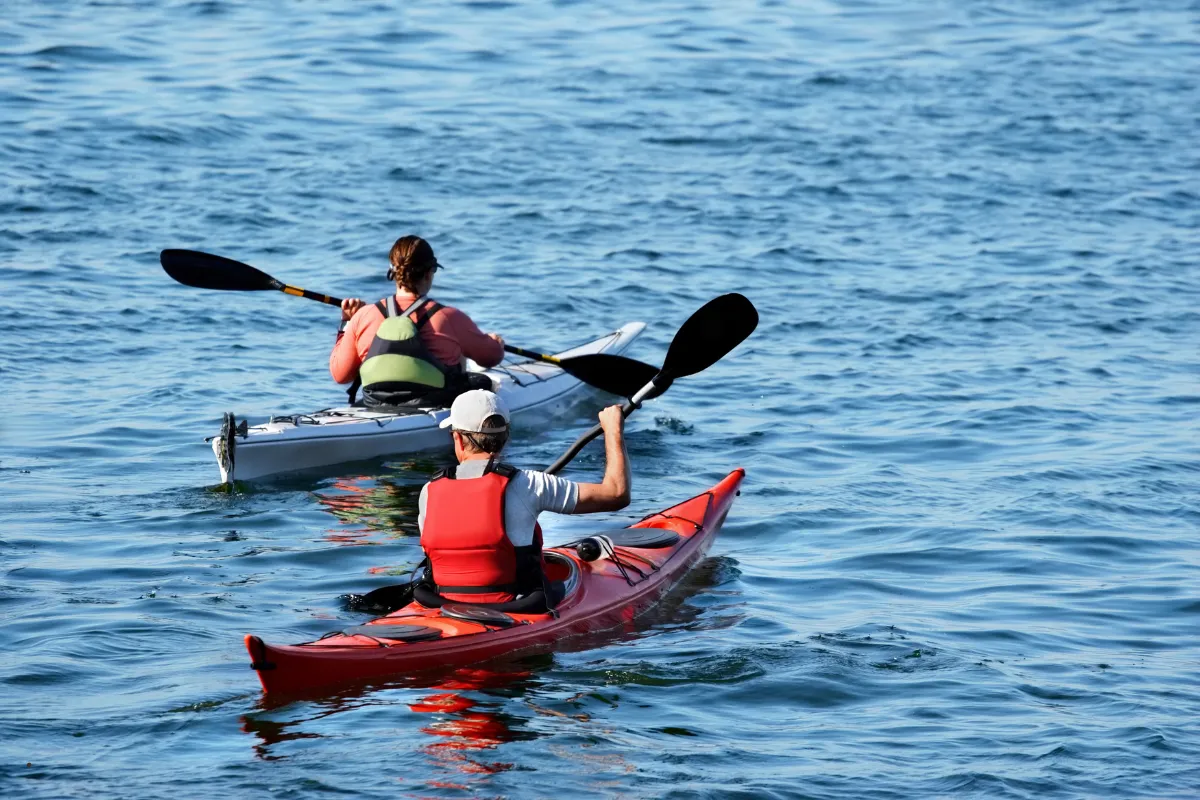

Most visitors see Barcelona’s coastline from the beach. A kayak changes that completely — the city skyline from the water looks nothing like it does from the sand, and thirty minutes of paddling south puts you in sea caves and limestone coves that exist in a completely different world from the urban waterfront.
The Barcelona coast has five distinct launch zones with very different water quality, scenery and difficulty levels. This guide covers all five — plus the one wind condition that cancels trips without exception, the price breakdown by route type, and the honest answer to which zone is actually worth it for a first-time paddler.
Quick answer: Port Olímpic is the easiest entry point — guided 2-hour tours from €30, no experience needed, skyline views. For cleaner water and more dramatic scenery, Vilanova i la Geltrú or Sitges on the Garraf coast are 40 minutes from Barcelona and genuinely better. Badalona heads north toward the Maresme coast — better for intermediate paddlers who want distance. Avoid afternoon departures in summer: the Garbí wind picks up after midday and makes conditions harder for beginners.
Quick Picks
- Best for first-timers → Port Olímpic (2-hour guided tour, instructor included, €30–45)
- Best scenery → Garraf coast from Vilanova or Sitges (sea caves, clear water, limestone cliffs)
- Best for distance paddling → Badalona to Montgat route (8 km, 3 hours, industrial heritage along the way)
- Best value → Free kayak rental on Barceloneta (€15–20/hour, unguided, intermediate level)
- Most unusual route → Sitges submarine sculpture route (Pasífae sculpture, snorkel included)
- Best morning window → Any zone before 12:00 (Garbí wind arrives at midday, calmer morning conditions)
Which Option Should You Choose?
- No experience, first time on a kayak → Port Olímpic guided tour — instructor teaches basics before departure, controlled environment
- Want the best visual experience, willing to travel 40 min → Vilanova i la Geltrú or Sitges — Garraf coast coves are the most photogenic in the metropolitan area
- Intermediate paddler wanting a proper route → Badalona to Montgat (Pont del Petroli, 8 km, meaningful distance)
- Serious kayaker wanting technique and training → Barcelona Caiac in Badalona (Surfski, ocean racing, Va’a — most specialised fleet near Barcelona)
- Want kayak + snorkel combined → Nootka tours from Sitges — Giants Cave, Bufador siphon, Cala Xica, snorkel at visibility points
- Travelling with mixed ability group → Vilanova guided routes — all levels, sea kayak doubles available, short options from 2 hours
The Five Launch Zones
Zone 1 — Port Olímpic: Urban Skyline, Accessible Entry
The Port Olímpic is the most practical starting point for visitors staying in central Barcelona. Nova Icària Nàutic operates here with 2-hour group tours including kayak, vest, paddle and dry bag. They also offer the Hobie Mirage pedal kayak — pedal-propelled rather than paddle-driven, which suits people who want to avoid arm fatigue on a first outing.
What you see from the water: the W Hotel, the Barceloneta waterfront, Port Vell, and the full city skyline. It’s an architectural experience more than a natural one — the urban coast has more boat traffic and the water quality is lower than the southern or northern zones. But the perspective of the Barcelona skyline from sea level is genuinely hard to get any other way.
Level: beginner. Duration: 2 hours. Price: €30–45.
Zone 2 — Badalona: North Toward the Maresme
Barcelona Caiac operates from the Badalona marina (Moll Lima, Carrer d’Eduard Maristany). Founded in 2012, it was the first club in Catalonia to introduce ocean racing and Polynesian outrigger canoe (Va’a). It has the most specialised fleet in the metropolitan area for sea kayaking and runs routes for all levels.
The standard route goes from Badalona to Montgat — around 8 km, 3 hours, intermediate level. Key landmarks: the Pont del Petroli, an early 20th-century industrial pier that extends into the sea with a wooden pedestrian walkway, and the Anís del Mono factory, visible from the water — a Modernista building that produced the anise liqueur for over a century. Heading south from Badalona, the route toward Barcelona with the skyline ahead is one of the better urban sea views on the coast.
For technical paddlers, Badalona is also the departure point for multi-day expeditions toward the Costa Brava.
Level: beginner–intermediate. Duration: 2–3 hours. Price: €25–50 depending on tour.
Zone 3 — Maresme Coast: Calella and Mataró
The stretch between Mataró and El Masnou is one of the longest continuous routes on the northern coast. RocRoi runs expeditions from Mataró with one of the most complete routes in the area: Mataró to El Masnou via Vilassar de Mar and Premià — around 8.5 nautical miles, 2–3 hours.
In Calella, at the northern end of the Maresme, routes pass the Platja Gran, Platja de Garbí and Platja de les Roques. Waters here are calm — better for beginners who want something more relaxed than the Port Olímpic urban environment without travelling as far south as Garraf.
For advanced levels: the Mataró to Sant Feliu de Llobregat route takes over 6 hours. There are also expeditions from Mataró north toward Blanes or Lloret de Mar as an entry point to the Costa Brava.
Level: beginner (Calella) / intermediate–advanced (Mataró routes). Duration: 2–6+ hours. Price: €30–60.
Zone 4 — Garraf Coast: The Best Water Near Barcelona
The Garraf coast is protected under the Natura 2000 network — which explains the water clarity and absence of coastal development that makes it visually different from the urban zones. Limestone cliffs, sea caves and rock formations make this the most photogenic stretch of coastline within 40 minutes of the city.
Nootka operates from Sitges with routes through the Colls i Miralpeix coves. Key stops: the Giants Cave (Cova dels Gegants), the Bufador — a natural siphon that produces a water spout depending on wave action — and Cala Xica. Tours include snorkelling at the highest-visibility points.
From Vilanova i la Geltrú (Platja de Ribes Roges, 40 minutes from Barcelona by car or train), the “Els Colls” route heads toward Sitges in double sea kayaks along a stretch of low rocky coast where the Mediterranean scrub comes almost to the water’s edge. No prior experience required. There are also routes toward the Pasífae underwater sculpture — one of the best-known landmarks on the Sitges coastline.
Port Ginesta (between Castelldefels and Sitges) offers 10 km coastal routes at medium difficulty, accessible by C-32.
Level: beginner (short guided routes) / intermediate–advanced (longer routes). Duration: 2–5 hours. Price: €40–85.
Zone 5 — Costa Brava Day Expeditions
Not a launch zone in itself, but the logical next step for anyone who has done the Maresme routes and wants more. Expeditions from Mataró toward Blanes or Lloret de Mar — and beyond to the Illes Medes or Cap de Creus — represent a completely different category of kayaking landscape. Intermediate level minimum, advance booking required, typically organised as full-day or multi-day tours.
If you’re coming to Barcelona specifically to kayak, the Ebro Delta day trip from Barcelona is another serious alternative — flat water, wildlife, completely different ecosystem, under 2 hours by car.
The Three Winds: What Cancels Trips and Why
Wind — not cold water or wave height — is the primary reason tours get cancelled on the Barcelona coast. Every operator monitors Windguru and AEMET Marítimo before each departure. Understanding these three winds tells you whether your booking will run.
Garbí (Southwest) — The Daily Afternoon Wind
The dominant thermal wind from April to July. It forms from the temperature difference between land and sea. It generates waves of 0.5–0.9 metres with 3–4 second periods — manageable for beginners with an instructor. Its pattern is consistent: mornings are usually calm, Garbí arrives around midday and strengthens through the afternoon. This is why morning departures always have better conditions than afternoon ones.
Llevant (East/Northeast) — The Swell Builder
Generates background swell. Its extreme form is the Llevant storm — destructive wave events that close the coast entirely. There’s also a “false Llevant” generated by the northern Tramontana, which arrives dry and with excellent kayaking conditions.
Ponent (West) — The Cancellation Wind
The most dangerous wind for any paddler on this coast, and the one that cancels tours without exception. Ponent blows from land toward the sea: if it’s strong enough, it pushes a kayak offshore faster than paddling can recover. There is no coming back under your own power against a strong Ponent. Operators cancel immediately when forecasts show significant Ponent. If you’re booking a tour in summer, check the forecast on Windguru the morning of your trip.
Price Breakdown by Activity Type
| Activity | Price range | Duration | Level |
|---|---|---|---|
| Free rental, Barceloneta | €15–20/hour | Flexible | Intermediate |
| Guided tour, urban coast (2h) | €30–45 | 2 hours | Beginner |
| Guided tour, coastal route (3h) | €50–65 | 3 hours | Beginner–intermediate |
| Garraf coast with snorkel | €65–85 | 3–4 hours | All levels |
| Long expedition (5h+) | €85–140 | 5–7 hours | Intermediate–advanced |
| Beginner course | €60–90 | 4–6 hours | No experience |
| Neoprene wetsuit rental | +€5 | — | All seasons |
Is It Worth It?
Yes — especially the Garraf coast routes.
The Port Olímpic urban tour is a solid 2-hour activity for visitors who want to see the skyline from the water. It’s worth doing once. The water quality is average and the scenery is primarily architectural.
The Garraf coast from Vilanova or Sitges is a different proposition entirely. The water is clean enough for snorkelling, the sea caves are dramatic, and the Natura 2000 protection means no hotels or developments on the coastline. The additional 40 minutes of travel from Barcelona is the correct trade-off.
When it’s less worth it: booking an afternoon tour in July without checking the wind forecast. The Garbí makes afternoon conditions significantly harder, and the Ponent can cancel your tour entirely. Morning departures on the Garraf coast in June or September are the highest-value version of this activity near Barcelona.
Best Strategy
- 2 hours, staying in central Barcelona → Port Olímpic morning tour. Book the day before. Check the forecast.
- Half day, want genuine coastal scenery → Vilanova i la Geltrú or Sitges morning departure. Train from Barcelona Sants (40 min), guided tour 2–3 hours, lunch in Sitges or Vilanova.
- Full day, intermediate level → Badalona to Montgat and back, or Mataró coastal expedition. Bring lunch, suncream, isotonic drink.
- Serious paddler → Barcelona Caiac in Badalona for the Surfski or ocean racing programme. Or plan a multi-day Costa Brava expedition departing from Mataró.
Port Olímpic is the easiest launch, not the best
Port Olímpic is the launch point everyone names. It is the easiest to find, and also the least interesting stretch of coastline near the city. The Garraf coast is protected nature, 40 minutes away, and almost nobody directs visitors there.
They don’t explain the wind. Ponent is not a weather footnote — it’s the primary operational variable for every tour operator on this coast. Understanding it takes 3 minutes and determines whether your tour runs.
They don’t distinguish morning from afternoon. The Garbí thermal wind is predictable and daily in summer. Morning departures consistently have calmer conditions. This single piece of information changes the quality of every beginner’s experience on the water.
The Badalona industrial heritage route gets left out. The Pont del Petroli — an early 20th-century petroleum pier extending into the sea with a wooden walkway — is one of the more unusual landmarks accessible only by water in the metropolitan area.
For visitors building a full day that combines kayaking with exploring the wider coastline, the best streets Barcelona walking guide covers the waterfront routes back into the city.
Mistakes to Avoid
-
Booking an afternoon departure in July or August without checking Windguru. The Garbí builds through the afternoon and can make a beginner’s tour significantly harder than the morning version of the same route. Check the forecast — it takes two minutes.
-
Choosing free rental on the Barceloneta if you’ve never paddled. Unsupervised rental assumes you can handle the kayak independently and read the sea conditions. If the Ponent picks up while you’re out, there’s no instructor to manage the return. Guided tours are the correct format for a first outing.
-
Underestimating sun exposure on the water. The sea surface reflects UV in addition to direct sun. A 2-hour tour without suncream on the face, neck and arms leaves a mark. Bring SPF 50+ and a long-sleeve layer for longer routes.
-
Wearing glasses without a retention strap. The kayak can rock or capsize. Every operator has dry bags for phones and cameras, but glasses need a cord. This is the most common equipment mistake on short urban tours.
-
Going to Vilanova or Sitges without booking in advance in summer. The Garraf coast operators run small group tours (6–10 people maximum). July–August tours fill, and there’s no spontaneous walk-in capacity the way there is at Port Olímpic.
-
Ignoring the wetsuit option in shoulder season. April, May, October and November water temperatures in Barcelona range from 15–19°C. Not dangerous, but uncomfortable for a 3-hour tour without neoprene. The €5 wetsuit rental is worth it — every operator has them.
Who Is This For?
- First-time kayakers visiting Barcelona → Port Olímpic guided tour. No experience needed, instructor included, 2 hours, central location.
- Active travellers who want more than the standard itinerary → Garraf coast (Vilanova or Sitges). Better scenery than any urban beach, snorkel included, accessible by train.
- Intermediate paddlers who want distance and landmarks → Badalona to Montgat route with Barcelona Caiac. Meaningful kilometres, industrial heritage, technical instruction available.
- Visitors on a tight budget → Free kayak rental on the Barceloneta (€15–20/hour). Requires prior experience and confidence on the water. Pairs well with the Barcelona travel budget guide for keeping the full trip cost down.
- Families or mixed groups → Vilanova guided tours in double kayaks. All levels catered for, short options available, train access from Barcelona Sants.
Frequently Asked Questions
Do I need experience to kayak in Barcelona?
Not for guided tours. You must be able to swim — operators ask this before every departure. The 2-hour introductory tours at Port Olímpic or Vilanova teach basic technique before setting off. For routes over 3 hours, at least one prior session or a beginner course is recommended.
How much does a kayak tour in Barcelona cost?
Guided 2-hour urban tours: €30–45. Three-hour Garraf coast routes with snorkel: €65–85. Free self-rental on the Barceloneta: €15–20/hour. Beginner courses: €60–90. Wetsuit rental: +€5.
What is the best time of year to kayak near Barcelona?
June to September for stable conditions and warm water. April–May and October are good with fewer tourists. Winter is possible with a wetsuit but conditions are more variable. Morning departures always have calmer conditions than afternoon ones due to the Garbí thermal wind.
Why do kayak tours get cancelled in Barcelona?
The Ponent (west wind) is the main cancellation cause — it blows from land toward the sea and can push kayaks offshore with no way back under your own power. Operators check Windguru and AEMET Marítimo before each departure. Strong Ponent means no tour, no exceptions. The afternoon Garbí (southwest wind) is manageable with an instructor but makes conditions harder for beginners.
Which is the best zone for kayaking near Barcelona?
Depends on what you want. Best urban experience: Port Olímpic. Best natural scenery and water quality: Garraf coast from Vilanova or Sitges. Best route for distance and landmarks: Badalona to Montgat. Best overall kayaking landscape: Costa Brava expeditions departing from Mataró.
Can you kayak in Barcelona in winter?
Yes, with a wetsuit (available at most centres for €5 extra). Barcelona Caiac in Badalona operates year-round. Winter conditions are more variable and beginner tour options are reduced, but the coast is far less crowded. Water temperature in January–February is around 13–15°C.