
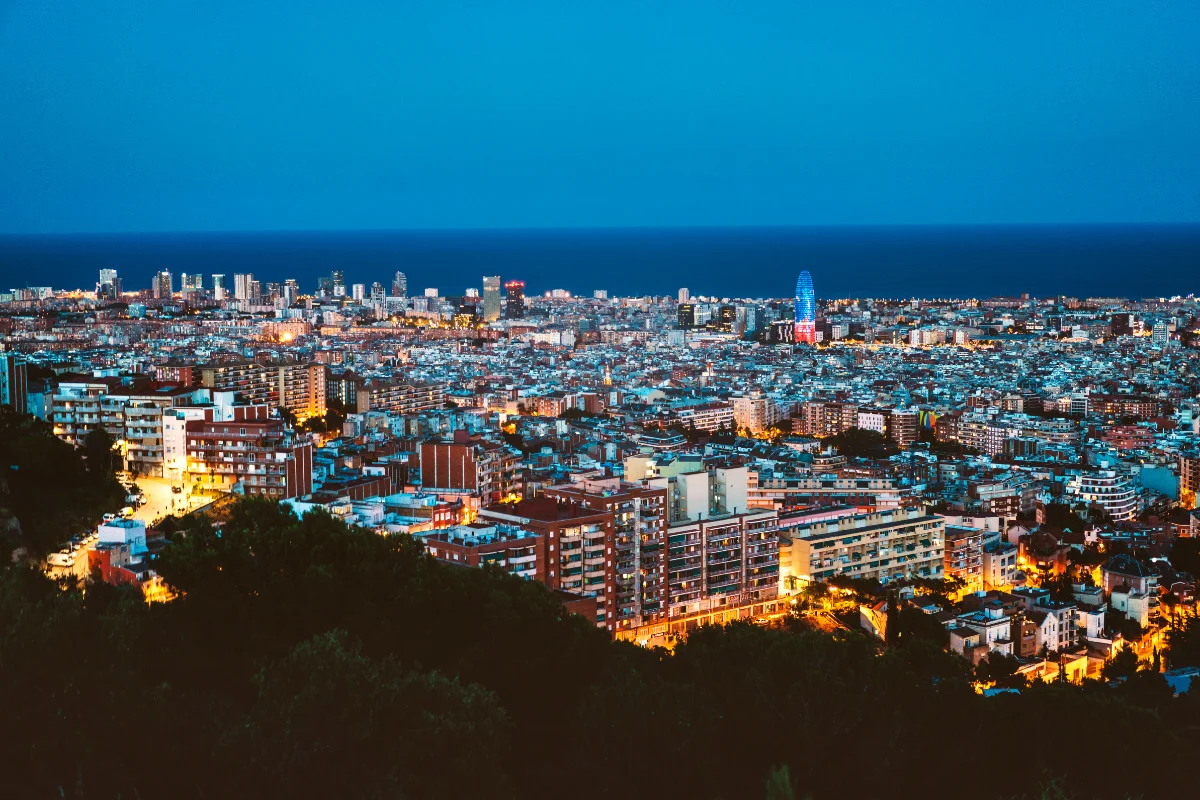

Barcelona after dark is not one thing. It’s five distinct types of evening, each with its own logic, its own geographic cluster and its own schedule. Mixing them — going from a Gaudí building at 21:00 to a cocktail bar at 22:30 to a club at 01:00 — works if you understand the transitions. Going in without that framework means arriving at a club at 23:00 (two hours before it has an atmosphere) or at the Magic Fountain on a Wednesday (when it doesn’t run).
The five nights: architectural (Gaudí buildings, light shows, landmark terraces), free spectacle (the Fountain, the skyline), performance (flamenco, jazz, concert halls), cocktail circuit (the Born speakeasy tier), and club culture (which doesn’t genuinely start before 01:00).
Night One: The Architectural Evening
Barcelona’s most iconic buildings have distinct nocturnal programs that bear no resemblance to the daytime visit.
La Pedrera Night Experience runs from 21:40 in spring — the specific start time is not arbitrary. The audiovisual show projected on the rooftop chimneys (“the warriors”) was designed for the exact light quality of Barcelona’s post-dusk sky. Starting at 21:30 would be too bright; 22:00 would lose the transition window. The show covers the building’s history through light and sound projected on Gaudí’s own architecture. The complete visit includes the Modernista apartment interior, the attic with the catenary arch structural model and the rooftop show.
From €39.50. Advance booking essential — no taquilla sales for nocturnal sessions.
Casa Batlló Magic Nights begins at 20:00 with access to the Gaudí Cube LED installation (six-sided immersive space reconstructing Gaudí’s design thinking), then transitions to a live concert on the dragon roof terrace. Cava included. The Casa Batlló visit guide details the building’s symbolism — worth reading before attending the evening version. From €45.
Sagrada Família illuminated from outside — free, no ticket, from any point on the Plaça de Gaudí or Plaça de la Sagrada Família. The tower illumination at 172.5 meters makes the completed basilica a reference point visible from a significant portion of the city. The best exterior night photography position: the pool reflection at the Plaça de Gaudí (east side), which duplicates the Nativity facade in the water.
Night Two: Free Spectacle — The Magic Fountain and the Views
Magic Fountain: Real Schedules by Season
| Season | Days | Hours |
|---|---|---|
| Winter (Nov–Dec) | Thu–Sat | 20:00–21:00 |
| Spring (Apr–May) | Thu–Sat | 21:00–22:00 |
| Summer (Jun–Sep) | Wed–Sun | 21:30–22:30 |
| Autumn (Oct) | Thu–Sat | 21:00–22:00 |
| February | Not operating | Annual maintenance |
The technical fact behind the show: the Magic Fountain runs on groundwater — água freática — rather than the city mains supply. This was designed to ensure operation continuity during drought conditions (frequent in Catalonia) without competing with domestic water needs. The 4,760 original halogen lights have been replaced with LED technology, enabling more complex color choreography at lower energy consumption.
Best viewing position: the steps of the MNAC (Palau Nacional) with the fountain in the foreground and the palace behind. Arrive 20–30 minutes early to secure position. Metro L1 or L3 to Plaça Espanya, five-minute walk.
The Las Arenas terrace (free, circular terrace above the former bullring) gives an elevated view of the Fountain from distance, with the Montjuïc illumination columns visible simultaneously. The free rooftops Barcelona guide covers this terrace alongside all other free elevated viewpoints.
Night Three: Performance
Flamenco by Setting, Not by Price
The correct way to choose a Barcelona flamenco venue is by the physical setting, not the programming or the ticket price. The shows are technically comparable; the spaces are not.
Palau Dalmases (Carrer de Montcada 20, Born): 17th-century Baroque mansion, performance in a vaulted basement that evokes Granada cave culture. The most cinematographic setting. For couples or anyone for whom atmosphere is the primary variable.
Los Tarantos (Plaça Reial 17, Gothic Quarter): the city’s oldest tablao, from 1963. 40-minute shows from 19:30, multiple nightly sessions. From €30. Compact intensity — the correct pre-dinner cultural primer. The Plaça Reial with its Gaudí lamp posts provides the before-and-after frame.
Tablao Cordobés (Las Ramblas 35): the technically most serious venue. No microphones, no amplification — natural acoustic proximity. Alhambra-inspired interior design. The only Biosphere-certified sustainable tablao in Barcelona. Menu adapted for halal, vegan and gluten-free. From €50 for show only, from €95 with dinner.
Gran Gala Flamenco at the Palau de la Música Catalana: flamenco at the highest scale in the most architecturally significant space in the city. The inverted stained-glass ceiling, the floral columns, the sculptural stage — the building competes with the performance for attention. Book weeks ahead for peak dates.
Jazz and Live Music: The Small Room Option
Harlem Jazz Club (Carrer de la Comtessa de Sobradiel 8, Gothic Quarter): the city’s jazz reference since 1987. Small room, daily programming, proper jazz club atmosphere. Shows typically from 22:00 with a second session past midnight. Low entry price or no minimum consumption on many evenings. From the best live music bars in Barcelona guide: Harlem consistently ranks as the most authentic small-room jazz option in the city.
Sala Apolo (Carrer Nou de la Rambla 113, Poble Sec): concerts before midnight, the Nitsa Club electronic sessions after 02:00. The most local-skewed large-room audience in the city. Two distinct audiences in the same building — concert-goers and club-goers — sharing space before the transition.
Night Four: The Cocktail Circuit
The Born holds the highest concentration of serious cocktail bars in Barcelona. The sequence matters.
Paradiso (Carrer de Rera Palau 4, Born) — consistently in the World’s 50 Best Bars top 10. Entry is through a SMEG refrigerator door at the back of a pastrami bar. No physical queue — the system is a QR code outside the door that issues a virtual number. You wait anywhere in the neighborhood and return when your number is called. Weekend waits run 60–90 minutes. The Kriptonite cocktail (Riboflavin, Shiso, Lemongrass, Electric Liqueur, Sichuan pepper) is the house signature.
Dr. Stravinsky (Carrer dels Carders 7, Born): botanical focus with in-house ferments, essential oils and seasonal distillates. The offering changes with ingredient availability — a menu that is genuinely different in February from September. Technical level comparable to Paradiso with lower wait times.
Sips (Carrer del Consell de Cent 207, Eixample) — second in the World’s 50 Best Bars. No physical bar — the team works at the tables directly with each client. Glassware designed specifically for each cocktail. Reservation recommended.
Boadas (Carrer dels Tallers 1, Raval): the oldest cocktail bar in Barcelona, from 1933. Art Deco interior, classical technique, no contemporary styling. Joan Miró and Ernest Hemingway were regulars. The Dry Martini at Boadas is the benchmark against which barcelonins measure any other.
The best cocktail bars guide covers the full circuit including Bobby’s Free (Eixample, weekly Instagram password required) and Club 61 (Carrer Trafalgar, real key + false mirror).
Night Five: Club Culture — The Schedule You Need
One piece of arithmetic belongs to every one of these nights: drinking in the street is 30 to 100 euros, shouting so it wakes residents reaches 3.000, and since February 2026 non-residents can be charged on the spot. The full list is in street fines.
Barcelona’s club culture runs on a timeline that punishes visitors who don’t know it.
The schedule that works:
- Dinner at 21:00–21:30
- Cocktail bars or rooftops 23:00–01:00
- Clubs: not before 01:00. The real atmosphere starts at 02:00–03:00.
Razzmatazz (Carrer dels Almogàvers 122, Poblenou): five simultaneous rooms covering indie, techno, pop, electronic and soul. Opens from 23:00 with concerts; the dance rooms peak between 01:00 and 04:00. The most culturally eclectic club audience in the city. Metro L4 (Marina) or taxi from the Born (10 minutes, under €12).
Port Olímpic (Pacha, Opium, Shôko): largest format, highest capacity, most international crowd, most commercial music. Smart-casual dress code actively enforced. The highest drink prices of any cluster in the city. Not before 01:00 for any genuine crowd.
Sala Apolo (Poble Sec): the Nitsa Club (after 02:00) runs European techno and electronic music with a specifically curated programming ethos. The most local-skewed of the major venues. For visitors who want a Barcelona club with genuine local character rather than international-tourist format.
Night Transport: What Actually Works
If you are out alone, the seven plans for meeting people at night all wrap up before the last metro on weeknights.
| Time | Option | Notes |
|---|---|---|
| Before 00:30 | Metro | L1, L3, L4 cover all key areas |
| 00:30–02:00 (Thu/Sun) | NitBus | 17 lines from Plaça Catalunya |
| Friday–Saturday all night | Metro (24h) + Taxi | Continuous metro service |
| Born/Raval → Razzmatazz | Taxi/Cabify | 10–15 min, ~€12 |
Rooftops After Dark
Azimuth Rooftop Bar (Hotel Almanac, Gran Via 619, Eixample): direct Sagrada Família views from the rooftop. The illuminated basilica at night is the most sought-after photography position from any terrace in the city. Seasonal cocktail list with constellation names. Open from 12:30 daily.
AZUL Rooftop (Barceloneta): Mediterranean gastronomy that transitions to Afro and Deep House sessions after midnight — dining and club in a single space without changing location.
Las Arenas Terrace (Plaça Espanya): free circular terrace on the former bullring, 360° views. The Magic Fountain is visible from distance simultaneously with the Montjuïc illumination columns. The free rooftop guide covers access via the internal mall elevators (no paid external lift needed).
Mistakes to Avoid
- Going to any club before 01:00 — you’ll pay full entry for an empty room. The Barcelona club timeline is 2–3 hours later than most European cities.
- Planning the Magic Fountain for a Tuesday or Wednesday outside summer — it doesn’t run. Check the season schedule.
- Going to Paradiso on a Saturday without the QR system understanding — there is no physical queue to join. Scan the QR, get your number, go have a drink in the Born, return when called.
- Trying to combine La Pedrera Night + club in the same evening — the Night Experience ends around 23:30. That’s exactly when the cocktail bars are at their best. Clubs don’t start until 01:00+. The timeline works; the energy shift is significant.
- Booking Sala Apolo’s Nitsa Club for the concert portion — if your objective is the Nitsa electronic session, it doesn’t begin until 02:00, after the concerts end. Know which event you’re going for.
If the night ends in a private room rather than a bar, A Viva Voz holds 134,000 songs and takes groups of 3 to 30, as the karaoke guide explains.
When the night runs long, the food map narrows fast: only 97 kitchens serve past 2am and three past 4am, with Mirablau reaching 5am on Friday and Saturday.
Final Insight
The Magic Fountain uses groundwater and starts at different times in different seasons because it was designed as infrastructure, not entertainment. That same functional logic runs through Barcelona’s nightlife — the tablao that starts at 19:30 serves pre-dinner audiences; the jazz club plays a second set after midnight for post-dinner ones; the clubs don’t open their second wind until 03:00. The city’s night was built around the Spanish meal schedule, and every element of it reflects that origin. Understanding the timeline doesn’t add to the experience — it makes the experience available rather than frustrating.
For more on the Barcelona Modernisme route that connects the daytime and evening versions of the Gaudí and Domènech buildings, and for the hidden patios and rooftops that provide quieter evening alternatives to the main circuits.