
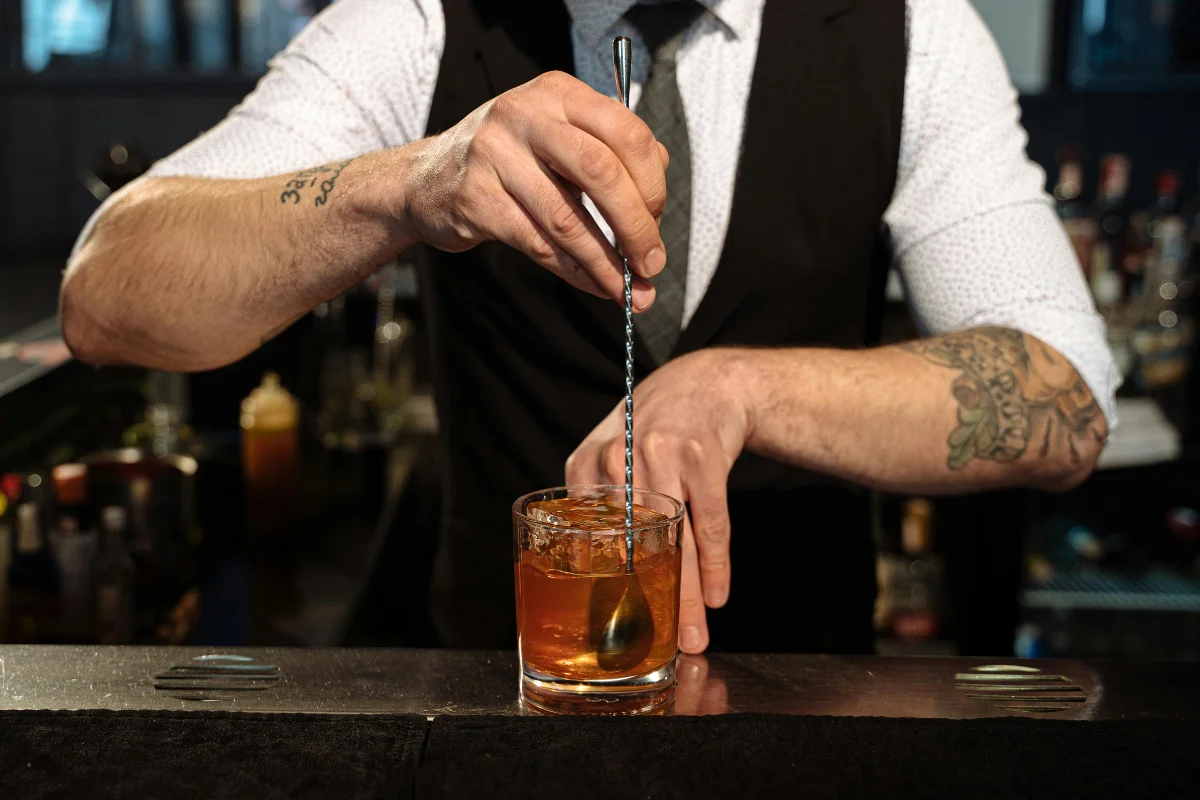

Barcelona never had Prohibition. The bars here were never illegal in the American sense, so the city has no authentic speakeasies of the Chicago 1924 variety. What it has is different and in some ways more interesting: bars that survived Bohemian Barcelona, industrial anarchism, the 1929 Exhibition, the Civil War, and four decades of the Franco regime — and are still open. And alongside them, a new generation of venues that have adopted the clandestine aesthetic of the 1920s with a technical execution that has placed Barcelona at the top of the world’s cocktail bar rankings.
The most honest way to navigate both: understand what each building actually survived, and what it’s simulating.
Barcelona in the 1920s: What Actually Existed Here
While Chicago closed its bars and opened them in basements, Barcelona had the Barrio Chino. Journalist Francisco Madrid coined the name in 1925 after immersing himself in the neighbourhood’s venues — there was no Asian community: the term was a marker of marginality and internationalism, borrowed from American city slang.
In that Raval territory, cabaret, tavern, brothel, and dance hall coexisted with a freedom that existed nowhere else in Spain. The extreme case was La Criolla (Carrer del Cid 10, 1925–1938): a cabaret where cross-dressing and class mixing were the norm, frequented by curious aristocrats, sailors, and artists. The interior decoration included tropical scenes and plaster palm trees designed to create a Caribbean mirage. Cocaine — called mandanga — circulated normally among a clientele ranging from port workers to bourgeois families on a nocturnal visit.
La Criolla didn’t close due to authorities: it was bombed by Italian aviation in 1938. The building was destroyed and with it one of the most iconoclastic periods in the city’s nocturnal history.
In the simultaneous Eixample, the scene was radically different: Art Déco cocktail bars, upper bourgeoisie clients, barmen trained in Cuba and New York. While the Raval lived transgressive chaos, the Eixample was perfecting Cuban pouring technique. Two cities drinking in the same calendar year but in social universes twenty minutes apart on foot.
The Survivors: Bars That Have Been Open for Over a Century
Bar Marsella (1820): The Oldest and the Almost-Lost
What is Bar Marsella and why does it matter?
Bar Marsella at Carrer de Sant Pau 65 has been open since 1820 in El Raval. The decoration — hanging lamps, humidity-patinated mirrors, hydraulic mosaic floor, unrefurbished shelves — is essentially the same as in the 19th century. The signs prohibiting singing and “lingering at tables” date from Francoism, when bar gatherings were monitored. The central drink is absinthe, served in the classic ritual: sugar cube on a perforated spoon, flame, cold water that dissolves it and opacifies the liquor. Picasso, Dalí, and Hemingway are documented in the bar’s historical records as regulars.
The year it nearly closed: in 2013, Marsella was on the verge of permanent closure. The rental contract was expiring and several companies had expressed interest in the premises. A neighbourhood mobilisation under the slogan “Salvem el Marsella” led the Barcelona city council to purchase the property for just over one million euros. Without that intervention, the oldest bar in the city would have disappeared that year.
In 2023 it gained new prominence appearing in Rosalía and Rauw Alejandro’s Vampiros video, and previously in Woody Allen’s Vicky Cristina Barcelona.
Open Tuesday–Sunday from 5pm. The El Raval neighbourhood has more nocturnal history within four blocks than many entire cities.
Casa Almirall (1860): Modernisme Without Restoration
Carrer de Joaquín Costa 33. The marble bar, the carved wooden door, and the central mirror are the same ones from the 19th century — there’s no period reconstruction, only continuity. Casa Almirall is one of the few Modernista bars that reached the 21st century without a renovation that emptied it of its original meaning.
It serves vermouth and absinthe — the same drinks as at opening. The bar has resisted successive waves of neighbourhood transformation precisely because it didn’t join any of them: neither the craft cocktail bar boom nor the design tourism wave.
Cafè del Centre (1873): The Baccarat Table Nobody Mentions
Carrer de Girona 69, Eixample. Originally founded as a casino, it preserves the most unusual piece in any historic Barcelona bar: an octagonal baccarat table with a technical coin slot for introducing gambling money, with an original 1940s wooden central leg. The Cafè del Centre has Category E2 heritage protection (Establishment of Interest), which restricts any structural modification.
The marble bar and iron-legged tables are from the original period. It’s the least-known bar in this guide and the one with the most singular heritage element. Being able to sit at a catalogued baccarat table and order a coffee is the kind of thing Barcelona casually offers without advertising it.
London Bar (1910): Woodwork Protected by Law
Carrer Nou de la Rambla 34. The wooden bar and Art Nouveau mouldings at London Bar are not pieces bought at antique shops: they are the venue’s original elements, declared a Catalan Cultural Asset. That means active legal protection — they cannot be modified or removed.
Inaugurated in 1910, London Bar was frequented by Picasso, Miró, and Dalí during the city’s most artistically active decades. Today it’s a live music and drinks bar that maintains the intact structure of its original period.
La Confitería (1912): The Discovery Beneath the Sign
Carrer de Sant Pau 128. La Confitería opened in 1912 as a Modernista confectionery — the carved wooden shelves that now hold spirits bottles originally held chocolate boxes and preserves. The original cash register is still in place.
The detail found under the sign: during the restoration of the venue by Grup Confiteria, workers discovered that beneath a 1930s commercial sign, the original Modernista decoration of a former salt cod establishment (owned by S. Ràfols) had survived intact. The Modernisme had penetrated even the most everyday neighbourhood businesses — and survived under subsequent renovation layers without anyone knowing.
The bar now serves cocktails at reasonable prices for the quality of the space, with the original confectionery structure fully preserved.
Boadas Cocktails (1933): The School That Changed Everything
Carrer dels Tallers 1, next to Las Ramblas. Miguel Boadas learned his craft at El Floridita in Havana — the same bar where Hemingway drank daiquiris — before opening what is considered Spain’s first specialised cocktail bar in Barcelona.
The technique he imported was the Cuban “throw”: the cocktail is poured from height between two glasses in rhythmic movement, which aerates the drink without the violence of shaking, producing a different texture. It’s a signature that its barmen in aquamarine tuxedos continue executing today.
A technical detail of the recipe: the Bambú cocktail — vermouth and Jerez fino — was served at Boadas with Campari because orange bitters didn’t exist in 1930s Spain. The adaptation wasn’t a recipe defect: it was the solution to the context of a post-war period with limited access to certain ingredients.
Among the documented historical clientele: Miró, Picasso, Hemingway, Greta Garbo, and Almodóvar. In 2022 it was acquired by Marc Álvarez and Simone Caporale — the founders of Sips, which held the number 1 position in the 50 Best Bars 2023 list — an operation analysts describe as “vertical integration of heritage”: vanguard technique taking over the management of the patrimony to guarantee its survival without emptying it of content.
The Contemporary Speakeasies: Clandestinity as Design
Barcelona adopted the 1920s American aesthetic not out of historical necessity but as an experiential design exercise. The city’s modern speakeasies are high-cocktail venues that use the false facade and controlled access as a differentiation tool — and in some cases have achieved world-ranking positions.
Paradiso (El Born): The Fridge Door That Leads to the World’s Best Bar
Carrer del Rec 12, El Born. Access is through the door of a vintage fridge in what appears to be a pastrami shop. The interior is curved organic wood that imitates the movement of waves. Number 1 on The World’s 50 Best Bars in 2022.
The cocktail programme includes the use of the buzz button — a flower also known as toothache plant that produces a transient effect similar to novocaine when it contacts the oral mucosa. There’s no conventional reservation: the system is a virtual queue via QR at the door, with 60–90 minute waits on weekends.
Bobby’s Free (Eixample): The Monthly Password
Carrer de Pau Claris 85. The facade is a classic barbershop with period objects. Entry requires a password that changes monthly and is published on their social media. The interior directly references 1920s American clandestine bar aesthetics. One of the most consistent speakeasies in terms of concept and visual execution.
How to get in: find the current month’s password on their Instagram before going. Tell it to the “barber” at the door. Without it, the facade gives no indication of what’s inside.
Monk (Gothic Quarter): Behind a Convenience Store
Behind the facade of a convenience store in the Gothic Quarter, a cocktail bar with neo-Gothic arch architecture and vaulted ceilings with contemporary lighting installations. The register shift — from neighbourhood convenience store to elaborate architectural space — is the venue’s primary argument.
Speakeasy (Dry Martini, Eixample): The Pioneer
Carrer del Consell de Cent 333. Javier de las Muelas was the pioneer of this format in Barcelona in 1998, directly inspired by American Prohibition. The original access required the password “Cardenal Martini / Papa” and obliged guests to pass through the kitchen and storage corridors of the Dry Martini before reaching the private dining room. The longest-documented speakeasy in the city, and the one that most consciously captures the historical concept’s heritage.
La Whiskería: The Aesthetic Without the Secret Door
Speakeasy aesthetic with the longest bar in Barcelona, over 1,300 whisky references from Scotland, Ireland, the US, Canada, and Japan, and live jazz and swing. For anyone who wants the 1920s atmosphere without the fake-door mechanics.
The Technical Vanguard: Where Barcelona’s Historic Base Has Led
The presence of Barcelona in the Top 10 of The World’s 50 Best Bars reflects a technical scene that has been building for decades on the foundation of its historic bars.
Sips (Carrer del Consell de Cent 207, Eixample) reached number 2 on the 50 Best Bars list. No physical bar — the team works directly with clients at tables. The glassware is designed specifically for each cocktail. Booking recommended.
Dr. Stravinsky (El Born) works with fermentation, distillation, and maceration in the venue itself, producing ingredients that change seasonally. Critics consistently identify it as the most technically rigorous bar in the city without depending on spectacle.
The Barcelona nightlife guide covers the complete cocktail circuit with current prices and hours, organised by the time-slot logic that makes the city’s night work.
Reference Table by Experience Type
| Venue | Year | Type | The essential | What it lacks |
|---|---|---|---|---|
| Bar Marsella | 1820 | Historic | Absinthe, intact 19th-c decoration | No elaborate cocktails |
| Casa Almirall | 1860 | Historic | Original Modernisme, vermouth | Small space, no music |
| Cafè del Centre | 1873 | Historic | Catalogued baccarat table | Little known, no cocktail bar |
| London Bar | 1910 | Historic | Legally protected woodwork, live music | Variable capacity on music nights |
| La Confitería | 1912 | Historic converted | Confectionery shelving, cocktails | Can fill quickly |
| Boadas Cocktails | 1933 | Classic cocktail bar | Cuban technique, classics | Narrow bar, no seating |
| Paradiso | 2016 | Modern speakeasy | Top 1 50 Best, fridge door entry | Virtual queue 60–90 min weekends |
| Bobby’s Free | current | Modern speakeasy | Monthly password, real 1920s aesthetic | Less decorated than Paradiso |
| Speakeasy (Dry Martini) | 1998 | Pioneer speakeasy | Oldest in city, classic elegance | More mediated access, less surprise |
| La Whiskería | current | 1920s-inspired | 1,300+ whiskies, longest bar in BCN | No secret entry mechanism |
Mistakes to Avoid
- Going to Paradiso on a Friday without expecting a wait — the 60–90 minute virtual queue is real and not reducible. Bring something to do in the surrounding Born neighbourhood while you wait. The best bars in El Born circuit makes the wait time productive.
- Missing Bar Marsella’s opening hours — it opens at 5pm Tuesday–Sunday. Arriving before that means a closed door. The area around it (El Raval, Carrer de Sant Pau) doesn’t provide obvious alternatives nearby.
- Treating the Dry Martini Speakeasy and Paradiso as equivalent speakeasies — one is a 1998 elegant fine-dining private room that happens to use the speakeasy concept as entry theatre. The other is a world-ranked cocktail bar with a genuinely theatrical entry mechanism and technical drinks programme. They serve different purposes.
- Not getting Bobby’s Free password before going — it’s published monthly on Instagram. Showing up without it means the barbershop door stays a barbershop door.
- Going to Boadas expecting a modern craft cocktail experience — it’s a classic cocktail bar operating the same techniques it was founded with in 1933. The aquamarine tuxedos, the Cuban throw, and the classic recipes are the offer. If you want contemporary mixology, the same building’s new owners run Sips.
How to Build the Night Around These Bars
If you want real history without modern filter: Bar Marsella → Casa Almirall → Cafè del Centre. Three stops across El Raval and the Eixample that show three centuries of nocturnal life without any reconstruction. Vermouth and absinthe as the thread. Three hours, three different centuries.
If you want the most developed speakeasy experience: Get Bobby’s Free password from Instagram before leaving → Paradiso for the virtual queue and most theatrical cocktail in the city → Dr. Stravinsky if time remains for something more technically focused and less spectacular.
If the objective is classic cocktail craft: Boadas is the mandatory reference point — it’s the link between 1930s Cuban technique and the current vanguard. Sips to understand what Barcelona has done with that heritage in the 21st century.
The complete chronological route — two centuries in one night: Marsella (1820) → Casa Almirall (1860) → Cafè del Centre (1873) → London Bar (1910) → La Confitería (1912) → Boadas (1933) → Speakeasy Dry Martini (1998) → Paradiso (2016). In practice, three or four stops chosen by neighbourhood make the most sense in a single evening.
The baccarat table at Cafè del Centre has the coin slot exactly where it always had it. The London Bar’s woodwork is the same that saw Miró and Dalí pass by. And Paradiso’s fridge opens the same way any clandestine door has always opened: knowing that on the other side there’s something not on the official map. Barcelona never had Prohibition — but it has produced a nocturnal culture dense enough that clandestinity, real or simulated, has been its natural state for two centuries.
Height changes the rules: most Barcelona rooftops close at sunset or only serve dinner, and only a handful turn into proper night bars, as the rooftop bars guide sorts out.
Frequently Asked Questions
What are the best speakeasies in Barcelona?
Paradiso (El Born, Carrer del Rec 12) was world number 1 on 50 Best Bars in 2022 — enter through a vintage fridge door in a pastrami shop. Bobby’s Free (Eixample, Carrer de Pau Claris 85) uses a barbershop facade and a monthly Instagram password. Monk (Gothic Quarter) hides behind a convenience store. The Dry Martini Speakeasy (Eixample) is the oldest in the city, from 1998.
What is the oldest bar in Barcelona?
Bar Marsella, open since 1820 at Carrer de Sant Pau 65 in El Raval. It preserves its original 19th-century decoration. In 2013 the city council bought it for over one million euros to prevent closure after a citizen campaign. Open Tuesday–Sunday from 5pm.
How do you get into Paradiso Barcelona?
Through a vintage fridge door in what appears to be a pastrami shop at Carrer del Rec 12 in El Born. No physical or online reservation. Scan a QR at the door for a virtual queue number and wait anywhere in the neighbourhood. Weekend waits: 60–90 minutes.
How do you get the Bobby’s Free password?
Bobby’s Free publishes the password monthly on their Instagram account. Find it before going — without it, the barbershop facade gives no indication of what’s inside. Tell the password to the “barber” at the door.
Does Barcelona have real 1920s speakeasies?
Not in the American sense — Barcelona never had Prohibition. What existed was the Barrio Chino (now El Raval): cabarets like La Criolla (1925–1938) where social transgression and substance use were normal among sailors, artists, and aristocrats. The current Barcelona speakeasies are design homages to that aesthetic — not clandestine venues out of legal necessity.
Why is Boadas Cocktails historically important?
Boadas (Carrer dels Tallers 1, open since 1933) is considered Spain’s first specialised cocktail bar. Its founder trained at El Floridita in Havana. In 2022 it was acquired by the founders of Sips — the bar that held the world number 1 position in 2023. It preserves the Cuban “throw” technique and serves classic cocktails in aquamarine tuxedos.