
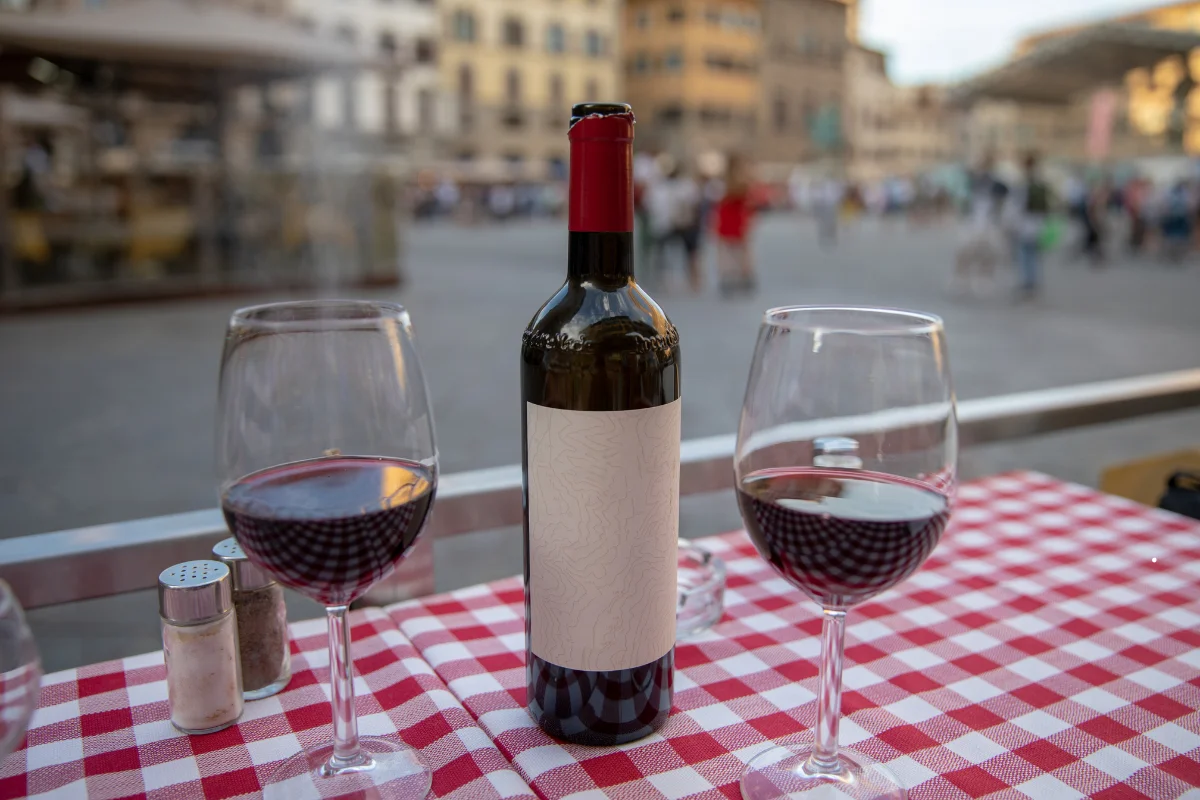

Barcelona sits surrounded by wine country. Priorat, Penedès, Alella, Montsant, Terra Alta — all within 150 kilometers. Over 300 wineries in the immediate orbit of the city. The result is a wine bar scene that doesn’t have to import its identity: small Catalan producers with limited national distribution end up poured by the glass in Born cellars and Gràcia taps before they reach anywhere else.
This guide organizes the best wine bars in Barcelona by type of experience — not by hype or arbitrary ranking. Natural wine caves, historic bodegas, Burgundy-at-retail-price models, and €2 biodynamic taps. With real prices per glass and the information that determines which place fits which plan.
Quick Answer
The best wine bars in Barcelona by category: La Vinya del Senyor (Born, terrace facing Santa Maria del Mar, 3,000+ references) for the classic experience. Bar Brutal / Can Cisa (Born, natural and biodynamic wines) for minimal-intervention. Público (Eixample, Burgundy and aged Spanish wines at retail price + €8 corkage) for best value per quality. Bar Salvatge (Gràcia, rotating biodynamic taps from €2) for accessible natural wine. Quimet & Quimet (Poble-sec, 500+ bottles, standing room only) for historic bodega character.
Quick Picks
- Best terrace → La Vinya del Senyor (Gothic facade view, Born)
- Best natural wine → Bar Brutal / Can Cisa (Born)
- Best value for serious bottles → Público (Eixample, retail + €8)
- Cheapest glass worth drinking → Bar Salvatge (Gràcia, from €2)
- Most historic → Quimet & Quimet (Poble-sec, standing bodega)
- Biggest selection → Monvínic (Eixample, 3,000+ references)
- Best cheese pairing → Viblioteca (Gràcia)
Is It Worth Seeking Out Barcelona’s Wine Bar Scene?
Yes — and it’s one of the most underrated things to do in the city.
Most visitors eat well in Barcelona but drink generically. The wine bar scene here isn’t a tourist amenity — it’s a functioning local ecosystem built around Catalan and Spanish denominaciones de origen that rarely make it to international distribution. A glass of Priorat Garnacha from a 12-hectare producer at a Born wine cave costs €5–7 and is genuinely difficult to find outside of Spain.
The scene has matured significantly over the past decade. The natural wine movement arrived in Barcelona earlier than most Spanish cities (strong French influence via the Born neighborhood), and the model pioneered by places like Público — where bottles sell at retail markup rather than restaurant markup — has shifted expectations about what value looks like.
If you drink wine at home with any regularity, the Barcelona wine bar scene will likely become one of your better memories from the trip.
Who Is This For?
- First-time wine traveler → Start with La Vinya del Senyor for atmosphere, then Bar Salvatge for price discovery
- Natural wine enthusiast → Bar Brutal / Can Cisa and L’Ànima del Vi are both internationally referenced; go to both
- Budget traveler → Bar Salvatge (€2 taps), Quimet & Quimet (€3–5), Els Sortidors (Sant Antoni)
- Serious bottle drinker → Público for retail-priced access to Burgundy and aged Spanish vintages
- Looking to explore Catalan DO wines → Vila Viniteca for depth and guided discovery
El Born & Gothic Quarter: Highest Wine Bar Density Per Block
La Vinya del Senyor
The definitive classic. The terrace sits directly facing the 14th-century facade of Santa Maria del Mar — drinking wine with a 700-year-old Gothic basilica at 20 meters is not a combination available anywhere else in the city.
The list runs over 3,000 references with regular rotation. The half-glass system (medias copas) lets you taste rare vintages without committing to a full pour. Strong in Catalan and Spanish wines, with Jerez, Champagne, and Penedès sparkling well represented. Service here has real technical formation in pairing — an exception in a city where wine knowledge at the bar is often superficial.
The honest caveat: the terrace fills completely on weekends and the wait without a reservation is real. Weekday afternoons are consistently the best window.
📍 Plaça de Santa Maria 5, El Born
Bar Brutal / Can Cisa
The most internationally referenced natural wine address in Barcelona. Can Cisa is the front shop — a traditional bodega with barrels, conserves, and small-producer labels. Bar Brutal is the back bar: louder, more informal, with glasses at reasonable prices and a selection of organic, biodynamic, and minimal-intervention wines from Spain, France, Italy, Georgia, and Austria.
The philosophy is explicit: native yeasts, spontaneous fermentations, no added sulfites. Wines with controlled oxidation notes, natural turbidity, or spontaneous effervescence are not flaws here — they’re the point. This is one of the places that shaped Barcelona’s natural wine vocabulary before natural wine became a marketing term.
Opens weekdays from 19:00, weekends from noon. No reservations — arrive early on weekends.
📍 Carrer de la Princesa 14, El Born
L’Ànima del Vi
Small and intimate on Carrer dels Vigatans, between the Gothic Quarter and El Born. Only natural and minimal-intervention wines, with emphasis on small Catalan and French producers. The atmosphere is genuinely cave-like — stone walls, low light, jazz — and the selection leans more toward French influence than Iberian.
Opens Wednesday to Saturday from 19:00. The person behind the bar explains each bottle with producer and terroir context. For discovering labels outside standard distribution, it’s the most accessible reference in the historic center.
📍 Carrer dels Vigatans 8, Gothic/Born
Vila Viniteca
More than a wine bar — one of the most important wine distributors in Europe with an integrated tasting space. The shop has imported directly from small wineries for decades. The tasting area serves high-level wines alongside a curated cheese and charcuterie board from their own cellar.
For finding a specific bottle or getting technical guidance before buying, Vila Viniteca has deeper knowledge than any other establishment in this guide. It’s also where you go when you want to take something serious home.
📍 Carrer dels Agullers 7, El Born
Eixample: The Model That Changes the Price Logic
Público
The most disruptive business model in the Barcelona wine scene. Customers access bottles of Burgundy, Bordeaux, and aged Spanish vintages at retail price plus a flat €8 corkage fee — no restaurant markup, no triple pricing. The math is significant: a bottle that would cost €60 in a conventional restaurant costs €28 here.
The space is dominated by large refrigerated display cases — the cellar as the main visual protagonist. Around 600 references with strong Burgundy and aged vintage coverage. The kitchen runs at a genuine level, served in a relaxed bistro format. No beer, no soft drinks by house policy — total focus on wine.
For drinking a serious bottle without paying three times its actual value, Público is the best quality-to-price ratio in the Eixample.
📍 Carrer de Sèneca, Eixample
Monvínic
The most extensive list in the city — over 3,000 references in a contemporary space with a full team of technically trained sommeliers. Strong in international wines across all regions. Regular tastings and educational events run at a pedagogical level not found at other wine bars in the city.
Opens Tuesday to Saturday, midday until 21:00. For a high-level guided experience across a comprehensive international catalog, Monvínic has no competition on selection depth.
📍 Carrer de la Diputació 249, Eixample
Gràcia: The Most Accessible Natural Wine at Real Price
Bar Salvatge
The most disruptive pricing policy in Barcelona. Eight rotating biodynamic taps with glasses from €2 to €2.80 — the lowest access price for minimal-intervention wines with genuine selection criteria in the entire city.
The atmosphere is deliberately un-precious: no dress code, no sommelier performance, no wine-bar formality. The selection rotates frequently. For understanding the natural wine movement without paying Born prices, Bar Salvatge is the most accessible entry point. It’s also the place that demonstrates what the scene looks like when you remove the premium positioning.
📍 Gràcia
Viblioteca
Specialized in the pairing of artisan cheeses and selected wines — but with the direction reversed from most places. The wine list is curated to complement the cheese selection, not the other way around. Over 50 cheese varieties. Minimalist space, technically oriented service.
For an afternoon of cheese and wine in Gràcia away from Eixample crowds, Viblioteca is the local reference.
📍 Gràcia
Poble-sec & Sant Antoni: The Neighborhood Bodegas
Quimet & Quimet
A case study in doing more with less. The space holds about 30 people standing, no kitchen, no tables — only bar, shelves with over 500 historic references, and cold montaditos the owner assembles on request. The salmon montadito with yogurt and truffle honey is the most ordered item. The house vermut is exceptional.
The friction of Quimet & Quimet — the tight space, the forced proximity, the absence of comfort — is the experience. For a glass of wine in a space that hasn’t changed in decades and doesn’t intend to, there’s no equivalent in the city.
Open Monday to Friday at midday and Saturday afternoons. Closed Sundays and August.
📍 Carrer del Poeta Cabanyes 25, Poble-sec
Els Sortidors del Parlament
In Sant Antoni, with an extensive wine list and a genuinely local atmosphere that the Born wine bars rarely achieve. Less known outside the neighborhood circuit, with more contained prices and no tourist density. For visitors who prefer the Sant Antoni scene — the Mercat de Sant Antoni, the vermut culture of the barrio — it’s the natural wine stop for the afternoon.
📍 Carrer del Parlament, Sant Antoni
Full Comparison: Which Bar for Which Plan
| Bar | Neighborhood | Style | Glass from | Reservation |
|---|---|---|---|---|
| La Vinya del Senyor | Born | Classic, historic terrace | €4–6 | Recommended |
| Bar Brutal / Can Cisa | Born | Natural, biodynamic | €4–6 | No |
| L’Ànima del Vi | Gothic/Born | Natural, small producers | €4–5 | No |
| Vila Viniteca | Born | Premium, guided tasting | €5–10 | No |
| Público | Eixample | Burgundy/vintages, retail+€8 | Variable | Recommended |
| Monvínic | Eixample | International, 3,000 refs | €5–12 | Recommended |
| Bar Salvatge | Gràcia | Biodynamic taps | €2–2.80 | No |
| Viblioteca | Gràcia | Cheese + wine pairing | €4–6 | Recommended |
| Quimet & Quimet | Poble-sec | Historic bodega, montaditos | €3–5 | No |
| Els Sortidors | Sant Antoni | Local, broad list | €3–5 | No |
Which Option Should You Choose?
- Want atmosphere + views → La Vinya del Senyor
- Serious about natural wine → Bar Brutal, L’Ànima del Vi (do both)
- Drinking a real bottle on a budget → Público (retail + €8 model)
- First glass, lowest price → Bar Salvatge
- Want to buy a bottle to take home → Vila Viniteca
- Local neighborhood feel → Quimet & Quimet or Els Sortidors
- Pairing food with the wine → Quimet & Quimet (montaditos), Público (bistro kitchen), Viblioteca (cheese)
The Catalan DO Wines You’ll See on Every List
Priorat (DOQ) — the peak of Catalan mineral intensity. Structured reds from Garnacha and Cariñena on llicorella (volcanic slate) soils. The most expensive wines on any serious list.
Penedès — the most diverse region. Fresh whites from Xarel·lo, Macabeu, and Parellada; high-end sparkling. Small-producer Cava — as opposed to industrial-scale production — is the most active trend in the current scene.
Alella — just north of the city, elegant whites from Pansa Blanca (local Xarel·lo) with Mediterranean salinity. The closest denomination to Barcelona and the least known outside Catalonia. If you see it on a list, order it.
Montsant — surrounding Priorat, expressive reds with a quality-to-price ratio that frequently outperforms its more famous neighbor.
Terra Alta — internationally referenced for Garnacha Blanca grown at altitude on limestone soils. The most interesting Catalan white for visitors who don’t know it.
Understanding these five regions transforms what you’re looking at on any Barcelona wine list — they’re not exotic references, they’re the local vocabulary.
Best Strategy
Short time (1–2 hours): La Vinya del Senyor if you want the iconic terrace. Bar Brutal if you want to understand what Barcelona’s wine scene actually tastes like. Pick one.
Half day (4–5 hours, Born-focused): Start at Can Cisa to browse and buy, move to Bar Brutal for a glass, walk to L’Ànima del Vi for a second. Three addresses, 10 minutes apart, covering the full range of the natural wine scene.
Full evening (Eixample + Born): Open at Público for a serious bottle at retail price. Walk east toward the Born for a second bar at Bar Brutal or La Vinya del Senyor. Finish at Quimet & Quimet in Poble-sec if timing allows (closes early — check before going).
Budget strategy: Bar Salvatge (€2–2.80 per glass) for discovery. Els Sortidors for local atmosphere. Quimet & Quimet for a montadito and a bodega experience at €3–5 per glass. Spend €12 total and drink better than most tourists spending €40 at restaurant wine lists.
The half-glass system at La Vinya del Senyor
The half-glass system at La Vinya del Senyor. The medias copas option lets you taste rare vintages and aged bottles that would be prohibitive by the full glass. Most visitors don’t know to ask for it.
Bar Salvatge’s rotating tap selection. The eight biodynamic taps change regularly — what you drink in March won’t be there in June. The bar’s Instagram is the only reliable source for knowing what’s currently on tap before you arrive.
Público’s no-beer policy. First-time visitors occasionally show up for a casual drink and are surprised. The policy is deliberate — total focus on wine. Know before you go.
The Sant Antoni option. Els Sortidors on Carrer del Parlament is genuinely beloved by locals and almost entirely absent from tourist circuits. The neighborhood has changed significantly in the past decade — the Mercat de Sant Antoni renovation brought new life, and the wine bar scene followed. The best flea markets in Barcelona guide covers the Sant Antoni weekend market, which pairs perfectly with an afternoon at Els Sortidors.
The distinction between Can Cisa (shop) and Bar Brutal (bar). They share a space but are functionally different. You can buy bottles to take away at Can Cisa at shop prices; Bar Brutal is for drinking on the spot. You can do both at the same address.
Mistakes to Avoid
-
Arriving at Quimet & Quimet late on a Saturday. It fills completely and stops serving when capacity is reached. Arrive before 14:00 or accept that you’ll be turned away.
-
Booking Público without checking the corkage math. The model works brilliantly for bottles over €25. For a €12 bottle, the €8 corkage is proportionally high. Bring a bottle you actually want to drink seriously.
-
Going to Monvínic with a time limit. The list has 3,000 references and sommeliers who want to explain them. Showing up for a quick glass is slightly like going to a library and asking for a one-sentence summary.
-
Assuming all natural wine is cheap. Bar Salvatge is the exception. At Bar Brutal and L’Ànima del Vi, serious natural bottles from small French or Priorat producers cost €6–10 per glass. Budget accordingly.
-
Visiting La Vinya del Senyor on a Friday evening without a terrace reservation. The terrace has a specific seating capacity and fills fast. Reserve the terrace specifically — a reservation for inside doesn’t guarantee outdoor seating.
-
Ignoring the local DO section on any list. Alella and Terra Alta in particular are almost never available outside of Catalonia. When you see them, it’s worth ordering something you won’t find at home.
Planning the Full Evening
Barcelona’s wine bars work best integrated into the neighborhood logic. In the Born, leaving Bar Brutal or La Vinya del Senyor and continuing toward the waterfront is the natural arc. In the Eixample, Público works well before dinner at any of the serious restaurants in the grid. In Poble-sec, Quimet & Quimet pairs with the pintxos bars of Carrer Blai for a full afternoon without leaving the neighborhood.
For post-wine evenings with live music, the best live music bars in Barcelona maps venues within walking distance of the main wine bar clusters. For a morning coffee before starting, the specialty coffee guide and best cafés in Barcelona both cover options in the Born and Eixample.
If you’re building a full day around the Barcelona food and drink scene, the Barcelona complete travel guide covers how the wine bar circuit fits into a broader city itinerary — including which neighborhoods to base yourself in and how to sequence days efficiently.
Wine in Barcelona isn’t a detour from the city’s identity. It’s one of the most direct ways into it.
The snack that decides a bodega is the croqueta, and what separates a fresh one from a frozen one — plus the addresses locals rate — is in the Barcelona croquetas guide.
The local version of the standard tapa is not the Madrid one: the bravioli pairs creamy allioli with a separate spicy oil, the distinction the patatas bravas guide is built on.
Frequently Asked Questions
What are the best wine bars in Barcelona for natural wine?
Bar Brutal / Can Cisa in El Born is the most internationally referenced address for natural, organic, and biodynamic wine in the city. L’Ànima del Vi (Gothic/Born) is smaller and more French-influenced. Bar Salvatge in Gràcia offers biodynamic wine on rotating taps from €2 per glass — the most accessible entry point in the city.
How much does a glass of wine cost at Barcelona wine bars?
The range is wide: from €2 (Bar Salvatge biodynamic taps) to €12+ (Monvínic, premium international references). The typical range in Born and Eixample wine bars is €4–7 per glass. Quimet & Quimet in Poble-sec serves historic bodega wine at €3–5.
What is the Público wine bar model?
Público sells bottles at retail price plus a flat €8 corkage fee — eliminating the restaurant markup that typically triples the price of wine. This means a bottle of Burgundy worth €20 retail costs €28 total instead of €55–70. The kitchen runs at a serious level in bistro format. No beer or soft drinks by policy. Reservations recommended.
Which neighborhood in Barcelona has the best wine bars?
El Born has the highest density — La Vinya del Senyor, Bar Brutal, L’Ànima del Vi, and Vila Viniteca within a 10-minute walk. The Eixample has the strongest technical wine programs (Monvínic, Público). Gràcia has the most accessible prices. Poble-sec and Sant Antoni have the most local, neighborhood character.
Do I need to book wine bars in Barcelona in advance?
La Vinya del Senyor terrace, Monvínic, Viblioteca, and Público benefit from advance reservations on weekends. Bar Brutal, L’Ànima del Vi, Bar Salvatge, and Quimet & Quimet don’t take reservations — arrive early (before 20:00) or outside peak hours.
Where can I drink wine with food at Barcelona wine bars?
La Vinya del Senyor (cheese and charcuterie boards), Quimet & Quimet (cold montaditos, the salmon with yogurt and truffle honey is the signature), Público (Michelin-level bistro kitchen), Bar Brutal (market-driven small plates), Viblioteca (artisan cheese pairing).