
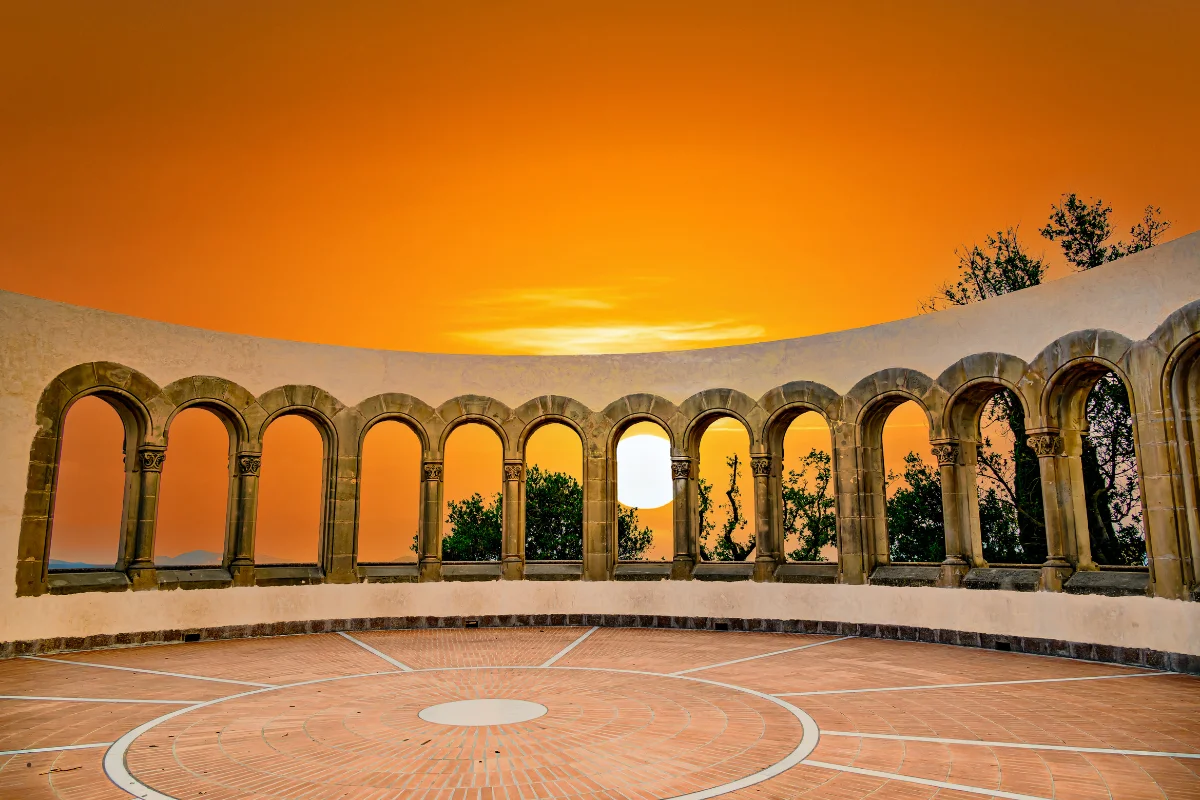

The Búnkers del Carmel have closing times, access control, and crowds on weekend afternoons — which is what happens when a secret viewpoint stops being secret. This guide covers eight alternatives, each organised by what the view actually shows and why it’s worth the specific journey. Some are 10 minutes from the Búnkers. One requires climbing 311 steps. All have a fraction of the visitors of any standard tourist viewpoint in the city.
This guide is based on direct visits to every viewpoint listed — including checking access conditions, transport routes, and what you actually see from each one. The goal is not to replace the Búnkers but to give you options for when it’s crowded, closed, or simply not what you’re looking for.
Quick Answer: Best Secret Viewpoints in Barcelona Closest Búnkers alternative: Pont de Mühlberg, Can Baró (261m, almost identical view, rarely more than 10 visitors). Best 360° without crowds: Turó del Putxet, Sant Gervasi (Himalayan cedars, urban forest, zero tourists). Most unusual structure: Torre de les Aigües del Besòs, Poblenou (63m water tower, 311 steps, Saturday guided visits only). Best port view: Mirador del Migdia, Montjuïc south face (port, airport, open sea — the view nobody takes). Only double horizon: Turó de la Peira, Nou Barris (sea and Collserola simultaneously). Highest point with access: Observatori Fabra, Tibidabo (415m, 1904 telescope, night visits).
Quick Picks
- Best Búnkers del Carmel alternative → Pont de Mühlberg (150m away, same view, almost no visitors)
- Best 360° urban forest viewpoint → Turó del Putxet (Sant Gervasi, Himalayan cedars, free)
- Most unique structure to climb → Torre de les Aigües del Besòs (130-year-old water tower, 311 steps, Saturdays only)
- Best sunset facing the port → Mirador del Migdia, Montjuïc south (La Caseta del Migdia bar, Wed–Sun)
- Best for simultaneous sea + mountain view → Turó de la Peira, Nou Barris (the only double horizon in the city)
- Best night view → Observatori Fabra (415m, summer night dinners, reserve weeks ahead)
Quick Decision: Which Viewpoint Is Right for You?
- Want the Búnkers view without the crowd → Pont de Mühlberg, Can Baró (free, open access, 150m from the Búnkers)
- Want a forest atmosphere with city views → Turó del Putxet, Sant Gervasi (15 min walk from Gràcia, completely local)
- Want something genuinely unusual → Torre de les Aigües del Besòs (Saturday guided visits, 63m water tower, book ahead)
- Want the port and airport view, not the city skyline → Mirador del Migdia, Montjuïc south (15-20 min walk from the castle)
- Visiting Nou Barris or want zero tourists → Turó de la Peira (double horizon, completely off-tourist-circuit)
- Want the highest accessible point in the city → Observatori Fabra (415m, night programme in summer, requires reservation)
- Want the Búnkers with fewer people → Go weekday mornings before 11:00 — the quietest window
Who Is This For?
- First-time visitors who’ve already seen the main viewpoints → Pont de Mühlberg for the Búnkers view without the crowds; Mirador del Migdia for the view nobody else takes
- Visitors who want zero tourists → Turó de la Peira (Nou Barris), Torre Baró (Nou Barris north), Turó del Putxet (Sant Gervasi)
- Architecture and urban history interested → Torre de les Aigües del Besòs (industrial heritage), Castell de Torre Baró (failed hotel, 1714 history)
- Sunset planners → Mirador del Migdia (west-facing, La Caseta del Migdia bar — see the best sunset spots in Barcelona guide for the full orientation logic)
- Night visitors → Observatori Fabra (summer night dinners at 415m, requires reservation weeks ahead)
Pont de Mühlberg — The Búnkers View With a Tenth of the Visitors
In the Can Baró neighbourhood, 150 metres in a straight line from the Búnkers del Carmel, the Pont de Mühlberg is a 70-metre metal footbridge built in 1991. The structure was erected in one week — a local engineering landmark at the time. It connects Carrer de Mühlberg with the Parc del Guinardó at over 261 metres altitude.
From the bridge and its immediate surroundings, the panorama is practically identical to the Búnkers: the Sagrada Família aligned with the sea horizon, the Eixample grid, the seafront. The difference is density — on a summer weekend afternoon, the Búnkers can hold hundreds of people. The Pont de Mühlberg rarely has more than ten.
The Parc del Guinardó surrounding this area has its own additional panoramic points, particularly in the upper section of the park where the paths face north and toward the sea simultaneously.
How to get there: Metro L5, stop Guinardó | Hospital de Sant Pau, then 15–20 minutes on foot uphill along Carrer del Guinardó. Also Metro L4, stop Joanic, 20 minutes on foot.
📍 Carrer de Mühlberg, Can Baró. Free, open access.
Turó del Putxet — Urban Forest, 360° Views, Zero Tourists
The Turó del Putxet in Sarrià-Sant Gervasi is the most underrated easily-accessible viewpoint in Barcelona. The park has notable biodiversity — Himalayan cedars, holm oaks, laurels — that creates a Mediterranean forest atmosphere without leaving the city.
The ascent from the main entrance has a steep gradient but the route is short — less than 20 minutes from base to summit. From the top: 360° panorama taking in the coastline from Badalona to the south, the Collserola ridge to the north, and the Sagrada Família clearly visible in the centre of the skyline.
The park has picnic areas, pétanque courts, and a children’s play area. It functions as a neighbourhood park, not a tourist space — the probability of finding almost nobody at the summit on a weekday is high.
How to get there: Metro L3, stop Lesseps or Fontana, 15 minutes on foot. FGC, Gràcia station, 15 minutes on foot.
📍 Parc del Turó del Putxet, Sarrià-Sant Gervasi. Free, open access.
Torre de les Aigües del Besòs — 311 Steps to the Top of a 130-Year-Old Water Tower
In Poblenou, there is a 130-year-old water tower you can climb. The Torre de les Aigües del Besòs stands 63 metres tall with 311 steps to the upper terrace. The ascent is narrow and vertical — not suitable for those with vertigo or mobility difficulties.
The view from the top is specifically the maritime face of Poblenou and the Besòs: the Mediterranean horizon to the east, the converted industrial chimneys of the neighbourhood, the 22@ innovation district grid, and the 19th-century fishing village street pattern. It is a view of industrial and maritime Barcelona that exists from no other point in the city.
Access detail: guided visits are on Saturdays only. There is no free access outside those dates. Check exact dates and booking at the Barcelona city council website or the space directly.
📍 Rambla del Poblenou, Poblenou.
For the wider Poblenou context — the recovered industrial neighbourhood surrounding the tower — the best Barcelona walking streets guide covers the Rambla del Poblenou and the surrounding grid.
Mirador del Migdia — The Port View Nobody Takes
Everyone who visits Montjuïc Castle looks north — toward the city, the Sagrada Família, the Tibidabo. The Mirador del Migdia is behind the castle, on the south side, and looks in the opposite direction: the port of Barcelona, El Prat airport, and the open Mediterranean horizon to the south.
The port from this height — 170 metres — has the scale of an architectural model. Containers, docks, cruise ships, and maritime traffic visible simultaneously. On clear days, the Llobregat Delta and the Garraf massif appear in the background.
La Caseta del Migdia — the bar integrated into the space — opens Wednesday to Sunday in the summer season. Sandwiches, beer, wine. One of the best-known plans among Barcelonese who come by motorbike or car to watch the sunset over the port.
How to get there: From Montjuïc Castle, a marked forest track of 15–20 minutes on foot. Also accessible by car or motorbike via the Carretera del Migdia. The Montjuïc funicular reaches the base — from there, ascend on foot or via the castle cable car.
The Montjuïc Castle guide covers the castle itself and the full hill — the Migdia viewpoint and the castle are on the same route, south face.
📍 Parc del Migdia, Montjuïc.
Turó de la Peira — The Only Double Horizon in the City
The Turó de la Peira in Nou Barris is a hilltop park with a characteristic that exists at no other elevated point in Barcelona: from its upper section you can see the Mediterranean to the south and the Collserola ridge to the north simultaneously. Two completely distinct horizons — water and mountain — visible in the same panorama.
The hill has free access and is fully integrated into the residential fabric of Nou Barris — a neighbourhood that appears on no tourist circuit. The density of outside visitors is practically zero.
How to get there: Metro L5, stop Vilapicina or Virrei Amat. The park is signposted from both stops.
📍 Parc del Turó de la Peira, Nou Barris. Free, open access.
Castell de Torre Baró — 360° Over the Besòs, Practically Empty
In the upper reaches of Nou Barris at the edge of the Collserola ridge, the Castell de Torre Baró looks like a medieval fortress but isn’t. It was a failed hotel project from the early 20th century — construction was abandoned incomplete and the building was listed as heritage in 1989. The historic name refers to the Torre del Barón de Pinós, destroyed in 1714 during the War of Spanish Succession.
From the Torre Baró viewpoint, the face of Barcelona that southern viewpoints never show: the Besòs river, Santa Coloma, Sant Adrià, Badalona, and the beginning of the northern coastline. A 360° panorama with no equivalent from any other point in the city.
Practically deserted on weekdays. Weekends see free guided visits about the building’s history and the Collserola natural environment.
How to get there: Metro L11, stop Torre Baró, then 15–20 minutes uphill on foot along a steep path. Also accessible by bus lines 73 or 119.
📍 Carrer de Torre Baró, Nou Barris.
Observatori Fabra — 415 Metres with a 1904 Telescope
The Observatori Fabra on the Tibidabo is at 415 metres altitude — higher than the tourist Tibidabo area — and has a working 1904 telescope. The observatory organises night visits with astronomical observation and, in summer, outdoor dinners with a night panorama of the city from that altitude.
This is the highest viewpoint in this guide and the only one combined with active scientific activity. For anyone who wants to see Barcelona illuminated at night from the highest accessible point in the city, without the amusement park tourist context: the Observatori Fabra.
Access: guided visits by prior reservation. Summer night dinners require booking weeks ahead. Check the programme at the Observatori Fabra website.
📍 Camí de l’Observatori Fabra, Sarrià-Sant Gervasi.
Mirador dels Xiprers — The Neighbourhood Balcony in Sarrià
In Sarrià, the Mirador dels Xiprers is a small viewpoint between gardens and cypress trees in the city’s upper residential neighbourhood. No tourist infrastructure, no information panels — a neighbourhood viewpoint that Sarrià residents know and visitors don’t search for.
The views point south toward the city skyline, with the Hotel Arts and the Hotel W as visual reference points and the Mediterranean in the background. The atmosphere is completely different from the hilltop viewpoints — more intimate, quieter, with the scale of the upper residential neighbourhood surrounding you.
How to get there: FGC, Sarrià station. On foot from the station, approximately 10–15 minutes uphill along Carrer de Sarrià.
📍 Sarrià area, Sarrià-Sant Gervasi.
The Búnkers del Carmel — Why They’re No Longer Secret and When to Go
The Búnkers del Carmel — technically the Turó de la Rovira — remain the best viewpoint in Barcelona for pure panoramic quality. At 262 metres with 360° views where the Sagrada Família and the sea horizon align, the view is genuinely unmatched. The issue is the regulated access since 2023: opening at 9:00 and closing at 19:30 in summer (17:30 in winter), with entry control to reduce overcrowding.
For the Búnkers with fewer people: weekday mornings before 11:00 is the quietest window. The interior museum space opens Saturdays and Sundays 10:00–15:00.
How to get there: Metro L5 or L2, stop El Carmel, then 15–20 minutes uphill on foot.
For the full sunset context from this hill — and why the northwest face is the one that actually shows the sunset — the best sunset spots in Barcelona guide covers the Búnkers alongside the orientation logic that determines which viewpoints work for golden hour.
📍 Carrer de Mühlberg (upper section), El Carmel.
Is It Worth It?
Pont de Mühlberg: Yes, unconditionally — especially if the Búnkers are crowded. The view is effectively the same. The effort is the same. The crowd is a fraction. The only reason it’s not more visited is that nobody knows its name.
Turó del Putxet: Yes — for anyone who wants a viewpoint that feels like a park rather than an attraction. Forest atmosphere, 360° view, neighbourhood scale. No queues, no closing times.
Torre de les Aigües del Besòs: Yes — if you go on a Saturday and book ahead. The industrial maritime view from the top is unique. The 311-step climb is the point, not the problem.
Mirador del Migdia: Yes — especially combined with La Caseta del Migdia on a Wednesday or weekend evening. The port view is the one nobody expects.
Torre Baró: Yes — if you’re willing to make the trip to Nou Barris. The 360° view of the Besòs side of Barcelona is genuinely different from anything visible from the southern viewpoints.
Viewpoint Comparison
| Viewpoint | Neighbourhood | Height | Access | Crowds | Best for |
|---|---|---|---|---|---|
| Pont de Mühlberg | Can Baró | 261m | Free, always open | Very low | Búnkers alternative |
| Turó del Putxet | Sant Gervasi | ~200m | Free, park hours | Very low | 360° + forest |
| Torre de les Aigües | Poblenou | 63m tower | Sat guided visits only | Very low | Industrial maritime view |
| Mirador del Migdia | Montjuïc | 170m | Free, foot from castle | Low | Port + airport view |
| Turó de la Peira | Nou Barris | ~110m | Free, always open | None | Double horizon |
| Torre Baró | Nou Barris | ~160m | Free, steep walk | Very low | Besòs panorama |
| Observatori Fabra | Tibidabo | 415m | Reservation required | Low | Night views, highest point |
| Búnkers del Carmel | El Carmel | 262m | 9:00–19:30 (summer) | High | Best overall panorama |
Mistakes to Avoid
- Going to the Torre de les Aigües del Besòs without checking it’s a Saturday. It is only open for guided visits on Saturdays. Arriving on any other day means finding a closed tower. Always verify the date and book in advance.
- Attempting the Observatori Fabra without a reservation. The summer night dinners sell out weeks ahead. Walk-in access is not available. Plan early or accept it won’t happen on this trip.
- Visiting the Mirador del Migdia and missing La Caseta del Migdia. It only opens Wednesday to Sunday in summer. If you’re there on a Monday or Tuesday, the bar is closed. The view is still worth it, but the bar is part of the experience.
- Going to the Búnkers after 14:00 on a weekend. The most crowded window at the Búnkers is Saturday and Sunday afternoons from 16:00 to closing. Weekday mornings before 11:00 is the alternative.
- Treating all of these viewpoints as interchangeable. The Mirador del Migdia faces south toward the port. The Turó del Putxet faces in all directions. The Torre Baró faces northeast toward the Besòs. Choosing based on what you want to see — city, port, mountains, or coast — is more useful than choosing based on proximity or fame.
The Búnkers is the best view, not the quietest
The Búnkers is where every list stops. The Búnkers del Carmel is the correct answer to “best viewpoint in Barcelona” — but it’s not the answer to “best viewpoint without crowds” or “best port view” or “only double horizon.” Those are different questions with different answers.
Access conditions decide these three. The Torre de les Aigües is Saturday-only. The Observatori Fabra requires a reservation. The Búnkers close at dusk. Miss any of them and you arrive at a closed space.
They ignore the north and east sides of the city entirely. The Mirador de Torre Baró gives you the Besòs, Santa Coloma, and the northern coastline — a view that doesn’t exist from any southern or western viewpoint. It’s a completely different picture of the city and it appears in almost no tourist content.
Best Strategy by Time and Goal
Got 2 hours, want the Búnkers view without crowds: Pont de Mühlberg → Parc del Guinardó upper section → descend through Can Baró. Free, open access, 150 metres from the Búnkers.
Half-day, want forest + views: Turó del Putxet (morning, 20 minutes from Gràcia) → descend to Gràcia for lunch. The best cafes in Barcelona guide covers Gràcia’s café scene for the post-hike hour.
Full day, want the city from every angle: Morning: Pont de Mühlberg (north view + sea). Lunch: Poblenou. Afternoon: Torre de les Aigües (Saturday only, book ahead) → Mirador del Migdia via Montjuïc (south face, port view) → La Caseta del Migdia for sunset drinks.
1-Day Viewpoint Plan:
- 10:00: Pont de Mühlberg, Can Baró — Búnkers alternative, 261m, 10 visitors maximum
- 11:30: Walk to Parc del Guinardó upper section — additional northern views
- 13:00: Lunch in El Carmel neighbourhood or metro to Poblenou
- 15:30: Mirador del Migdia, Montjuïc (walk from castle, 15-20 min) — port and airport view
- 17:30: La Caseta del Migdia — drinks in pine trees, sunset over the port (Wed–Sun)
Frequently Asked Questions
What is the best viewpoint in Barcelona without tourists?
Pont de Mühlberg in Can Baró (same view as the Búnkers, almost no visitors). Turó del Putxet in Sant Gervasi (360°, urban forest, fully local). Turó de la Peira in Nou Barris (double horizon — sea and Collserola simultaneously). All three are free and open access.
What time do the Búnkers del Carmel close?
Current hours: 9:00–19:30 from May to October; 9:00–17:30 from November to April. The interior museum opens Saturdays and Sundays 10:00–15:00. Access is regulated to reduce overcrowding — entry control operates during high season.
How do you visit the Torre de les Aigües del Besòs in Poblenou?
Guided visits only, on Saturdays. No free access outside those dates. 311 steps to 63 metres of height. Check dates and booking at the Barcelona city council website. Located on the Rambla del Poblenou.
What is the Mirador del Migdia on Montjuïc?
A viewpoint on the south face of Montjuïc Castle looking toward the port, the airport, and the southern Mediterranean — the opposite direction from what most Montjuïc visitors see. La Caseta del Migdia bar opens Wednesday to Sunday in summer. Accessible on foot from the castle (15–20 min forest track) or by car/motorbike via Carretera del Migdia.
What is the highest viewpoint in Barcelona?
The Observatori Fabra on the Tibidabo at 415 metres, with a working 1904 telescope. Organises night visits and summer dinners with a night panorama. Prior reservation required. The Tibidabo amusement park summit reaches 560m altitude but the Observatori is the highest with structured public access.
Final Insight
The Pont de Mühlberg has almost identical views to the Búnkers del Carmel. It is 150 metres away. The difference is that nobody knows its name yet. That gap — between the famous viewpoint and the equivalent one without the crowd — is the most useful information this guide contains. Use it before everyone else does.
At ground level the same secrecy applies: the Casa Ignacio de Puig garden has sat metres from La Boqueria since 1861, reachable only through a hotel lobby, in the secret gardens guide.
Continue the Route
For the full sunset planning logic — which viewpoints face west for the actual solar descent and which face east for sky colours — the best sunset spots in Barcelona guide maps the orientation of every major viewpoint in the city.
For combining viewpoint visits with neighbourhood exploration, the Barcelona complete travel guide has the routing framework for Can Baró, Nou Barris, and Montjuïc as full half-day destinations rather than single-stop visits.
And for the rooftop alternative to hilltop viewpoints — particularly if you want views with a drink included — the best rooftops and terraces in Barcelona guide covers the hotel terraces with the best city panoramas and their access policies.