
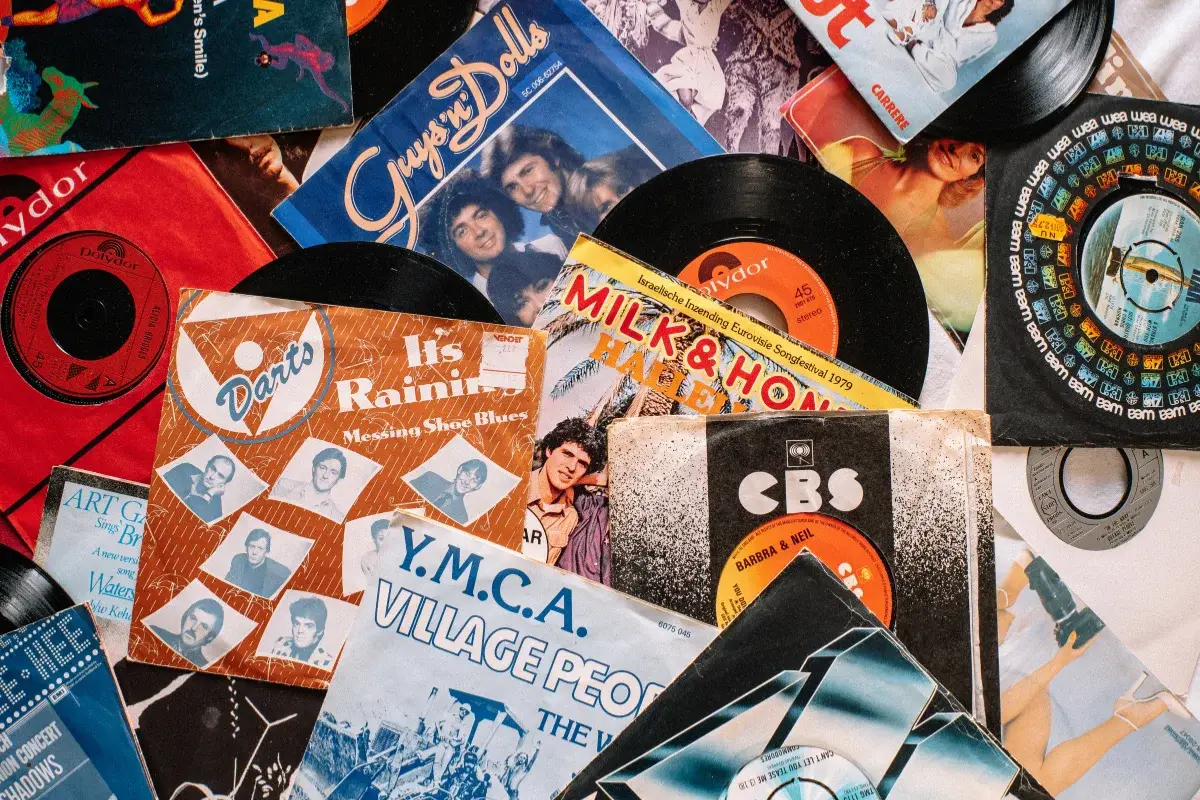

Archetype: B — DECISION. The reader is a vinyl buyer — collector, DJ, or curious traveller — who wants to know which specific shop fits their genre before making the trip. The intent is to choose, not to browse generic lists.
Barcelona’s vinyl market has grown by over 30% annually for several years running, driven almost entirely by physical record sales. The city has more than 50 active record stores. The problem with the usual listings is that they name them all without explaining what makes each one worth the detour. What follows organises Barcelona’s best record shops by genre specialisation — with the one concrete fact that makes each visit irreplaceable.
Quick Decision
- Electronic, techno, house → Discos Paradiso (Raval) — listening decks available, underground international labels
- Jazz → Jazz Messengers (Eixample) — 8,300 artists, 1,805 labels, ships internationally
- 1960s Latin rarities, cumbia, Discos Fuentes → Barcelona City Records (Sant Antoni) — FT-recognised, impossible to find elsewhere
- Rock, indie, punk → Revólver Records (Carrer Tallers) — active since 1991, new and used
- Psychedelia and collector rarities → Wah Wah Records (Riera Baixa) — also a label, reeditions of 60s and 70s obscurities
- Oldest shop in Catalonia → Surco (Gràcia, open since 4 March 1974) — Beatles specialists, small concerts
- Punk and hardcore → BCore Disc (Gràcia) — HQ of Spain’s most important independent punk label
- Used records, social atmosphere → Galeries Olimpia (Sant Antoni) — multiple shops under one roof, bar from 5pm
What are the best vinyl record shops in Barcelona? Discos Paradiso (Raval, electronic, listening decks). Revólver Records (Tallers, rock/indie, est. 1991). Barcelona City Records (Sant Antoni, Latin rarities, FT-recognised). Jazz Messengers (Eixample, 8,300 artists, international shipping). Surco (Gràcia, oldest in Catalonia, since 1974). Record Store Day: mid-April. Most shops open Tuesday–Saturday from noon.
The Shop-by-Genre Breakdown
Electronic, Techno, House, Experimental — Discos Paradiso
Discos Paradiso at Carrer de Ferlandina 39 in El Raval is the reference point for Barcelona’s independent electronic music scene. Techno, house, jazz, ambient and experimental genres — the selection is updated with new releases from the most relevant underground international labels.
The detail that separates it from every other shop in the city: you can listen to records before buying. Turntables are available for in-store listening. This makes Paradiso the first stop for DJs who need to verify a record’s condition and sound before committing. It’s not a courtesy feature — it’s central to how the shop operates.
Hours: Monday–Thursday 11:00–20:00. Friday split hours. Saturday 12:00–19:00.
📍 Carrer de Ferlandina 39, El Raval. Combine with the El Raval neighbourhood guide for a full day in the area.
Jazz — Jazz Messengers (Visual Identity by Javier Mariscal)
Jazz Messengers at Carrer de Còrsega 202 in the Eixample is widely considered the European reference for jazz vinyl. The catalogue numbers: approximately 8,300 artists, 1,805 labels, thousands of LPs and CDs in stock at any given time.
The detail nobody connects to the shop: its visual identity was designed by Javier Mariscal — the Valencian illustrator known internationally for designing Cobi, the mascot of the 1992 Barcelona Olympic Games. The logo and aesthetic of Jazz Messengers carry that signature.
They ship internationally. If a jazz record exists, Jazz Messengers either has it or can source it.
Hours: Tuesday–Friday 11:00–20:30. Saturday 10:30–20:30.
📍 Carrer de Còrsega 202, Eixample.
1960s Latin Rarities — Barcelona City Records (Financial Times Pick)
Barcelona City Records, opened in November 2019, was named one of the best record stores in the world by the Financial Times. The FT’s specific reason: its collection of Latin music, including 1960s cumbia and vinyl from Discos Fuentes of Colombia — the label founded in Barranquilla in 1934 that documented the most important recordings of cumbia, porro and Colombian salsa before a modern Latin American music industry existed.
The shop also carries Black music, funk, soul and jazz from the 1960s and 1970s, well-catalogued and accessibly priced for collectors. Located at Carrer de Jerusalem 32, at the border between El Raval and Sant Antoni.
Hours: Tuesday–Saturday 12:30–20:30.
📍 Carrer de Jerusalem 32, Raval/Sant Antoni.
Rock, Indie, Punk — The Carrer Tallers Axis
Revólver Records (Carrer dels Tallers 11) has been active since 1991. Rock, indie, punk, soul, jazz, garage, country, progressive — with sections for new releases and used records. They buy collections. It’s the most recognisable shop on Carrer Tallers and the standard first stop on any crate-digging route through the Raval.
Discos Impacto (Carrer dels Tallers 61) — over three decades specialised in the 1960s, 1970s and 1980s: Latin rhythms, Caribbean sounds, funk and soul. The natural complement to Revólver on the same street for anyone searching those specific decades.
Daily Records (Carrer de les Sitges 9) — punk, ska, reggae and Jamaican music since 1994. Also operates as a record label releasing national and international material.
Pentagram Music Store (Carrer de les Sitges 5) — heavy metal, gothic and industrial. Managed by Rubén, a recognised expert in Barcelona’s local metal scene. Two doors from Daily Records — two shops, two genres, one short street.
Psychedelia and Collector Rarities — Wah Wah Records
Wah Wah Records at Carrer de la Riera Baixa 14 is simultaneously a record shop and a internationally respected record label specialising in reissues of psychedelia, garage and obscure sounds from the 1960s and 1970s. The dual role as shop and label gives access to material other stores simply cannot stock.
Founded in 1992. Honest note from regular visitors: the customer experience can vary depending on the day and who’s working. Worth knowing before making a specific trip.
Hours: Monday–Saturday 11:00–14:00 and 17:00–20:30.
📍 Carrer de la Riera Baixa 14, El Raval.
Punk and Hardcore — BCore Disc in Gràcia
BCore Disc at Carrer de Montmany 25 in Gràcia is more than a record shop — it’s the headquarters of one of the most significant independent punk and hardcore labels in Spain since the 1990s. The catalogue includes their own releases alongside international reference labels like Dischord (Ian MacKaye’s label) and Touch & Go.
For anyone who knows the independent punk scene, BCore is the local equivalent of the labels that defined American hardcore in the 1980s and 90s.
Hours: Monday–Thursday 10:00–17:00. Friday 10:00–14:00.
📍 Carrer de Montmany 25, Gràcia.
Oldest in Catalonia — Surco, Open Since 4 March 1974
Surco at Travessera de Gràcia 144 opened on 4 March 1974 — the exact date is documented. It is the oldest continuously operating record shop in Catalonia. Founded by Carlos García, it has specialised in the Beatles and independent Catalan and national labels for over 50 years.
Surco organises small-format concerts and maintains a curation that prioritises quality over mass turnover. The Gràcia neighbourhood gives it the right context — a neighbourhood shop with its own identity that has been part of the local cultural fabric since before most of its current neighbours were born.
📍 Travessera de Gràcia 144, Gràcia.
Galeries Olimpia: An Ecosystem Under One Roof
At Ronda de Sant Pau 17–21 in Sant Antoni, the Galeries Olimpia occupy what was once the Teatro Circo Olympia. The space houses several record shops under a single roof:
Rhythm Control — run by DJ Tony Bruce Lee (also known as Tony Manejas). Techno, house, disco and electro. Technics turntables and Sennheiser headphones available for in-store listening. Afternoon-only hours: Monday–Friday 15:00–19:45, Saturday 12:00–19:45.
Vinilarium — meeting point for DJs and diggers, with high-turnover used stock at accessible prices. Explicit support for local labels including Melodram Recordings and Galleta Records.
The space includes a bar that opens from 17:00 — record buying becomes a social act, with knowledge exchange between collectors that you don’t get in a standalone shop. This is the most communal record-buying environment in Barcelona.
Vintage and Second-Hand — Discos Edison’s (Est. 1979)
Discos Edison’s at Carrer de la Riera Baixa 10 has operated since 1979 as an archive of the physical format: period vinyl, cassettes, music books and memorabilia. The owner is known in the sector for her knowledge and for the quality of customer interaction — a rarity in second-hand record retail.
Riera Baixa is the street with the highest concentration of second-hand shops in the Raval — Edison’s, Wah Wah and several vintage clothing shops in the same short block. The Riera Baixa street market on Saturdays turns the area into a buyer-seller meeting point for second-hand goods of all kinds.
Hours: Monday–Saturday 13:00–21:00.
📍 Carrer de la Riera Baixa 10, El Raval.
Shop Comparison at a Glance
| Shop | Neighbourhood | Specialisation | Listening decks | Ships internationally |
|---|---|---|---|---|
| Discos Paradiso | El Raval | Electronic, experimental | Yes | n/a |
| Jazz Messengers | Eixample | Jazz (8,300 artists) | On request | Yes |
| Barcelona City Records | Sant Antoni | Latin rarities, funk, soul | No | No |
| Revólver Records | Raval (Tallers) | Rock, indie, punk | No | No |
| Wah Wah Records | El Raval | Psychedelia, 60s–70s obscurities | No | No |
| BCore Disc | Gràcia | Punk, hardcore | No | Yes (label) |
| Surco | Gràcia | Beatles, Catalan indie | No | No |
| Rhythm Control | Sant Antoni | Techno, house, disco | Yes (Technics) | No |
| Discos Edison’s | El Raval | Vintage, second-hand | No | No |
Record Store Day Barcelona
Record Store Day — the Saturday of mid-April each year — is the most important annual event for the survival of independent shops. Labels release exclusive limited editions available only at participating physical stores: coloured vinyl, boxsets, unreleased live recordings and luxury reissues.
The most active Barcelona shops during RSD are Revólver, BCore Disc, Daily Records, Jazz Messengers and Discos Paradiso. Demand for limited copies generates queues from early morning — the most sought-after pieces sell out within hours. For anyone visiting Barcelona specifically around mid-April, checking the Barcelona festivals calendar confirms the exact date each year.
Discos Castelló closed in 2016 after 87 years
Discos Castelló closed in 2016 after 87 years, and it still turns up in circulation as if it were still operating. Castelló’s closure wasn’t the end of the scene; it was the event that forced specialisation. The shops that survived and grew after 2016 are better precisely because they know exactly what they are.
The second thing worth planning around: Galeries Olimpia is the most social record-buying environment in the city. Multiple shops, in-store listening on Technics decks, a bar open from 5pm, and a community of collectors who treat record buying as a collective activity rather than a solitary transaction. If you want to understand Barcelona’s current vinyl culture rather than its history, start here.
The One-Day Crate Digging Route
Morning (10:00–13:00): Carrer Tallers — Revólver Records + Discos Impacto. Then Carrer de les Sitges — Daily Records + Pentagram Music Store. Two short streets, four shops, four distinct genres.
Afternoon (15:00–20:00): Carrer de Ferlandina — Discos Paradiso (electronic, listening decks). Carrer de la Riera Baixa — Wah Wah Records + Discos Edison’s. Finish at Barcelona City Records (Carrer de Jerusalem) or Galeries Olimpia (Ronda de Sant Pau).
The walking distance from Carrer Tallers to Galeries Olimpia is 15–20 minutes — the entire route is on foot, no metro needed. The best walking streets in Barcelona covers the surrounding area for building a full day around the route.
Is It Worth It?
Yes — Barcelona’s vinyl scene is one of the most genre-specific in Southern Europe.
The combination of a shop recognised by the Financial Times for Latin rarities, a jazz specialist with 8,300 artists, and a punk label headquarters that also functions as a retail shop is genuinely unusual in a single city. Most European cities this size have two or three serious record shops. Barcelona has over fifty, with real depth of specialisation.
When it’s less worth it: going without a genre in mind. The shops are excellent at what they do, but most are narrow by design. Walking into Discos Paradiso looking for Beatles vinyl, or into Surco looking for techno, wastes everyone’s time. Know your genre before you go.
Mistakes to Avoid
-
Going to Revólver Records on a Sunday morning. Most of these shops are closed Sundays, or open only limited hours. Tuesday–Saturday is the reliable window for every shop on this list. Check hours specifically before making a trip across town.
-
Assuming Wah Wah Records always has great customer service. Multiple long-term visitors have noted variable experiences depending on who’s working. The selection is excellent; the interaction is inconsistent. Go for the records, not the conversation.
-
Arriving at Rhythm Control before 15:00. It only opens in the afternoon. Morning visits to Galeries Olimpia will find the gate closed. Plan the afternoon portion of the route for Sant Antoni.
-
Missing the Riera Baixa Saturday market. Wah Wah, Edison’s and the surrounding street market are all active on Saturday mornings. The combination of permanent shops plus market stalls on the same street on the same morning is the most concentrated second-hand vinyl opportunity in Barcelona.
-
Buying a Record Store Day limited edition from a reseller at full premium. RSD releases in Barcelona sell out within hours at the participating shops. If you miss them, secondary market prices can be 3–5x the original. If RSD is the reason for your visit, arrive at Revólver or Jazz Messengers before opening time.
-
Not asking about international shipping at Jazz Messengers. They ship worldwide, and the catalogue is deep enough to justify ordering specific titles remotely. This is not obvious from the shop’s physical presence.
Who Is This For?
- DJs visiting Barcelona → Discos Paradiso first (listening decks, underground labels), then Rhythm Control at Galeries Olimpia (Technics in-store, house and techno focus). Both allow proper pre-purchase listening — the functional requirement for professional record buying.
- Jazz collectors → Jazz Messengers, no alternative in the city. 8,300 artists, international shipping, Mariscal-designed space. Budget a full hour minimum.
- Travellers interested in Latin music history → Barcelona City Records specifically for the Discos Fuentes material and 1960s cumbia. The collection is not reproducible in any other shop in Spain.
- First-time vinyl buyers exploring the format → Revólver Records on Carrer Tallers. Wide genre coverage, used and new sections, accessible entry point without specialist knowledge required.
- Collectors building a serious punk or hardcore archive → BCore Disc in Gràcia. The label catalogue alone justifies the visit; the retail stock extends it. Pair with the best live music bars in Barcelona for a music-focused evening.
Discos Castelló ran for 87 years on the same street, survived two world wars and the Franco dictatorship, and closed because of streaming. The shops that opened in its wake are more specific, more knowledgeable, and more interesting than anything Castelló ever was. That’s what happens when a scene is forced to justify its existence.