
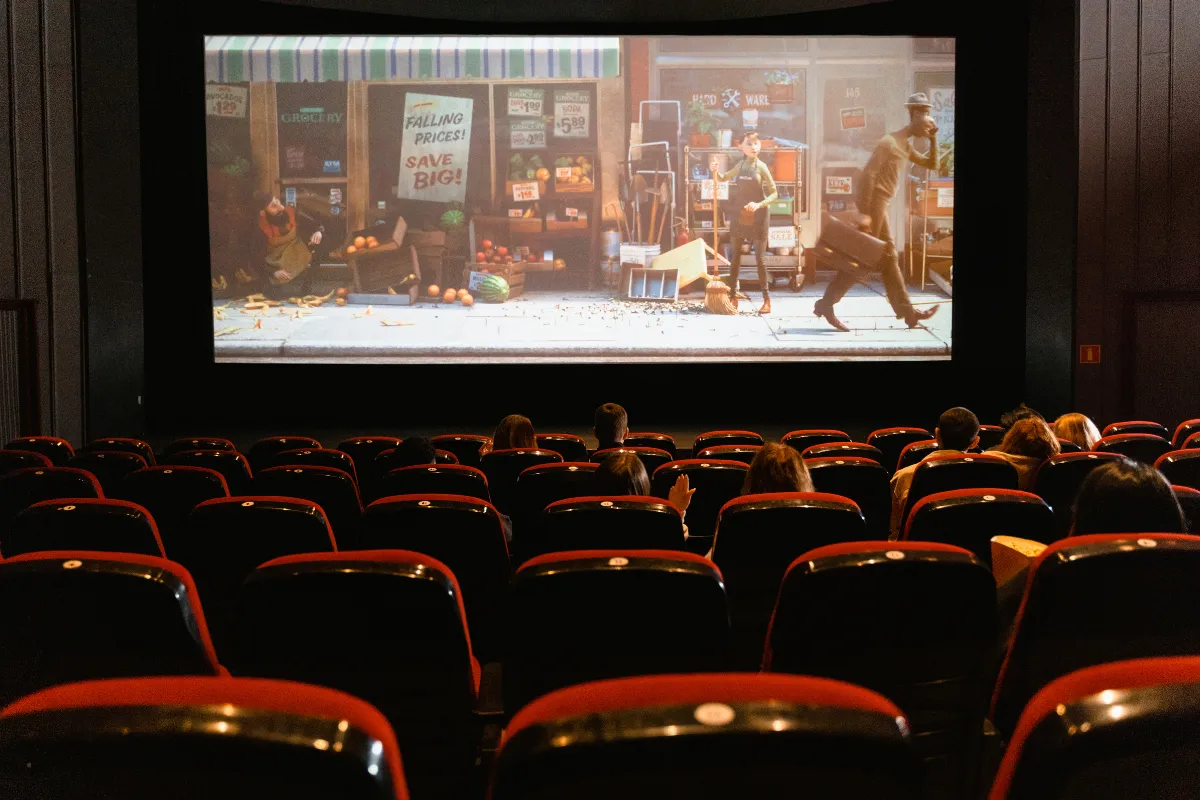

Most travel guides to Barcelona skip the cinemas entirely. That’s a mistake — not because Barcelona’s film scene is famous, but because a handful of these places are genuinely unlike anything you’ll find in most cities. A cooperative that debates every screening. A 400-seat theater designed to feel like 1978. A screen inside a commercial passage that opened in 1849. A film archive that still projects in 35mm.
Quick Answer: What are the best independent cinemas in Barcelona? Phenomena Experience is a 400+ seat retro cinema in the Sagrada Família neighborhood built to recreate the 1970s moviegoing experience with current projection tech. Cinemes Maldà sit inside Barcelona’s oldest commercial arcade (1849) in the Gothic Quarter. Verdi has been the city’s original-version arthouse hub since 1983. Zumzeig is a nonprofit cooperative in Hostafrancs with post-screening debates. La Filmoteca screens in 35mm for around €4. Cine Aribau holds 1,100 people in a single-screen format.
Why Barcelona’s cinema scene is smaller than it should be
Barcelona had over 50 cinemas in the 1980s. Today, fewer than 15 operate with any real identity. The ones that disappeared didn’t just close — they took something specific with them. The Cine Comèdia on Passeig de Gràcia (opened 1941, one of the most beautiful auditoriums in the city) became a museum. Cines Boliche, Cine Urgell, Cine Alexandra, Cine Capsa in the Eixample — all gone.
The ones that survived did so by committing to something streaming can’t replicate: the room, the crowd, the choice of being there on purpose.
Quick Decision: Which Cinema Fits What You’re Looking For?
| You want… | Go to |
|---|---|
| The most spectacular experience | Phenomena Experience |
| Arthouse + original language | Verdi or Méliès |
| Something experimental / rare | Zumzeig |
| Film history + 35mm | Filmoteca de Catalunya |
| Big single screen, classic feel | Cine Aribau |
| Central location + indie programming | Cinemes Maldà |
| Best value (under €5) | Filmoteca |
Phenomena Experience: The Cinema That Rebuilt the Past
This is the most deliberately designed cinema experience in Barcelona. Roger Vilà built Phenomena from scratch to recreate the atmosphere of 1970s neighborhood picture houses — red velvet, theatrical lighting, framed vintage posters, a lobby that looks like it hasn’t changed since 1977. The effect when you walk in is immediate and disorienting in the best way.
What makes it more than nostalgia décor: the projection and sound systems are completely current. You’re watching Indiana Jones or 2001 in a room that feels like the past with technology that outperforms most modern multiplexes.
The programming is selective. Phenomena doesn’t screen everything Hollywood releases — it curates. Expect 80s and 90s classics, themed retrospectives, anniversary screenings, and occasional current releases that fit the aesthetic. The audience tends to be people who came specifically for that film, which changes the energy of the room entirely.
Location: Carrer de Fenals, 9 (Sagrada Família neighborhood). Capacity 400+.
Cinemes Maldà: Inside a Passage Built in 1849
The Galeries Maldà is the oldest commercial arcade in Barcelona — built in 1849, running between Carrer del Pi and Portaferrissa in the Gothic Quarter. The Cinemes Maldà are inside it. To reach the box office, you walk through a corridor of small shops that has been there since before most European countries had their current borders.
The screens are small and the programming leans hard into independent film, director retrospectives, and thematic marathons. Halloween horror marathons and full-weekend director cycles are among the most consistent draws. Ticket prices are among the lowest in the city.
For Barcelona residents who want to see something that won’t appear in any other local cinema that week, Maldà is usually the answer. Its combination of Gothic Quarter location and curated programming makes it one of the most culturally specific cinema experiences in the city.
Verdi: Barcelona’s Original-Language Institution Since 1983
Verdi opened in 1983 in Gràcia with a clear position: original-language films with subtitles, no dubbing. At the time that was a risk — dubbed Spanish was standard and the subtitled market was a small niche. Four decades later, Verdi is the definitive reference for independent European and North American cinema in Barcelona.
The complex runs five screens on Carrer Verdi and three more at Verdi Park a few minutes away. Programming covers international arthouse releases, independent debuts, and curated thematic series. It survived the DVD era, the streaming shift, and the pandemic.
The Gràcia neighborhood strengthens the whole experience: there are good bars, vermouth spots, and restaurant terraces within a short walk in every direction, which makes Verdi easy to work into a full evening rather than just a single outing. If you’re already exploring Barcelona’s best streets and walking routes, the Gràcia area around Verdi is worth building into your route.
Zumzeig Cinema: The Cooperative in Hostafrancs
Zumzeig opened in 2013 in Hostafrancs (Carrer de Béjar, 55) as a nonprofit cultural cooperative. The model is unique in the city: members get priority access and reduced pricing, and revenue goes back into programming.
The programming is the most adventurous in Barcelona. Experimental films, hard-to-find documentaries, short films, work by visual artists without commercial distribution — this is where you see things that have no other venue in the city. When a director is present, screenings routinely end with an open floor discussion that can run as long as the film itself.
The space is small, the atmosphere is close, and the audience self-selects. The same people don’t show up twice unless they’re choosing every screening deliberately. If you want to understand what Barcelona’s film culture looks like at its most engaged, this is the place.
Cine Aribau: 1,100 Seats, One Screen
The Cine Aribau (Carrer d’Aragó, 240 — Eixample) operates a main auditorium with over 1,100 seats — the largest single-screen cinema still functioning as such in Barcelona. It appears regularly in international rankings of remarkable cinemas.
What that scale does is change the experience of watching. A film seen with a thousand people in the same room lands differently than one watched in a 200-seat multiplex. The collective reaction — the silence, the laughter, the sustained tension — becomes its own layer on top of the film. Aribau programs a mix of current releases, classics, and special events. Its occasional late-night screenings and 35mm projection nights have waitlists.
Cine Méliès: The Sant Gervasi Option
Méliès (Carrer de Villana, 12 — Sant Gervasi) is off the tourist circuit entirely, in a residential neighborhood in the northern part of the city. Three small screens, steady programming of European arthouse and classic cinema, a regular local audience that knows exactly what it’s coming for.
This is the cinema where the film that isn’t playing anywhere else in the city that week is playing here. If you’re based in the upper neighborhoods or want to see something specific that hasn’t made it to the central venues, Méliès is where to look.
Filmoteca de Catalunya: The Living Archive
The Filmoteca (Plaça de Salvador Seguí, 1-9 — Raval) isn’t a cinema in the commercial sense — it’s Catalonia’s national film archive with public screening rooms. The current building, opened in 2012, was designed by architect Josep Lluís Mateo.
Programming draws from the archive: retrospectives of historical directors, silent films with live music, films restored from original prints, 35mm projections, and rare works unavailable on any streaming platform. A media library offers access to archival holdings. Tickets run around €4 — the lowest of any cinema on this list.
The audience is the most cinematically literate of any venue here. The 35mm regulars come specifically for the grain, the print artifacts, the mechanical click of the projector — the things that distinguish photochemical film from a digital master. If you want to see what serious cinephile culture in Barcelona looks like, a Filmoteca screening tells you more than any other venue.
After a Raval afternoon, the area has some of Barcelona’s best specialty coffee spots and independent cafés within easy walking distance — the neighborhood rewards staying out.
These cinemas reward choosing on purpose
One thing matters more than the list of addresses: these cinemas reward choosing on purpose.
Phenomena is not worth visiting for a random blockbuster you could see anywhere — it’s worth visiting when something in their program is a film you actually want to see in that specific room. Zumzeig is not a casual drop-in cinema; it’s a place for people who want to engage with what they just watched. Filmoteca is extraordinary for anyone who has never seen a 35mm projection and genuinely underwhelming if you don’t care about the format.
The common mistake: treating these places like interchangeable screening venues. They’re not. Each one has a specific thing it does better than anywhere else in the city. Match your choice to what you’re actually looking for.
Mistakes to Avoid
Showing up without checking the program. These cinemas don’t always screen daily. Zumzeig and Maldà in particular have limited weekly schedules. Check ahead.
Assuming original language. Phenomena and Aribau sometimes screen dubbed versions depending on the title. Verdi is the reliable original-language venue. Filmoteca is mostly silent or subtitled by nature.
Skipping the Filmoteca because it sounds institutional. The €4 tickets and archive programming make it the best value cultural experience in the city by a considerable margin. The location in the Raval is also well-placed if you’re combining it with other parts of the neighborhood.
Booking for Phenomena on a regular commercial release. The magic of the space works best with the programming that matches it — their curated classics and retrospective cycles, not a standard weekend release.
Best Time to Go
Phenomena’s classic film marathons (typically Saturday evenings) and themed retrospective cycles are when the space operates at its best. The audience that shows up for a 1982 Spielberg double bill is different from a standard Friday night crowd.
Filmoteca’s 35mm sessions and silent film programs with live accompaniment are scheduled events worth planning around specifically — they don’t happen every week.
Zumzeig’s post-screening debates are most lively on Friday and Saturday evenings when full audiences turn out and directors or guests are more likely to be present.
Verdi is consistent year-round, but its themed festival programming (around the San Sebastián Film Festival in autumn, or LGBTQ+ film weeks) is worth following if you’ll be in the city during those periods.
Making a Night of It
Barcelona’s independent cinemas are mostly embedded in neighborhoods worth spending time in before or after the screening.
Verdi sits in the heart of Gràcia — one of the best walking neighborhoods in the city — with vermouth bars and evening terraces throughout the surrounding streets. The Cinemes Maldà are three minutes from the Born and ten from the Ramblas, well-positioned for a Gothic Quarter evening.
For nights that go past the screening: Barcelona has a strong circuit of live music venues that pair well with a late film, and if you want somewhere to sit down with a laptop before an early evening session, the city’s best cafés for working cover most neighborhoods.
The complete Barcelona travel guide covers how to structure full days across neighborhoods — useful if you want to combine a cinema evening with other cultural stops during the same visit.
Is It Worth Going to an Independent Cinema in Barcelona?
For most visitors, the answer depends on a single question: are you here for the film, or for the experience of watching it somewhere specific?
If you just want to see a current release, a multiplex will do fine. But if you want an evening that’s specific to Barcelona — a screening in a 1849 arcade, a debate with the director in Hostafrancs, a 35mm projection in a national archive — these venues offer something that exists nowhere else. That’s the point.
FAQ
What is Phenomena Experience in Barcelona?
A purpose-built cinema in the Sagrada Família neighborhood designed to recreate the atmosphere of 1970s grand movie houses, with red velvet interiors and period decor paired with current projection and sound technology. Programming focuses on 80s-90s classics, director cycles, and selected current releases. Capacity over 400.
Is Phenomena Experience worth it?
Yes — but specifically when you attend a screening that fits the space. Their curated classic and retrospective programming is where the design concept pays off most completely. Attending a standard commercial release is less distinctive than attending a cycle screening or themed marathon.
Where are the Cinemes Maldà?
Inside the Galeries Maldà, Barcelona’s oldest commercial arcade (1849), in the Gothic Quarter between Carrer del Pi and Portaferrissa. Independent film and arthouse programming, thematic marathons, and low ticket prices.
What makes Zumzeig Cinema different?
It’s a nonprofit cultural cooperative (opened 2013) in the Hostafrancs neighborhood. Programming covers experimental cinema, hard-to-find documentaries, and works with no commercial distribution. Members get reduced pricing and priority access. Post-screening debates with directors are a regular part of the format.
How much do Filmoteca de Catalunya tickets cost?
Around €4 per session — the lowest of any cinema on this list. Programming includes director retrospectives, 35mm projections, silent films with live music, and archival rarities not available on streaming. Located in the Raval (Plaça de Salvador Seguí, 1-9).
Are Cines Verdi still open?
Yes. Open since 1983 and still specializing in original-language films with subtitles. Five screens on Carrer Verdi and three more at Verdi Park nearby. Programming covers independent European and North American releases and arthouse cinema.
Is Barcelona’s film scene good for tourists?
It depends what you’re looking for. Barcelona’s independent cinemas aren’t tourist attractions — they’re working cultural institutions with specific programming identities. Phenomena and Filmoteca are most accessible to international visitors. Zumzeig and Maldà require knowing what’s screening to get the most out of them.