
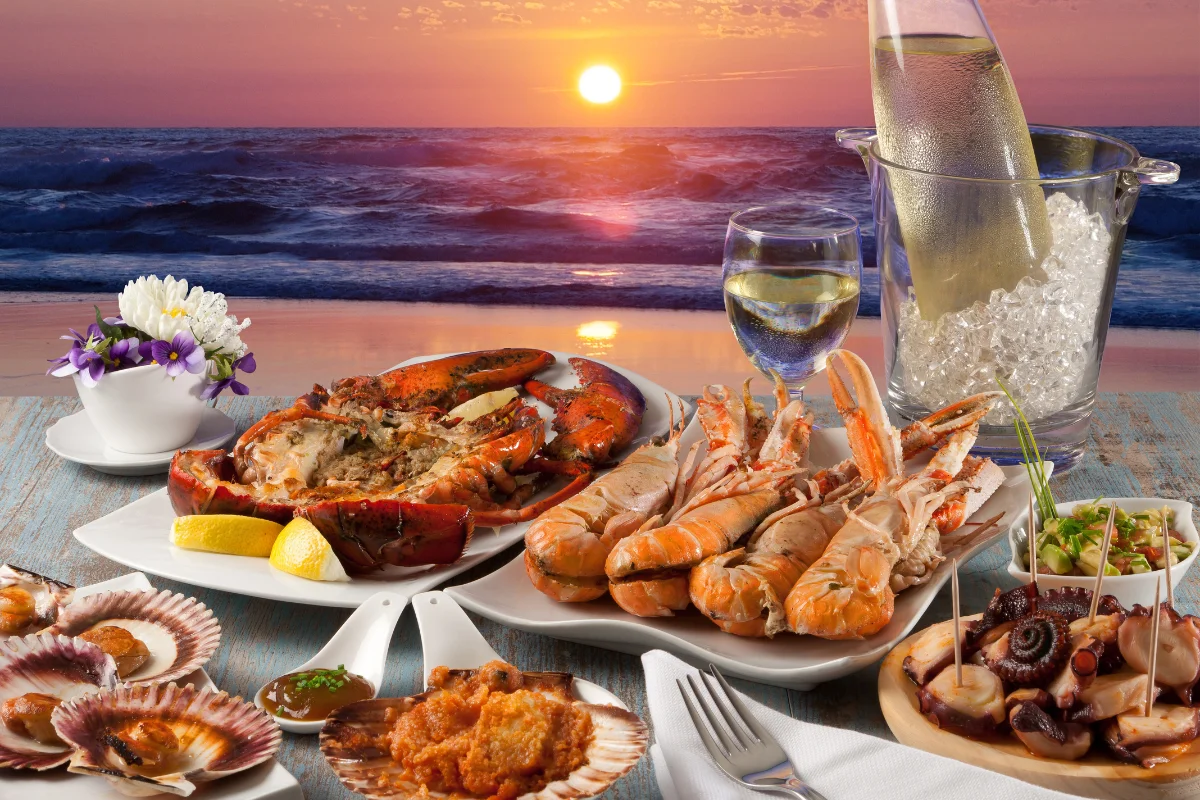

The quality of seafood in Barcelona is decided before a restaurant opens. The Port Vell fish auction runs two sessions daily — one before dawn, another at 16:45 for the trawler fleet. What gets sold there can be on a restaurant’s stove within four hours. The gap between restaurants that buy at that auction and restaurants that work with standard distribution is the most important distinction on any seafood list in this city.
Barcelona is also a city where Barceloneta beach sits 500 meters from tourist-trap paella and genuinely good fish cooked with local ingredients — sometimes in the same street. Knowing the difference requires a few specific signals.
How the Supply Chain Works
The new Barcelona Fish Auction building at Port Vell opened in 2024 in a 3,233 m² facility with a €9 million investment. A 140-meter exterior ramp now gives the public access to watch boats arrive and unload. The auction runs on a Dutch descending-price system — prices start high and drop until a buyer commits.
The afternoon session at 16:45 covers the trawler fleet’s haul: prawns, langoustines, hake, whiting, monkfish. The morning session handles the smaller-boat catch — sardines, anchovies, cephalopods.
La Platjeta is a Barceloneta-based project with two of its own fishing boats that sell the day’s catch directly at the auction or at the central market. It’s the only point in the city where you can buy seafood directly from the fisherman with no intermediaries. Not a restaurant — a direct purchase point.
The Fishermen’s Brotherhood (Confraria de Pescadors) runs guided visits that include watching the live auction, the trawl net yard, and the unloading docks. It’s the most direct way to understand the supply chain before eating it.
Where to eat the best seafood in Barcelona? Estimar (El Born, Gotanegra family, fifth generation, product from Roses, Michelin-recognized) for high-end minimal-intervention cooking at €80–120. Rías KRU (Eixample, 3,500-liter live tank, Galician XXL seafood) for premium Galician product at €60–90. For honest price and auction-fresh product: Can Ramonet or La Mar Salada in Barceloneta. For self-service fresh seafood by weight: La Paradeta (6 locations). El Botafumeiro in Gràcia for classic marisquería experience, 50+ years.
Quick Decision
- Best high-end seafood in the city → Estimar (Sant Antoni dels Sombrerers, 3, El Born) — Roses product, Michelin-recognized, OAD best casual restaurant in Europe, €80–120, book weeks ahead
- Best Galician live-tank seafood → Rías KRU (Eixample) — lobster, centollo and langoustine in a 3,500-liter tank, €60–90
- Best no-menu market-driven experience → Passadís del Pep (Pla de Palau, 2) — no written menu for 35+ years, depends entirely on the day’s catch
- Classic marisquería, 50+ years → El Botafumeiro (Gràcia) — Galician and Catalan seafood, formal traditional environment, €60–80
- Honest price, auction-fresh product → Can Ramonet (Barceloneta, 65-year-old 18th-century wine cellar) or La Mar Salada (Passeig de Joan de Borbó)
- Choose your seafood raw and watch it cooked → La Paradeta (6 locations: Barceloneta, Born, Sagrada Família, Sants, Gràcia) — fishmonger-counter self-service since 1994
- Market bar, serious cooking → Hermós bar de peix (Mercat de la Llibertat, Gràcia) — plancha, two burners, oven, product exclusively from the market that day, no fixed menu
Estimar and Rías KRU — The High-End Benchmarks
Estimar (Carrer de Sant Antoni dels Sombrerers, 3, El Born) is the most-cited seafood restaurant in Barcelona in recent years. The Gotanegra family has been buying fish in the port of Roses since 1895 — five generations. Chef Rafa Zafra, trained at elBulli, applies a minimum-intervention philosophy: grill, plancha, seaweed steam. The restaurant has Michelin recognition and was named best casual restaurant in Europe by the OAD list. The front counter displays the entire day’s fresh catch on ice. Average €80–120. Reserve weeks in advance.
Rías KRU (Eixample) has a 3,500-liter live tank at the entrance with lobster, centollo (spider crab), and langoustine swimming. Chef Rafa Erbs — trained at Dos Palillos, Enigma, and Pakta — works Galician XXL product across preparations from raw to cooked. Michelin highlights it as one of the city’s best fish and seafood establishments. Average €60–90.
Passadís del Pep (Pla de Palau, 2, Gothic Quarter) has operated without a written menu for over 35 years. It depends entirely on what arrived from Mediterranean and Galician fish markets that morning. They start each table with 6–7 shared plates that change daily. It’s the highest-uncertainty, highest-consistency seafood experience in Barcelona — and one of the few places where giving the kitchen total control produces better results than ordering from a menu.
Barceloneta — What’s Worth It and What Isn’t
Barceloneta has the densest concentration of seafood restaurants in Barcelona and also the densest concentration of establishments living off tourist proximity rather than product quality. The most reliable signal: restaurants with predominantly local clientele don’t have menus in eight languages with color-saturated paella photos on placards outside.
La Cova Fumada (founded 1944, Solé family) is where the Bomba — Barcelona’s signature deep-fried potato croquette — was invented. Sardines on the grill and fresh squid, cooked plainly. No visible terrace, no photos on the door, cash only. Closes early and some days doesn’t open if the product isn’t good enough. It’s the most local restaurant in Barceloneta and operates on its own logic.
Can Ramonet has been in an 18th-century wine cellar in the heart of the neighborhood for 65 years. Auction product, home-style cooking, consistent quality at a reasonable price for the area.
Restaurante Salamanca has been selecting its seafood and fish daily at Port de Barcelona since 1969. Beachfront setting, paellas, straightforward Mediterranean format. More formal than La Cova Fumada, more accessible than Estimar.
For the full neighborhood context beyond restaurants, the Barceloneta Barcelona guide covers the beach, the maritime history, and the surrounding waterfront area.
The species-on-the-menu test for auction-connected kitchens
Judging a seafood restaurant from its dining room tells you little. The species-on-the-menu test is what identifies the kitchens connected to the auction.
If a restaurant’s menu lists unusual species — brótola (forkbeard), jall (Atlantic horse mackerel), galera (mantis shrimp), escórpora (scorpionfish) — it’s buying directly at auction. Those species don’t appear in standard distribution because they have low commercial volume and short shelf life. They only appear on menus when a chef was at the auction that morning and bought whatever was available.
If a menu lists only salmon, tuna, large prawns, and sepia, the product almost certainly comes from standard distribution. Not necessarily bad — but not auction-connected.
The second signal is menu length. A restaurant working with daily auction product can’t maintain a menu of 30 fixed dishes — the product changes and the menu should reflect it. Long menus with photos = planned production with no room for daily variation.
La Paradeta, Hermós and Chao Pescao — The Direct Formats
La Paradeta has run the same format since 1994: queue at a fishmonger-style counter, choose your product by weight, specify your preferred cooking method (plancha, steam, fried), pay, wait, collect. Six locations across the city — Barceloneta, Born, Sagrada Família, Sants, and Gràcia. The competitive advantage is transparency: you see what you’re buying before you order it, the per-weight price is visible, and high turnover means the product is genuinely fresh.
Hermós bar de peix (Mercat de la Llibertat, Gràcia) is chef Alexis Peñalver’s market bar. Minimal equipment — plancha, two burners, oven — and product sourced exclusively from the market’s fish stalls that day. Scallops on the plancha with rockfish fumet, sardines stuffed with classic Catalan picada, cuttlefish stew. No reservations, no fixed menu. For more on the area, the Gràcia Barcelona guide covers the market and the surrounding neighborhood.
Chao Pescao (Eixample and Born) operates the same choose-and-cook principle as La Paradeta with a more considered aesthetic: lonja-style display case, choose your piece, specify the cooking method, eat in the dining room. Popular with Barcelona residents for the same reason La Paradeta is — it removes the menu as a buffer between the customer and the product.
| Restaurant | Neighborhood | Average price | Best for |
|---|---|---|---|
| Estimar | El Born | €80–120 | High-end, Roses product, Michelin |
| Rías KRU | Eixample | €60–90 | Galician live-tank XXL seafood |
| Passadís del Pep | Gothic Quarter | €60–80 | No menu, daily catch |
| El Botafumeiro | Gràcia | €60–80 | Classic marisquería, 50+ years |
| Can Ramonet | Barceloneta | €30–50 | 65-year classic, honest price |
| La Mar Salada | Barceloneta | €30–45 | Rice and auction product, less touristy |
| La Paradeta | 6 locations | €15–25 | Self-service fresh seafood by weight |
| Hermós bar de peix | Gràcia (Mercat Llibertat) | €15–30 | Market bar, no-menu daily product |
| Chao Pescao | Eixample / Born | €20–35 | Choose-and-cook, lonja-style counter |
An hour up the coast the same fish is sold at source: the auction at Arenys de Mar runs from 16:00 Monday to Friday, and the town devotes a thirty-year-old festival to hand-jigged squid, as the Arenys de Mar guide explains.
Mistakes to Avoid
- Judging a Barceloneta restaurant by its terrace view: proximity to the beach has no correlation with product quality. Some of the best seafood in the neighborhood is served inside, facing a wall.
- Ordering percebes (barnacles) in August and accepting “fresh today”: Percebes are an Atlantic species. Their season peaks in winter when cold water concentrates the flavor. Summer percebes in Barcelona almost certainly came frozen or traveled a long way. Ask the origin.
- Not booking Estimar: it’s the most in-demand seafood restaurant in the city. Walk-ins are essentially impossible. Book several weeks in advance.
- Confusing La Paradeta locations: the quality is consistent across all six, but some are in more convenient locations depending on your base. The Born location has the smallest space.
- Expecting La Cova Fumada to always be open: it closes when there’s no product worth serving. No advance notice, no website, no social media. Show up and check.
How do I know if a restaurant buys at the Barcelona fish auction?
Ask directly — most restaurants that do will tell you, and it’s a point of pride. Otherwise, check for unusual species on the menu (brótola, galera, escórpora), look for a short menu that changes daily, and note whether the staff can tell you where specific fish came from. Menus in multiple languages with stock photos are a reliable negative signal.
What’s the best seafood season in Barcelona?
Mediterranean seafood follows defined cycles. Red prawns from Palamós and langoustines are at their best May–October. Bivalves — oysters, clams, cockles — peak January–April when cold water firms the flesh. Lobster and spiny lobster are in season May–August. Barnacles (percebes) are best in winter. Asking what’s in season before ordering is standard practice in any serious seafood restaurant here and will always get a straight answer.
Good seafood in Barcelona doesn’t start at the restaurant — it starts at 16:45 when the trawler fleet comes in and the auction opens. A restaurant that sends someone to that auction every afternoon is working with a different product than one that calls a distributor. The four-hour difference between auction and plate is the whole argument.
For the broader waterfront area: the Barceloneta Barcelona guide covers the beach neighborhood beyond restaurants. For seafront dining with views, seafront restaurants Barcelona maps the best terrace options along the maritime front. And for planning a full food-focused day, the best restaurants Barcelona guide covers the city’s dining scene across all categories.