
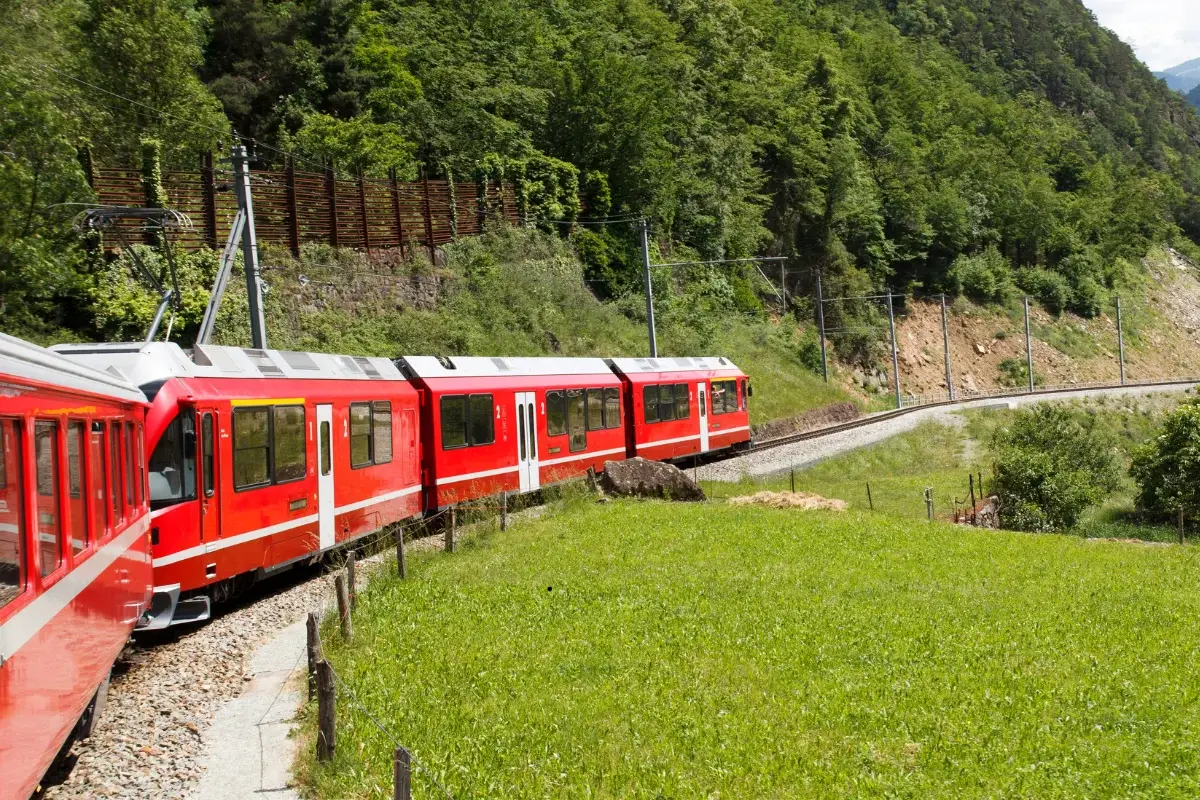

From Barcelona you can reach a beach, a medieval city, Roman ruins, a sacred mountain and the capital of Catalan sparkling wine — all by train, without a car, in under 90 minutes. The challenge isn’t the range of options. It’s knowing that the difference between taking the high-speed train or the regional service to the same destination can mean arriving in the city centre or being stranded 12 kilometres out with a bus journey still ahead.
From Sants, Passeig de Gràcia or Plaça Catalunya, the same T-Casual transport card that works for the metro covers Sitges, Sant Sadurní d’Anoia, Vic and Colònia Güell. For Girona and Tarragona by high-speed rail, you need a separate ticket. This guide separates what matters before you choose.
What are the best day trips from Barcelona by train? Sitges (40 min, R2 Sud from Passeig de Gràcia), Girona (38 min high-speed from Sants or 80 min regional), Tarragona (60 min regional from Sants), Montserrat (75 min, R5 FGC + rack railway, €50 all-inclusive), Sant Sadurní d’Anoia (45 min, R4). The T-Casual travel card covers Sitges and Sant Sadurní. Girona and Tarragona by high-speed require separate tickets.
Quick decision: which destination for which kind of day?
- Beach without planning → Sitges (R2 Sud, 40 min) — included in T-Casual, every 15–20 min, 500m from the station to the beach
- Dense medieval city in one day → Girona (high-speed from Sants, 38 min) — old town, cathedral, Jewish quarter, coloured houses on the Onyar, all walkable from the station
- Mountain panorama and monastery → Montserrat (R5 FGC + rack railway, ~75 min) — €50 all-inclusive ticket covers rack railway, funiculars, return
- Roman history by the sea → Tarragona regional train (60 min from Sants) — the amphitheatre faces the Mediterranean, station 20 min on foot from the monument
- Something different: cava tasting → Sant Sadurní d’Anoia (R4, 45 min) — Freixenet, Codorníu and smaller cellars minutes from the station, guided visits at weekends
- Market town with food credentials → Vic (R3 from Plaça Catalunya, 80 min) — arcaded main square, Tuesday and Saturday market, DO-certified charcuterie
- Architecture without crowds → Colònia Güell in Santa Coloma (FGC lines S3/S4/S8/S9, 25 min) — Gaudí’s Crypt meters from the station, 100–200 daily visitors vs thousands at the Sagrada Família
Sitges: the easiest beach from Barcelona
Train: R2 Sud from Passeig de Gràcia or Sants. Frequency: every 15–20 minutes. Journey: 35–45 minutes. Price: included in T-Casual (€13 for 10 journeys) — the cheapest day trip on this list.
Sitges has beach, a hillside old town with a church above the cliff, and a scale compact enough to cover on foot in 2–3 hours. The station drops you less than 500 metres from Platja de la Fragata and 10 minutes’ walk from the historic centre.
What tends to get understated: the Cau Ferrat and Maricel Museums — former home and studios of painter Santiago Rusiñol — hold one of the most significant Catalan Modernisme collections outside Barcelona. The Cau Ferrat building is constructed directly on the cliff edge. For the full Sitges context, the guide covers the fishermen’s quarter, the marine cemetery and the LGBTQ+ scene that makes the town distinct from any other beach town on the coast.
The honest limitation: Sitges in August is genuinely overcrowded. The beaches north of the centre are noticeably quieter. If the beach is the priority and it’s peak summer, going midweek changes the experience considerably.
Girona: 38 minutes or 80 minutes — which train to take
Train: High-speed AVE or Avant from Sants (38 min, separate ticket required, price varies €15–30) or regional from Sants (80 min, significantly cheaper, includable in integrated zone tickets at €8–10). The key logistical fact: Girona station is a 10–12 minute walk from the Barri Vell. No additional transport needed once you arrive.
Girona is compact. The Carolingian walls, the Cathedral of Santa Maria — the widest Gothic nave in the world — the Call (one of the best-preserved medieval Jewish quarters in Europe), and the coloured houses hanging over the Onyar river all fit in a 3–4 hour walking circuit. The density of monuments per square metre is exceptional for a city this size.
High-speed vs regional: the AVE cuts the journey to 38 minutes but costs €15–30 per ticket. The regional takes 80 minutes but can be covered for €8–10 with integrated passes. Unless time is genuinely critical, the regional is the economically rational choice. The experience of arriving in the same city is identical.
For the complete Girona itinerary — which specific section of the walls has the best view, what the Call opens and closes — the Girona day trip guide covers all of it.
Montserrat: the most complete day trip on the FGC network
Train: R5 (FGC) from Plaça Espanya to Monistrol, then the rack railway or the Aeri cable car. Total: approximately 75 minutes. All-inclusive ticket price: €50 (covers R5 return, rack railway or Aeri, Sant Joan and Santa Cova funiculars).
Montserrat is the only destination on this list with no practical driving alternative — there’s no road that brings you close to the monastery. The rack railway leaves from the mountain base and climbs in 15–20 minutes on a gradient that standard rail can’t negotiate.
What the schedule determines: if you arrive on weekdays between approximately 1pm and 1:15pm, the Escolania — the monastery’s boys’ choir, one of the oldest in Europe, documented since 1307 — sings in the basilica. It’s not guaranteed every day; the sanctuary publishes the current calendar. Worth checking before planning your arrival time.
The all-inclusive ticket has a specific practical advantage: it removes the need to calculate each component separately. If you’re only visiting the monastery without hiking, the funiculars aren’t necessary and buying components separately is cheaper.
For the full mountain plan — which viewpoints, which hiking routes, funicular vs. path for the descent — the Montserrat guide maps the complete day.
Tarragona: the Roman amphitheatre facing the sea
Train: regional or Media Distancia from Sants (60–75 min, approximately €8–10 return). Critical note: the high-speed AVE arrives at Camp de Tarragona station, 12–15 km from the city centre — an additional 40 minutes by bus or taxi. For cultural day trips, the regional service to Tarragona central station is the correct choice. The central station is in the Serrallo neighbourhood, 1.6 km from the Roman amphitheatre — around 20 minutes’ walk along the seafront.
Tarragona’s amphitheatre has something no other preserved Roman amphitheatre in Spain has: it’s built directly above the Mediterranean. The seating faces the sea. Tarragona is UNESCO World Heritage for its archaeological ensemble — the amphitheatre, the Roman circus under the old city, the walls and the necropolis are all within walking distance of each other.
The complex closes on Mondays. Summer hours are longer than winter hours — worth verifying before going.
For combining Tarragona with a beach afternoon, Platja del Miracle and Platja de l’Arrabassada are less than 1 km from the amphitheatre. The Tarragona from Barcelona guide covers the full walking itinerary.
Sant Sadurní d’Anoia: cava at 45 minutes
Train: R4 (Rodalies) from Plaça Espanya. Journey: 45 minutes. Price: included in T-Casual. The most economical day trip on this list after Sitges.
Sant Sadurní is the capital of Catalan cava — Freixenet, Codorníu and dozens of smaller cellars are based here. Several offer guided visits and tastings that begin minutes’ walk from the station. Canals & Munné has consistently high reviews and accepts walk-in visits at weekends during peak season without advance booking.
For combining cava with the wider territory, the Penedès wine route guide maps other cellars in the region accessible by train and bus.
Vic and Colònia Güell: two less obvious options
Vic (R3 from Plaça Catalunya, 80 min) has the most photogenic arcaded main square of the Catalan interior. The Tuesday and Saturday market is Catalonia’s most traditional weekly food market in continuous operation. Vic charcuterie has Designation of Origin status — Casa Riera Ordeix has been producing fuet and llonganissa since 1852. The cathedral has mural paintings by Josep Maria Sert covering the entire interior, repainted after destruction in the Spanish Civil War.
Colònia Güell (FGC lines S3/S4/S8/S9 from Plaça Espanya, 25 minutes) is the least-known and most overlooked destination on the network. The Gaudí Crypt — the work the architect used as a laboratory for the structural forms he later applied in the Sagrada Família — is metres from the station and receives 100–200 visitors per day. Nothing like the queues at the major Gaudí monuments in the city centre. For the Barcelona Modernisme architectural context, Colònia Güell is the piece that completes the map of Gaudí’s output — and it’s accessible in 25 minutes.
Comparison table: all destinations at a glance
| Destination | Train | Journey | Ticket | Best for |
|---|---|---|---|---|
| Sitges | R2 Sud from Passeig de Gràcia | 40 min | T-Casual (€1.30/trip) | Beach, Modernisme museums |
| Girona | Regional from Sants | 80 min | ~€8–10 | Medieval city, Jewish quarter |
| Girona | AVE/Avant from Sants | 38 min | €15–30 | As above, if time-critical |
| Montserrat | R5 FGC + rack railway | ~75 min | €50 all-inclusive | Mountain, monastery, hiking |
| Tarragona | Regional from Sants | 60–75 min | ~€8–10 | Roman ruins, amphitheatre |
| Sant Sadurní d’Anoia | R4 from Plaça Espanya | 45 min | T-Casual | Cava tasting, wine tourism |
| Vic | R3 from Plaça Catalunya | 80 min | ~€8 | Market, charcuterie, cathedral |
| Colònia Güell | FGC S3/S4/S8/S9 | 25 min | T-Casual | Gaudí Crypt, no crowds |
The AVE trap, or why the fast train to Tarragona is slower
Every guide covering Tarragona from Barcelona includes the option of travelling by AVE. Almost none of them explain clearly that the AVE station is not in Tarragona — it’s in Camp de Tarragona, in the middle of an industrial-agricultural zone with no independent attraction, 12–15 km from the Roman amphitheatre, the cathedral and the old city walls that are the reason anyone visits.
Taking the AVE to Tarragona and then discovering you need a bus or taxi adds 40 minutes and €5–15 to a journey that the regional train covers direct to the central station for the same result. The regional is slower — 60 vs 30 minutes — but it arrives where you actually want to be.
This is the single most common logistics error on this day trip, and it’s easily avoided by taking the regional from Sants and ignoring the AVE option unless convenience at the station end is specifically what you’re optimising for.
Who is this for?
First-time visitors with a second day → Sitges by R2 Sud on T-Casual; the beach town is 40 minutes away and the round trip costs €2.60 total, which changes the economics of the entire day considerably
Architecture and culture focus → Girona by regional train; the medieval old town density is comparable to the best-preserved cities in Tuscany at a fraction of the visitor volume; Colònia Güell on FGC for the Gaudí context that no tourist brochure covers adequately
Families with children 6–12 → Montserrat all-inclusive ticket; the rack railway ride is the most memorable part for most children, the funicular to Sant Joan adds a hiking element, and the monastery is short enough to hold attention
Wine and food focus → Sant Sadurní d’Anoia for cava production at scale followed by the Penedès wine route for smaller artisan producers
Budget travellers → Sitges and Colònia Güell on T-Casual — both cost €1.30 per journey on the same card used for city transport; Tarragona by regional is €8–10 return
Mistakes to avoid
- Taking the AVE to Tarragona — arrives at Camp de Tarragona, 12 km from the city centre; the regional to Tarragona central is the correct choice
- Going to Sitges on an August weekend afternoon — the beach fills completely and the station sees return queues; midweek or early morning completely changes the experience
- Not checking the Montserrat Escolania choir schedule before going — the choir sings on specific days and at specific times; it’s not an automatic part of the monastery visit; the sanctuary publishes the calendar on their website
- Buying separate Montserrat tickets instead of the all-inclusive — the €50 all-inclusive covers rack railway + both funiculars + return; buying components individually at the equivalent fare levels is more expensive
- Planning Girona with the expectation of the high-speed price — tickets from €15 but regularly higher; the regional at €8–10 round trip gets you to the same station and the city is the same regardless of how fast you arrived
The Catalan rail network allows covering five completely different destination types — beach, mountain, medieval city, Roman heritage and wine tourism — without a car and within 90 minutes of the city centre. The most expensive ticket on the list is the Montserrat all-inclusive at €50. The cheapest is Sitges at €1.30 per journey on a T-Casual card. Between those two poles, the decision isn’t about the destination — it’s about what kind of day you’re building around it.
For planning the airport arrival before any of this applies, the Barcelona airport to city centre guide covers transport options and costs. And for the Barcelona travel budget overview that contextualises day trip costs within a full trip, the guide includes rail excursions in the daily spend breakdown.