
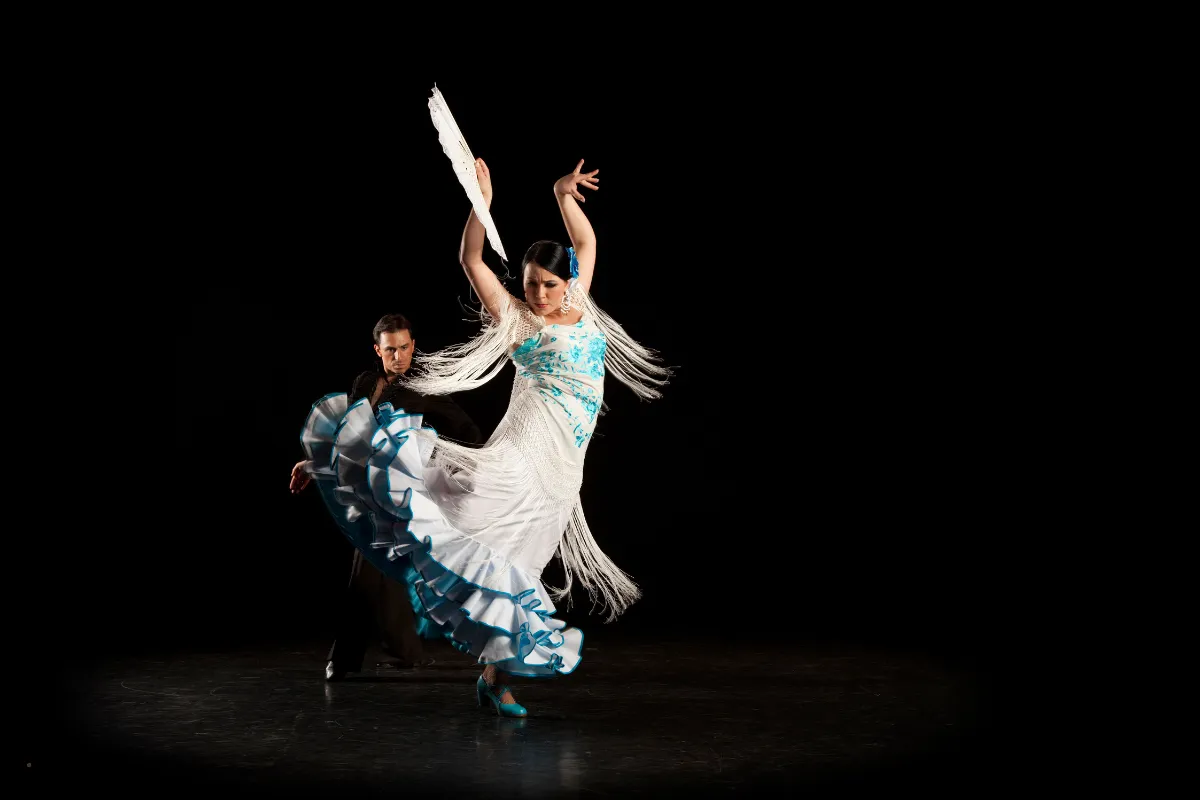

Most visitors assume Barcelona’s flamenco scene is a tourist add-on — Andalusian art transplanted north to fill an entertainment gap. That assumption is wrong in an interesting way.
Barcelona is Spain’s third flamenco capital. The genre arrived with 20th-century migration waves — Andalusian and Romani families who settled in El Raval, La Barceloneta, and Somorrostro. Carmen Amaya, one of the most influential flamenco dancers of the century, was born in the Somorrostro shantytown and performed before King Alfonso XIII at the Poble Espanyol in 1929. The city’s oldest tablao, Los Tarantos, opened in Plaça Reial in 1963. The Tablao Cordobés has been running on Las Ramblas since 1970.
The real question isn’t whether Barcelona has authentic flamenco. It’s which format matches what you’re looking for — and the range runs from €10 at a Raval bar to €154 for a VIP dinner show at Montjuïc.
Quick Answer: Best Flamenco in Barcelona Best overall reputation: Tablao Cordobés (from €48, no microphones, international award winner). Most intimate: Casa Sors (20 seats, perfect Google rating, recording studio acoustics). Best value: Los Tarantos (from €17, 40-minute show, oldest tablao in the city). Full evening with dinner: Tablao de Carmen (from €68, Poble Espanyol, Carmen Amaya tribute). Budget option with real flamenco: 23 Robadors in El Raval (€10).
Quick Decision: Which Barcelona Flamenco Venue Is Right for You?
| You want… | Go to | Budget |
|---|---|---|
| Award-winning, no amplification, serious flamenco | Tablao Cordobés | €48–97 |
| Maximum intimacy, 20 seats, perfect acoustics | Casa Sors | €45–65 |
| Oldest tablao, high intensity, best price | Los Tarantos | €17–37 |
| Full dinner + show + architectural heritage | Tablao de Carmen | €68–154 |
| Baroque palace, stone vault acoustics | Palau Dalmases | €30–38 |
| Grand concert hall, Modernista setting | Palau de la Música | €55–65 |
| Real flamenco, bar atmosphere, €10 | 23 Robadors | €10 |
| Flamenco as locals see it, no tourist format | El Dorado (Sociedad Flamenca) | €15 |
Why Barcelona Has Real Flamenco (Not Just Tourism Flamenco)
The connection between Barcelona and flamenco is structural, not cosmetic. The city absorbed hundreds of thousands of Andalusian migrants during the 20th century — people who brought the music, the technique, and the tradition with them. Neighbourhoods like El Raval and Sants developed a genuine flamenco culture from within, not imported for visitors.
Carmen Amaya is the anchor of that history. Born in Somorrostro, she performed before the king at the 1929 International Exposition in the Poble Espanyol — the exact moment that inspired the Tablao de Carmen when it opened in 1988 in the same venue. Artists from Seville and Jerez still come to Barcelona for extended seasons because the city has an economically viable market and a demanding audience.
The tablaos that have been running since the 1960s and 70s are not novelties. They are institutions.
The Historic Tablaos: What Each One Actually Offers
Tablao Flamenco Cordobés — The International Reference
The Tablao Cordobés on La Rambla has been running since 1970 and holds the distinction of winning the Silverio Franconetti Award for best tablao in the world — the international flamenco equivalent of a Michelin star. Camarón de la Isla, Farruco, Manuela Carrasco, and Farruquito have all performed here.
The technical detail that sets it apart from most venues: no microphones, no electronic amplification. The artists perform in natural acoustics, which requires greater physical and vocal commitment and lets you hear flamenco the way it was designed to be heard — including the full resonance of the zapateado on wood, the guitar’s unprojected tone, and the singer’s raw voice.
The interior décor was executed by restorers from the Patronato de La Alhambra in Granada — Nasrid-style tilework and arches that aren’t decorative approximations but the work of specialists.
Pricing: Show + drink from €48. Show + tapas from €69. Show + buffet dinner (40 dishes) from €84. Open daily.
Los Tarantos — The Oldest Tablao, Best Entry Price
Founded in 1963 in Plaça Reial, Los Tarantos is the oldest tablao in Barcelona. Antonio Gades, Eva la Yerbabuena, Miguel Poveda, and Niña Pastori have all performed on this stage.
The format is the most concentrated of any tablao in the city: 40-minute shows at high intensity, no padding, no extended dinner format. Seats are unassigned and allocated on arrival, so come 20–30 minutes early to secure a position with clear sightlines to the dancers’ feet — the full technique of the zapateado is only visible from floor level.
Pricing: Show only from €17. With drink: €20. With tapas menu: €37. The most accessible serious tablao in the city.
Los Tarantos is two minutes from the best live music bars in Barcelona — the Jamboree jazz club is directly in Plaça Reial, making this the most logical pairing for a full evening of live music.
Tablao de Carmen — The Most Complete Evening
Opened in 1988 as a tribute to Carmen Amaya, in the exact Poble Espanyol venue where she performed in 1929. The space is designed as a traditional Andalusian corrala courtyard inside the architectural recreation of Spanish villages and townscapes on Montjuïc.
Entry includes free access to the Poble Espanyol from 16:00 — you can explore the architectural complex and craft workshops before the show. Two performances daily (18:45 and 21:15), five or six days per week. Closed Tuesdays.
It is the only Barcelona tablao where dinner is served during the performance rather than before it, which changes the pacing of the experience entirely.
Pricing: Show + tapas from €68. Carmen dinner menu: €85–88. VIP pairing menu: €154. The highest total investment in this guide — and the format that packages the most elements into a single evening.
See the Montjuïc Castle guide for the full Montjuïc context — the Poble Espanyol and the castle are on the same hill and can be combined in a single afternoon before the evening show.
Palau Dalmases — A 17th-Century Baroque Palace in El Born
Carrer de Montcada 20 is one of the best-preserved medieval streets in Barcelona, and the Palau Dalmases is a 17th-century baroque palace on that street. The basement performance space has stone vaults that create a natural reverb — the zapateado and guitar sound arrives wrapped by centuries-old walls.
The very limited capacity makes every performance feel close to a private event. Pricing: €30–38, drink included in some options. Open daily.
Casa Sors — The Most Intimate Venue in the City
Founded in 1972 as a family house, Casa Sors at Carrer del Consell de Cent 215 has 20 seats and a perfect Google rating sustained across more than 1,400 reviews. Camarón de la Isla, Paco de Lucía, and Tomatito have all performed here.
What makes Casa Sors genuinely different from every other venue in this guide: the performance space functions simultaneously as a professional recording studio. That means reference-level acoustics without amplification, engineered for precision rather than volume. At 20 seats, the proximity to the artists allows you to observe technical details — hand positions, breath timing, interaction between guitarist and dancer — that are invisible from a larger venue.
The ticket price includes a guided visit to their guitar museum, with instruments that belonged to historical figures of the genre. It has been recommended by Forbes, Vogue, and La Vanguardia.
Pricing: €45–65, museum visit included.
Palau de la Música — Flamenco in a UNESCO World Heritage Building
The Palau de la Música Catalana (UNESCO World Heritage since 1997) programmes flamenco cycles in its main concert hall — including a Paco de Lucía tribute and the “Arte Flamenco” production with 12 artists on stage. Lluís Domènech i Montaner’s stained-glass ceiling and floral mosaics create a visual dimension that no tablao can replicate.
The trade-off is real: what you gain in architectural grandeur and perfect sightlines from every seat, you lose in proximity to the artists and the possibility of improvisation. This is the format for people who want the spectacle as much as the music.
Pricing: €55–65 for accessible seating categories.
Budget Flamenco That Doesn’t Compromise the Art
23 Robadors — €10, El Raval
Carrer d’En Robadors was historically one of the most troubled streets in El Raval — now it’s a cultural corridor. This bar programmes flamenco almost daily for €10. The lineup includes young Barcelona-based artists like Lidia Mora, David Sánchez, and Pere Martínez — urban flamenco with a contemporary perspective.
No themed décor. No dinner service. A bar where real flamenco happens at bar prices.
23 Robadors is two minutes from the cultural institutions covered in the El Raval neighbourhood guide — the MACBA, CCCB, and Filmoteca are all within walking distance, making this the most natural end to a day spent in the neighbourhood.
El Dorado — Sociedad Flamenca Barcelonesa (Poblenou)
The most academically serious and least commercially packaged option in the city. Programmed by the Barcelona Flamenco Society at Sala Sandaru in Poblenou. Tickets from €15 for general public, free for members. Tickets sold at the door 45 minutes before the show. This is how local aficionados watch flamenco — no tourist format, no themed interior, just the music.
What Most Flamenco Guides in Barcelona Get Wrong
They rank by price as a proxy for quality. A €10 session at 23 Robadors with a talented young artist is not inferior to a €48 tablao show — it’s a different format entirely. Treating price as the quality indicator means missing the most interesting part of Barcelona’s flamenco scene.
The no-microphone difference goes unexplained. The Tablao Cordobés is the only tablao in Barcelona that performs without electronic amplification. That changes the experience fundamentally — the audience is closer to the physical reality of the art. It usually reads as a footnote. It is the central technical argument for choosing that venue over others.
They ignore the booking reality. Casa Sors has 20 seats and a perfect rating. It books up. The same applies to Los Tarantos on weekend nights — unassigned seating means arriving late means a bad view of the feet, which means missing half the technical content of the show.
Flamenco Price Comparison
| Venue | Format | Base price | Key differentiator |
|---|---|---|---|
| 23 Robadors | Bar | €10 | Local scene, contemporary |
| Los Tarantos | Historic tablao | €17–37 | Oldest tablao, high intensity |
| El Dorado | Society / club | €15 | Local audience, no tourist format |
| Palau Dalmases | Baroque palace | €30–38 | Stone vault acoustics, El Born |
| Casa Sors | Studio / museum | €45–65 | 20 seats, perfect rating, Paco de Lucía heritage |
| Tablao Cordobés | Historic tablao | €48–97 | No microphones, award winner |
| Palau de la Música | Concert hall | €55–65 | UNESCO building, grand format |
| Tablao de Carmen | Dinner show | €68–154 | Poble Espanyol, Carmen Amaya tribute |
Practical Tips
Arrive early at Los Tarantos. Unassigned seating means floor-level views of the zapateado — the most technically revealing position — go to whoever arrives first. 20–30 minutes ahead is the margin.
Book Casa Sors well in advance. 20 seats, perfect rating, mentioned in Forbes and Vogue. It fills up.
Tablao de Carmen is closed Tuesdays. Worth confirming the day before if you’re planning around it.
Combine 23 Robadors with El Raval. The bar sits inside one of Barcelona’s most culturally dense neighbourhoods — build a full afternoon around the MACBA and CCCB and end the evening with €10 flamenco.
For the Palau de la Música, check the festival programme rather than one-off concerts — the curated cycles have better lineups and the same entry prices.
For a broader picture of Barcelona evenings, the Barcelona complete travel guide covers how to structure nights by neighbourhood — flamenco integrates naturally with El Born, the Gothic Quarter, and El Raval routes.
Frequently Asked Questions
Which is the best flamenco tablao in Barcelona?
Depends on what you’re after. Tablao Cordobés (from €48) won the international award for best tablao in the world and performs without amplification. Casa Sors (€45–65) has 20 seats, a perfect rating, and recording-studio acoustics. Los Tarantos (€17) is the oldest and most accessible. Each is the best for different reasons.
How much does flamenco cost in Barcelona?
From €10 at 23 Robadors in El Raval to €154 for the VIP dinner pairing at Tablao de Carmen. Historic tablaos without dinner: €17–50. With full dinner: €70–97.
Is flamenco in Barcelona authentic?
The historic tablaos — Cordobés (since 1970), Los Tarantos (since 1963), Casa Sors (since 1972) — programme first-tier artists from Andalusia. The Cordobés performs without microphones. The alternative scene at 23 Robadors and El Dorado features serious young local artists from €10–15. Flamenco has real roots in Barcelona through 20th-century migration — it is not an imported attraction.
What is the cheapest flamenco in Barcelona worth seeing?
23 Robadors in El Raval (€10, almost daily). El Dorado / Sociedad Flamenca Barcelonesa (€15, door tickets, Poblenou). Los Tarantos (€17, oldest tablao in the city).
What’s the difference between Los Tarantos and Tablao Cordobés?
Los Tarantos (€17–25) is 40 minutes, high intensity, oldest tablao (1963), unassigned seating. The Cordobés (€48+) is 70 minutes, no electronic amplification, internationally award-winning, higher gastronomy level. For a first experience on a budget: Los Tarantos. For the most serious flamenco in the city: Cordobés.
Does the Tablao de Carmen require booking in advance?
Yes — and note it’s closed Tuesdays. Two shows daily (18:45 and 21:15). Book online to guarantee your format (show only, tapas, or dinner) since availability by show type varies.
Plan the Rest of the Evening
Los Tarantos and the Tablao Cordobés are both within five minutes of the Gothic Quarter and El Born — the most natural areas for a full evening that doesn’t require transport between venues. The best Barcelona walking streets guide covers both neighbourhoods in detail for building a route from afternoon to late night.
For the Tablao de Carmen, the Poble Espanyol entry from 16:00 makes it a natural continuation of a Montjuïc afternoon. Pair it with the Montjuïc Castle guide for a full day on the hill that ends with dinner and flamenco.
In Barcelona, the best flamenco can be found in a 17th-century palace or behind a bar door with a hand-written sign. Knowing which one suits you is the only decision that matters.