
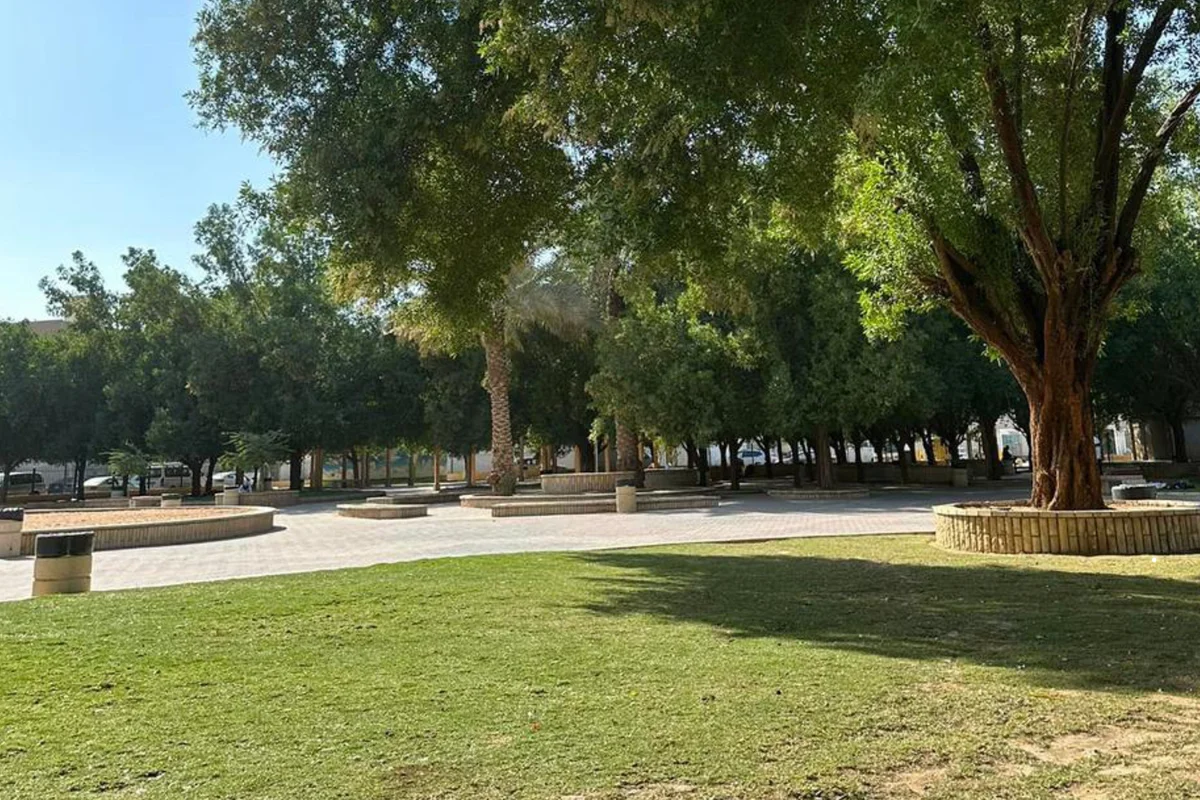

Barcelona has over 140 parks and gardens. The problem isn’t finding one — it’s knowing which one fits what you’re actually looking for. A neoclassical 18th-century garden with a cypress hedge maze has completely different logic from an urban park with a rowing lake, or a hillside with 800 species of cacti, or a rose garden that only makes sense in May.
The second problem is access. Some parks are free always; some are free on specific days only; one limits visitors to 750 simultaneously; one opens only on weekends. Arriving at the wrong park on the wrong day is a genuine waste.
This guide organizes Barcelona’s best parks by what they actually offer, with the access details that determine whether the visit works.
What are the best parks in Barcelona? Park Güell (Gaudí, UNESCO; monumental zone from €18 + free forest zone with same views). Parc de la Ciutadella (lake, cascade, free, central). Laberint d’Horta (oldest garden in Barcelona, cypress maze, free Wednesdays and Sundays). Parc de Cervantes (10,000 rose bushes, 150,000 roses in May, always free). Montjuïc gardens — six distinct zones including the city’s only cactus garden. All accessible by public transport.
Quick Decision: Which Park for What
- Classic city park, central, rowing lake → Parc de la Ciutadella — free, 10 minutes from El Born
- Most architecturally significant → Park Güell (free zone) — same views as the paid zone, no booking
- Oldest and quietest → Laberint d’Horta — €2.23, free Wednesdays and Sundays, 750-person cap
- Flowers and roses → Parc de Cervantes — visit in May; free always
- Cacti and port views → Jardins de Mossèn Costa i Llobera (Montjuïc south face) — free, open daily
- Formal neoclassical garden → Jardins de Joan Maragall — free, weekends and holidays only, 10:00–15:00
- Panoramic views without Búnkers crowds → Parc del Guinardó, Mirador de la Mitja Lluna — free, always
- Best for children → Parc de la Ciutadella (lake, space) or Park Güell free zone (forest paths)
Park Güell: The Paid Zone and the Free Zone Are Not the Same Visit
Park Güell divides into two zones with completely different access rules, and most visitors don’t understand the boundary until they arrive.
The monumental zone (paid, booking required): the dragon staircase, the Hypostyle Hall with 86 Doric columns, and the wavy trencadís bench of the upper esplanade. Entry from €10 with a mandatory time slot. Advance booking is essential in high season — it sells out days ahead.
The forest zone (free, no booking): the rest of the park — stone viaducts that look like tree roots, hillside paths, viewpoints over the Eixample and the Mediterranean. The panoramic photograph most associated with Park Güell is taken from the forest zone, not the monumental zone. The entrance porters’ pavilions — with their undulating rooflines and white mushroom finials — are visible from outside the perimeter without any ticket.
For visitors without the budget or time for the monumental zone, the free forest circuit with the viaducts is a complete experience on its own terms. It just doesn’t include the dragon or the bench.
The Gràcia neighborhood guide covers how to combine the Park Güell forest zone with the neighborhood directly below it — the natural descent route on foot from the park to the Plaça del Sol.
Getting there: Bus 24 from Passeig de Gràcia, Bus 92 from Plaça Catalunya. Metro Lesseps (L3), 20 minutes uphill on foot.
Parc de la Ciutadella: The Urban Park Built on a Fortress
The Parc de la Ciutadella occupies the land where Felipe V’s military fortress stood from 1715 until the city demolished it in 1869 and converted the site into a public park — one of the few 19th-century urbanistic victories in favor of residents over military authority.
What the Parc de la Ciutadella has that no other central Barcelona park has: real grass in large expanses. In a city this dense, lying on a lawn with space around you requires planning. On spring and summer weekends the park functions as the collective living room of the Born and Barceloneta neighborhoods — families, musicians, students, groups with bottles of wine.
The Monumental Cascade was the first significant project of a young architect named Josep Fontserè, who enlisted a student named Antoni Gaudí to help with some of the decorative elements. The cascade combines a triumphal arch structure with sculptures, a pond and a rowing lake. The rowing boats operate daily — rental at the embarcadero beside the pond.
The park also contains the Catalan Parliament building, the Barcelona Zoo (paid, separate entry) and the Natural Sciences Museum with its blue whale skeleton in the exterior.
Entry: free. Hours: opens at 10:00, closes seasonally (21:00 in summer). Ten minutes on foot from El Born.
Laberint d’Horta: The Oldest Garden, and the Timing That Matters
The Laberint d’Horta was completed in 1791 — before the Eixample existed, when Barcelona was still a walled city. The Marquis of Alfarrás commissioned an Italian architect to design a neoclassical garden with a cypress hedge maze at its center.
The maze has approximately 750 meters of path and 70-centimeter-wide corridors. Finding the exit takes between 10 and 30 minutes depending on the decisions made at each fork. At the center of the maze stands a statue of Eros — the metaphor of love as disorientation and discovery that gives the symbolic logic to the whole composition.
The garden has two distinct sections with opposing aesthetics: the 18th-century neoclassical zone (rational geometry, symmetry, marble fountains) and the 19th-century Romantic zone added later (freer nature, artificial waterfall, hermitage). This transition from Enlightenment to Romanticism is literally written in the hedgerows — you walk through two centuries of aesthetic philosophy in a single garden.
The access detail that changes the visit: the park limits simultaneous visitors to 750 people. Entry costs €2.23 on standard days. Wednesdays and Sundays the entry is free. On free days, arrive before 10:30 to avoid a queue at the gate. The reduced-price ticket (seniors and children) applies on paid days.
Getting there: Metro Mundet (L5), 10 minutes on foot.
Montjuïc: Six Gardens, Not One Park
Montjuïc is not a park — it is a mountain with six distinct garden zones, each with its own character, hours and access conditions. Visitors who go to “the Montjuïc park” leave with an incomplete picture of what’s available.
Jardins de Laribal — the oldest garden zone on the mountain, early 20th century, Andalusian and French influence. Cobblestone paths between bougainvillea pergolas, interconnected ponds and the Font del Gat — a historic fountain with a merendero. The most stately and least crowded garden on Montjuïc.
Jardins de Mossèn Costa i Llobera — the city’s only cactus garden. The dry, warm microclimate on Montjuïc’s south face supports over 800 species of cacti and succulents from arid zones worldwide. The viewpoint includes the commercial port — the visual contrast between desert plants and container ships is one of the most unusual photographic frames in Barcelona. Free, open daily.
Jardins de Joan Maragall — the most formally neoclassical garden in the city, surrounding the Palauet Albéniz (official Barcelona residence of the Spanish Royal Family). Perfect geometric parterres, monumental fountains, formal hedging. Open weekends and public holidays only, 10:00–15:00. This restriction eliminates it from most itineraries, which is why it remains the least crowded garden of genuine quality in the city.
Jardí Botànic Històric — built in a former quarry. The terrain depression creates a cool, humid microclimate that supports ferns and large-canopy trees that wouldn’t survive elsewhere on Montjuïc. The least visited of the mountain’s gardens and the most surprising.
Jardins del Teatre Grec — the scenographic garden of the city. The Roman amphitheater carved into the mountain rock is surrounded by rose gardens that serve as the backdrop for the Festival Grec in summer. Outside festival season: free public access.
Getting around Montjuïc: Funicular from Metro Paral·lel (L2/L3) to mid-mountain. Cable car for the Castle. Bus 150 loops the mountain. The Montjuïc complete guide covers the museums, castle and gardens in a single itinerary.
Parc de Cervantes: Only Worth It in May
The Parc de Cervantes has 10,000 rose bushes of 2,000 varieties. In the peak flowering window — late April and all of May — the park reaches 150,000 simultaneously open roses. That number converts the visit from a pleasant garden outing into something that has a specific time window.
The main garden has the Pergola de Rosas — a wooden and iron structure covered in climbing rose varieties that in May forms a color canopy with no equivalent in any other Barcelona park. The Jardí dels Perfums at the entrance is dedicated to intensely fragrant varieties and is designed for accessibility including visually impaired visitors.
In May, the International New Rose Competition takes place here. Winning varieties receive names of Catalan cultural figures and are incorporated into the permanent collection.
Outside May, the park is a well-maintained but ordinary rose garden primarily used by Les Corts neighborhood residents. Free always. Metro Palau Reial (L3).
The 23-metre oak in a Mediterranean city
The Jardins de la Tamarita in Sant Gervasi have a 23-meter centenarian oak — a botanical anomaly in a Mediterranean urban context. Designed by Nicolau Maria Rubió i Tudurí with marble fountains and terracotta figures. Located in the city’s upper zone surrounded by residential villas, it appears in almost no tourist circuits. Free access. This is the park for visitors who want genuine quiet without leaving the city.
The Parc del Guinardó has the Mirador de la Mitja Lluna — a stone platform oriented toward the Sagrada Família with views over the Eixample grid. Significantly less crowded than the Búnkers del Carmel with comparable panoramic range. Free, always accessible. Metro Alfons X (L4).
Access and Timing Table
| Park | Entry Fee | Free When | Best Moment |
|---|---|---|---|
| Park Güell monumental zone | €18 | Never | Early morning slot |
| Park Güell forest zone | Free | Always | Late afternoon |
| Parc de la Ciutadella | Free | Always | Spring weekends |
| Laberint d’Horta | €2.23 | Wed & Sun | Before 10:30 on free days |
| Mossèn Costa i Llobera | Free | Always | Morning side-light |
| Joan Maragall | Free | Weekends 10:00–15:00 | Weekday alternative: N/A |
| Parc de Cervantes | Free | Always | May (peak bloom) |
| Jardins de la Tamarita | Free | Always | Weekdays |
| Parc del Guinardó | Free | Always | Late afternoon |
Who Is This For
Visitor with half a day and no specific plan → Parc de la Ciutadella for the rowing lake, then walk into El Born for the afternoon.
Architecture-focused visitor → Park Güell forest zone (free, viaducts, views) combined with the Gaudí route itinerary for the full sequence.
Visiting in May specifically → Parc de Cervantes for the rose bloom (morning, free) then outdoor yoga in Barcelona for the afternoon circuit.
Seeking genuine quiet → Laberint d’Horta on a paid weekday (750 visitor cap makes it reliably tranquil) or Jardins de la Tamarita on any day.
Botanical interest → Jardins de Mossèn Costa i Llobera (800 cactus species, port views, free) combined with the Jardí Botànic Històric on the same Montjuïc visit.
Mistakes to Avoid
- Going to Laberint d’Horta on a free Sunday after 11:00 — the 750-person cap means the queue forms quickly on free days. The garden itself is worth any day; the timing matters.
- Visiting Jardins de Joan Maragall on a weekday — closed. Weekend and public holidays only, 10:00–15:00. The most commonly missed access constraint of any park in this guide.
- Planning the Parc de Cervantes for October or January — it’s a standard rose garden outside bloom season, with nothing that justifies the detour from the city center. The May visit is the only one worth specifically planning.
- Treating Park Güell as a single park — the paid monumental zone and the free forest zone are genuinely different experiences. Visitors who only know about the monumental zone pay €10 for something they could have experienced for free from a different entrance.
- Going up Montjuïc expecting one coherent park — it’s six separate gardens, a castle, two major museums and a cable car system. Each garden requires a separate decision. The Montjuïc castle guide covers the historical and military side; this guide covers the green spaces.
Final Insight
The Laberint d’Horta was built in 1791, before the French Revolution had finished, before Napoleon invaded Spain, before Barcelona had a rail network. It was a private garden for a marquis. The city bought it in 1967 and turned it into a public park. The cypress maze — 70cm corridors, a statue of Eros at the center, 30 minutes of genuine disorientation — is the same structure it was when the marquis commissioned it. Barcelona has 140+ parks. This is the only one where you can get lost on purpose in the same garden where the Marquis of Alfarrás got lost two centuries ago.
For the green spaces that fall outside the park category — the hidden courtyards, rooftop terraces and interior gardens of the Eixample and Gothic Quarter — the hidden patios Barcelona guide covers the urban green that never appears on park maps.