
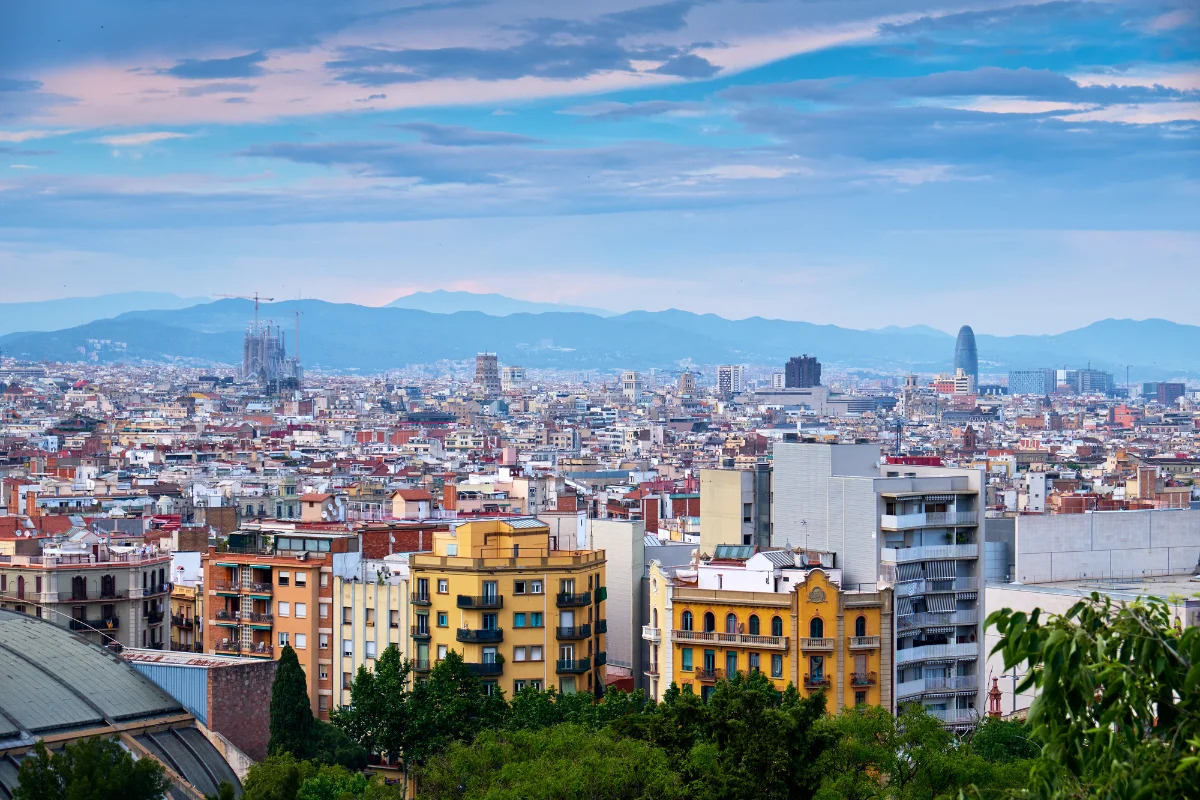

There is a layer of Barcelona that tourism doesn’t reach — not because it’s hidden, but because it requires a padró (municipal registration) and time. This guide is for people who already live here, or who’ve recently arrived and want to stop visiting the city and start inhabiting it. It covers the discounts that actually exist (with the specific conditions that make them work), the markets where residents buy food, the neighbourhoods worth living in, and the routines that mark the difference between passing through and being here.
The Resident Discounts Most People Don’t Use
Two more that go unclaimed: civic centres give registered unemployed people 50 % off the enrolment fee, and the pet census is free and separate from the microchip, which is the step most owners skip.
Two more that cost nothing: the night study rooms, one per district and open to midnight, and the fact that tap water is safe with 1.760 public fountains carrying it.
Gaudir Més: The Most Useful Card in the City
Any person over 16 years old registered (empadronada) in Barcelona can register for Gaudir Més for free — online or in person at any OAC (city council service point). No physical card: your DNI at the ticket desk is sufficient.
It all hangs on the register, and registering on the padrón is free and needs no lease or residence permit. The in-person route runs through the thirteen citizen advice offices, open 8:30 to 14:30 with a late Thursday outside summer.
What it includes:
- Free access to Park Güell (with same-day booking), Montjuïc Castle, Monastery of Pedralbes, Born CCM, and all MUHBA spaces
- 20% discount at Barcelona Zoo and the Tibidabo amusement park
- 50% discount on the Tibidabo funicular and the Torre de Collserola
- Valid for 10 years from registration
The Park Güell element alone makes this card worth registering for. Residents can book a free slot on the day of the visit — the same slot that tourists book weeks in advance for €10–18. The window is 7am–9:30am and 6:30pm–10pm. Turn up with your DNI and walk in.
The Sagrada Família Resident Discount
Residents of Barcelona receive 50% off any ticket type. The process: email resident@ext.sagradafamilia.org with your DNI or volant de padró (municipal registration certificate), at least 48 hours before your visit. You cannot manage this at the ticket desk on the day. The discount applies to basic entry, tower visits, and any combination.
This is one of the few significant discounts in Barcelona that requires planning but delivers real value — a basic entry that costs a tourist €26 costs a resident €13.
The Library Card as a Cultural Pass
The Barcelona library network card is free and functions as a discount card for cultural venues. It gives:
- 50% off MACBA entry
- 25% off CosmoCaixa and CaixaForum
- Discounts at Verdi and Méliès cinemas
- Access to over 2,000 films online at no extra cost
Obtainable at any library branch with a padró and ID. Takes five minutes.
Free Museum Windows That Are Genuinely Worth Planning Around
| Museum | Free window |
|---|---|
| Museu Picasso | First Sunday of month (all day) + Thursdays from 6pm |
| MNAC | Sundays from 3pm + Saturdays from 3pm |
| MACBA | Sundays from 4pm |
| CCCB | Sundays from 3pm |
| Montjuïc Castle | First Sunday all day + Sundays from 3pm |
| MUHBA | Included in Gaudir Més |
| Museu Marítim | Sundays from 3pm |
With these windows, it’s possible to build a dense cultural calendar for months without paying for museum entry.
The Markets Residents Use
La Boqueria has a tourist function that has largely displaced its market function — prices are higher and the selection responds to what tourism demands rather than what the neighbourhood needs. The markets where Barcelona residents actually shop are different.
Mercat de Sant Antoni has two distinct personalities. Monday through Saturday: a fresh food market with seasonal produce and the best selection of cured meats and cheese in the Eixample. Sunday morning: a second-hand book and collectibles market in the exterior arcades that has been running for decades. The market’s renovation integrated 17th-century archaeological baluartes into the structure — the old military fortification is visible under glass in the market floor. The best markets in Barcelona circuit starts here for a reason.
Mercat de Santa Caterina in El Born has the Enric Miralles undulating tile roof and focuses on organic and gourmet produce. The best market for quality food in Ciutat Vella.
El Ninot in the Eixample has restaurant-level eating options inside the market — a sit-down lunch without leaving the market space. Galvany in Eixample Esquerra has more accessible prices and a local clientele. Llibertat in Gràcia is certified with the Comerç Verd local-produce seal.
Els Encants is not a food market — it’s a second-hand and antiques market under a mirrored canopy structure near Glòries. Open Tuesday, Thursday, Friday, Saturday, and Sunday. The most interesting buying space in the city for furniture, clothing, books, and electronics at negotiable prices. The best flea markets in Barcelona guide covers it in detail.
The Neighbourhoods Worth Living In
Gràcia: Village Scale Inside the City
Gràcia maintains village scale in part because the metro doesn’t reach the centre of the neighbourhood as directly as the Eixample — you arrive at the edge and walk in. The squares (Sol, Virreina, Diamant) function as social hubs at every hour. The Festa Major de Gràcia in August is one of the most intense community participation events in the city — 23 street sections competing in decoration under strict secrecy, with months of neighbourhood preparation.
Poblenou: The Combination That Shouldn’t Work But Does
Direct beach access, converted factory creative spaces, and a quiet residential neighbourhood in the same postcode. The Bogatell and Mar Bella beaches have less saturation than Barceloneta and are integrated into the seafront promenade. The Rambla del Poblenou — a tree-lined street with continuous terrace seating — on Sunday mornings has a neighbourhood atmosphere that El Born or the Gothic Quarter cannot replicate.
Sant Antoni: The Decade-Long Transformation
Sant Antoni moved in ten years from a pass-through neighbourhood to one of the most sought-after places to live in Barcelona. The Mercat de Sant Antoni is the anchor, but the radius of cafés, restaurants, and design shops that surrounds it defines an environment that balances local character with the influence of recent arrivals. The best cocktail bars in Barcelona are disproportionately concentrated here.
Sants and El Carmel
Sants has its own Festa Major in the last week of August — more local and less well-known than Gràcia’s, with the same structure of decorated streets and neighbourhood events. El Carmel has the Bunkers at its summit, free access with regulated hours (9am–7:30pm in summer, 9am–5:30pm in winter). The night access restriction is enforced by the urban guard.
Sunday Vermouth: Still Real in the Right Neighbourhoods
Sunday vermouth in Barcelona is not a trend — it’s a practice that persists in neighbourhoods that haven’t been completely transformed by tourism. The most stable poles are Gràcia (Plaça del Sol, Plaça de la Virreina), Poble-sec (Carrer Blai and surroundings), Sant Pere (around Mercat de Santa Caterina), and Poblenou.
What distinguishes local vermouth from tourist vermouth: timing (12pm–2:30pm, not later), price (€2.50–4 with something to eat), and format (neighbourhood terrace, no waiting list, no English-language menu on the first page). The vermouth Barcelona guide has the specific addresses by neighbourhood.
The Beach as a Resident
The difference between going to the beach as a resident versus a tourist is the schedule. Before 9am, Barceloneta has surfers, swimmers, and runners — by 11am there are umbrellas. The beaches of Bogatell, Mar Bella, and Nova Mar Bella in Poblenou have more space throughout the day.
Mar Bella has an established nudist zone and is one of the few beaches with a genuinely local user profile. The seafront path connecting all these beaches runs 4.5 flat kilometres — one of the longest car-free routes in the city.
Collserola: The Park Residents Forget They Have
The Collserola Natural Park starts where the upper-city neighbourhoods end — Les Planes, Sant Gervasi, Vallvidrera — and extends across 8,000 hectares. Marked trails, water sources along the routes, and views over the whole city from multiple points. FGC from Plaça Catalunya to Baixador de Vallvidrera or Les Planes in under 20 minutes.
The Torre de Collserola has 50% off with Gaudir Més. The tower has a lift to the observation platform at 265 metres with 70km views on clear days.
For structured trail information, the hiking near Barcelona guide covers Collserola routes alongside the broader options within 1 hour of the city.
Bicing: The Mobility System That Defines the City’s Rhythm
Bicing is exclusive to residents — no subscription without a padró. The annual flat-rate subscription costs €50. With that subscription, the first 30 minutes of electric bike use costs €0.40; mechanical bike is free for the first 30 minutes. For neighbourhood distances — Gràcia to El Born, Eixample to Poblenou — Bicing covers most journeys at no extra cost.
The city has over 500 stations covering virtually every neighbourhood on the plain up to the mountain.
Spaces Residents Know and Tourists Don’t Reach
Laberinto de Horta — the oldest garden in Barcelona, an 18th-century neoclassical garden with a cypress hedge labyrinth. Entry €2.23. Free Wednesdays and Sundays. Metro Mundet (L3).
Jardí de Joan Maragall (Montjuïc) — the palace gardens of the Palau Albéniz, open weekends only. Almost unknown outside the neighbourhood.
Biblioteca Arús (Passeig de Sant Joan) — a 19th-century building with one of the world’s few replicas of the Statue of Liberty on the staircase, housing one of the most significant Freemasonry archives in Europe and the Joan Proubasta Sherlock Holmes collection. Free entry during research hours.
Can Felipa (Poblenou) and Cotxeres de Sants — civic centres with dance, music, and technology programming at public subsidised prices.
Weekend Escapes Residents Use
When the city becomes too much, the area around Barcelona absorbs well. The most common resident weekend escapes, all under 2 hours by public transport:
- Montserrat — FGC from Plaça Espanya, 1 hour. The Montserrat guide covers what to do beyond the monastery.
- Sitges — R2 Sud train, 35–40 minutes. The Sitges day trip guide covers the beaches, the Modernista architecture, and the carnival.
- Cadaqués — bus or car, 2h 15min. The Cadaqués guide covers the Dalí house, Cap de Creus, and the rastrell pavement that no other Costa Brava village has preserved.
- Penedès wine country — train, 45 minutes. The Penedès day trip guide covers the vineyards, cava cellars, and what to book before you go.
Frequently Asked Questions
What is Gaudir Més and how do I register?
A free programme from the Barcelona city council for anyone over 16 years old registered in the city. Gives free access to Park Güell, Montjuïc Castle, Monastery of Pedralbes, Born CCM, and all MUHBA spaces, plus discounts at the Zoo and Tibidabo. Register online or in person at an OAC with your DNI. Valid for 10 years.
How do I get the 50% resident discount at the Sagrada Família?
Email resident@ext.sagradafamilia.org with your DNI or municipal registration certificate at least 48 hours before your visit. Cannot be managed at the ticket desk on the day. The discount applies to any ticket type including tower visits.
Does the Barcelona library card give museum discounts?
Yes. 50% off MACBA, 25% off CosmoCaixa and CaixaForum, discounts at Verdi and Méliès cinemas, and free access to over 2,000 films online. The card is free from any library branch with padró and ID.
Which Barcelona neighbourhoods are best to live in?
Gràcia for village-scale social life and the Festa Major community events. Poblenou for beach access plus creative neighbourhood character. Sant Antoni for the best concentration of cafés, restaurants, and bars. Sants for affordability and local character. The answer depends significantly on budget — Gràcia and Sant Antoni have risen in price; Sants and Poblenou offer more value.
Is Bicing available for non-residents?
No — Bicing requires a Barcelona padró. The annual subscription costs €50. Visitors can use other bike rental services (several along the seafront) or the city’s public electric scooter systems, which don’t require residency.