
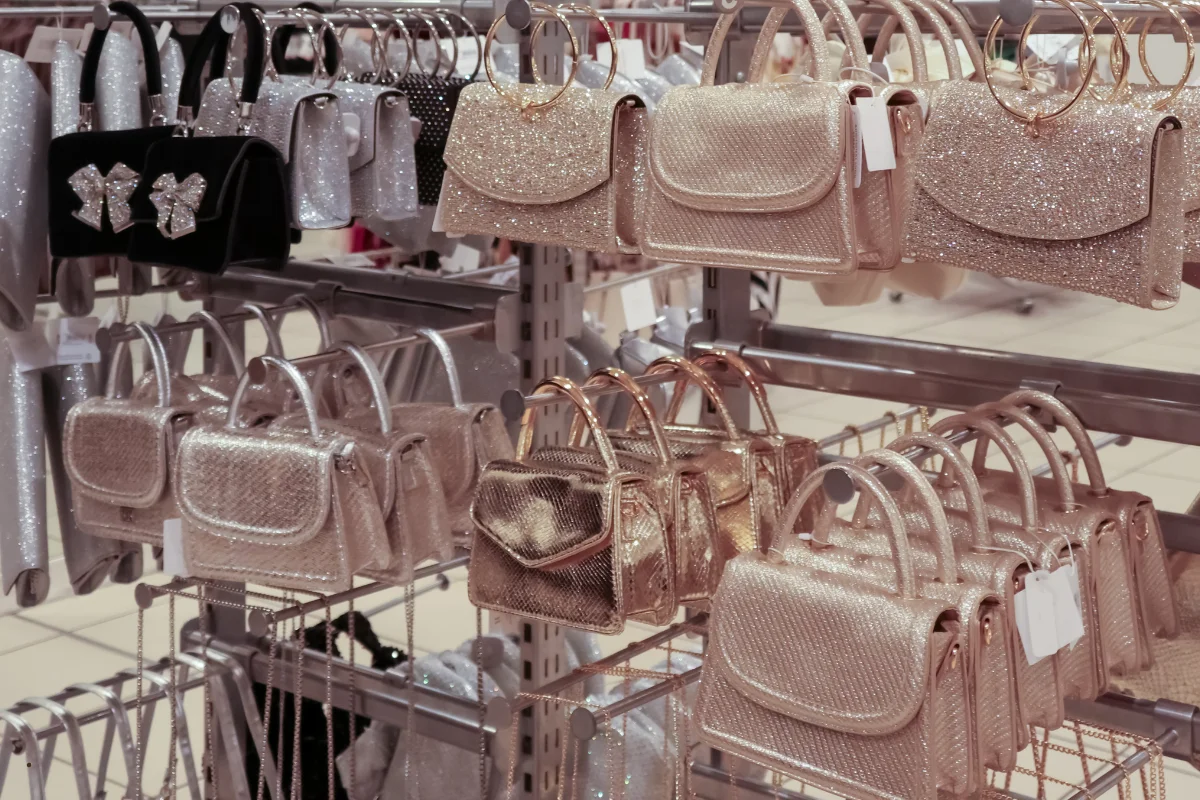

The most interesting shops in Barcelona have one thing in common: people visit them without necessarily intending to buy anything. A candle shop that has operated in the same building since 1761. A bookshop with a working fireplace and a strict no-phones policy. A pharmacy with Modernista stained glass windows that still fills prescriptions. An Aesop store whose interior won a Dezeen Award in 2024 for architecture, not retail.
Barcelona’s commercial architecture spans nine centuries of continuous occupation — which is why some of its shops feel less like retail spaces and more like inhabited monuments. This guide covers the ones where the space itself is the reason to visit, organised by experience type rather than by neighbourhood list.
The Historic Shops: Interiors That Haven’t Changed
What are the oldest shops in Barcelona? Cerería Subirà (Baixada de la Llibreteria 7, Gothic Quarter) has operated since 1761 — one of the oldest candle shops in Europe, with original 18th-century decor intact. Casa Gispert (Born, 1851) still uses its 19th-century wood-fired oven for roasting nuts. El Rei de la Màgia (Born, 1881) bills itself as the oldest working magic shop in the world. All three are free to enter.
Quick Decision
- Oldest shop in Barcelona → Cerería Subirà (1761, Gothic Quarter) — smell the wax from the street
- Best historic interior + edible product → Casa Gispert (Born, 1851) — wood-fired oven still in use
- Best Modernista retail interior → Farmacia Bolós (Eixample, 1902) — mahogany counter, stained glass, still an active pharmacy
- Best architecture + luxury goods → Loewe in Casa Lleó Morera (Passeig de Gràcia) — Domènech i Montaner building, Dezeen-level interior
- Best bookshop interior → Librería Finestres (Eixample) — fireplace, garden courtyard, phones prohibited
- Best concept store architecture → Moco Store (Born) — pink micro-cement curves, designed around a digital artwork
- Best hidden garden inside a shop → Santa Eulalia (Passeig de Gràcia) — 2,000 sq metre interior with a secret terrace garden
Cerería Subirà at Baixada de la Llibreteria 7 in the Gothic Quarter has been open since 1761 — making it the oldest shop still trading in Barcelona and one of the oldest candlemakers in Europe. The interior is original: a curved wooden staircase with balusters, floor-to-ceiling shelves, 18th-century mouldings. The wax scent reaches the street before you see the entrance. The candle range runs from high-craft ceremonial pieces to fruit shapes, animals and sculptural forms. More than 260 years in the same address puts this in a category shared by almost no other commercial premises in Southern Europe.
Casa Gispert at Carrer dels Sombrerers 23 in El Born was founded in 1851. The wood-fired oven from the 19th century still operates for roasting almonds, hazelnuts and coffee. The shop combines dark wood, sacks of dried fruit and a constant smell of roasting — not a simulation of 1851, but the actual processes of 1851 still running. Located in a medieval street in El Born with minimal tourist traffic, it’s one of the few historic shops in the old city that functions entirely on its own terms.
El Rei de la Màgia at Carrer de la Princesa 11 was founded in 1881 and its own facade bills it as the oldest working magic shop in the worle. The interior looks like an excavation of the 19th century: tricks, marked cards, illusion books, professional and amateur supplies. It runs shows and courses. The unrenovated facade is part of the value — no attempt to modernise has been made, because none was needed.
Herboristeria del Rei at Carrer del Vidre 1 in the Gothic Quarter traces the oldest trade in Catalonia — herbalism — in premises dating from 1823. The original Isabelline furniture, a marble fountain by the Baratta Rossi brothers, and a bust of Carl Linnaeus presiding over the space give it the atmosphere of a 19th-century apothecary that never closed. It did close briefly in 2021, and was rescued by Pavlina Doroshenko on a ten-year lease — one of the few recent cases where heritage value won against old-city real estate pressure.
La Manual Alpargatera at Carrer d’Avinyó 7 has been making handmade espadrilles since 1940. Custom orders are taken. The work is done on site — production enters through the back and leaves through the front. Jack Nicholson, Julianne Moore, and several heads of state have ordered here. The shop is in the quieter southern edge of the Gothic Quarter, away from the main tourist corridor.
The Architecture Shops: Where the Building Is the Product
These shops are destinations for people who have no particular interest in buying. The interior design is the reason to be there.
Cubiñá at Casa Thomas (Carrer de Mallorca 291, Eixample) occupies the ground floor of Lluís Domènech i Montaner’s 1898 building. Original cast iron columns, hydraulic mosaic floors and decorated 19th-century ceilings present contemporary furniture collections from Kartell and Stua. The tension between the Modernista container and the contemporary content is the proposition. This is a five-minute walk from Casa Batlló and sits naturally on the Eixample Modernisme circuit.
Loewe in Casa Lleó i Morera (Passeig de Gràcia 35) occupies the ground floor of Domènech i Montaner’s 1905 building — part of the Block of Discord alongside Casa Batlló and Casa Amatller. The intervention preserved the mosaics by Lluís Bru, stained glass by Antoni Rigalt and sculptures by Eusebi Arnau on the facade. The shop’s interior design works with continuity: mulberry motifs — symbol of the Morera family — appear on handles and mouldings, in dialogue with the brand’s leather craft.
Santa Eulalia (Passeig de Gràcia 93) is the oldest fashion boutique in Barcelona, founded in 1843 and renovated by New York architect William Sofield in an Art Déco language. The stated brief was to turn 2,000 square metres into a “home.” The result includes The Bistrot with an interior garden terrace — one of the best-kept secret gardens on Passeig de Gràcia. The city awarded Santa Eulalia the Gold Medal for Civic Merit. It is worth visiting for the garden alone.
Aesop in Casa Mumbrú (Carrer del Consell de Cent, Eixample, building from 1882) was designed by studio Barozzi Veiga and won a Dezeen Award in 2024. The interior is built on economy of means: burnished steel columns, suspended counters, a semicircular zone with warm curtains. No decorative excess. Beauty comes from material selection and light management, not accumulation of objects. The contrast between the 1882 shell and the 2024 interior is the same formal strategy as Cubiñá in Casa Thomas — the Eixample provides the best examples of this typology.
Moco Concept Store (Carrer de Montcada 27, El Born) originated from a digital artwork by artist Ezequiel Pini (Six N. Five) and was physically executed by Isern Serra. To achieve the digital aesthetic in real space, the architects returned to manual craft — they created specific tools to produce the curvature radii of the surfaces. The result: monochromatic pink micro-cement, sinuous organic forms, backlit niches. A zone dedicated to NFTs sits inside a high-impact physical environment. The building is on the most photographed medieval street in El Born.
The Bookshops Worth Visiting for the Space
Librería Finestres (Carrer de la Diputació 312, Eixample) opened in 2021, designed by Quintana Partners. Dark wood shelving to the ceiling, sofas, a working fireplace, an interior garden courtyard. Strict silence policy — phones are prohibited. The second location, in the Modernista Casa Garriga i Nogués, is dedicated to visual arts. Rated 4.8 from over 2,000 reviews — one of the best-rated cultural establishments in the city. Free to enter; no purchase required to sit and read.
La Central del Raval (Carrer d’Elisabets 6) occupies the former 18th-century Chapel of La Misericòrdia. Modern shelving respects the Baroque arches and proportions of the original sacred space. The interior garden with a central orange tree is one of the quietest corners in the Raval. La Central is part of the CCCB cultural complex — pairing a bookshop visit with the El Raval neighbourhood guide gives the area full context.
The Shops Where Product and Space Are Equally Strong
Farmacia Bolós (Rambla de Catalunya 77, Eixample) was built between 1902 and 1904 by Antoni Falguera. The Modernista design preserves a curved mahogany counter, leaded stained glass with orange tree motifs on the facade and interior, and ceiling murals with allegorical scenes from pharmacopoeia. It was selected for the 1992 Cultural Olympiad for its historical value. It still operates as an everyday pharmacy — prescriptions filled, cosmetics sold, beneath the original stained glass. Nothing has been museumified.
Pastelería Escribà (La Rambla de les Flors 83) occupies the former Casa Figueres from 1906. Restored mosaics, stained glass, iron curves on the facade. Christian Escribà’s creations include caramel rings and chocolate shoes. The Modernista architecture frames the pastry pieces — the exterior window display is one of the most photographed on Las Ramblas, and earns it without any gimmick.
Les Topettes (Carrer de Joaquín Costa 33, Raval) is a niche perfumery with fragrances from Orto Parisi, Escentric Molecules and DS&Durga. The staff have technical perfumery training, not sales training. The minimalist interior puts focus on the packaging — some designed as art objects. Rated 4.8. It is the local reference for anyone looking outside the major brand circuit, and the Carrer de Joaquín Costa location puts it in the most interesting independent retail street in the Raval.
Born to Clay (Carrer de l’Esparteria, Born) is a ceramic workshop where production is visible to the customer. Wooden beam ceilings, natural light, pieces with deliberate imperfection. More than a shop — it’s a training space, production studio and retail point in one. El Born has become the centre of Barcelona’s artisan ceramics scene, with several workshops within a few streets of each other.
Sorting by product hides the rooms themselves
Organising shops by product category — fashion, food, design — says nothing about the spaces themselves. This makes them useful for procurement, useless for anyone interested in the city’s commercial architecture.
The specific gap: almost no English guide mentions Farmacia Bolós as an architectural destination. It appears in every Spanish-language guide to Modernista Barcelona, and in none of the English ones. A working pharmacy with original 1902 Modernista stained glass, mahogany counters and allegorical ceiling murals — free to enter, operating as a normal pharmacy — is precisely the kind of thing that separates a visitor who knows Barcelona from one who doesn’t. The hidden churches guide covers a similar category of overlooked architectural interiors across the city.
The second gap: the Santa Eulalia garden. Every guide notes it’s the oldest fashion boutique in Barcelona. Almost none mention that the interior garden and bistrot are open to anyone — no purchase required — and constitute one of the better-hidden outdoor spaces on Passeig de Gràcia.
The Neighbourhood Logic for Building a Route
El Born has the highest density of independent shops with genuine character. Casa Gispert, El Rei de la Màgia, Moco Store and Born to Clay are all walkable from each other. The natural circuit runs from Carrer dels Sombrerers through Carrer de la Princesa and Carrer de Montcada. Weekday mornings avoid the weekend saturation. The best walking streets guide maps the full pedestrian network.
The Gothic Quarter has the oldest shops: Cerería Subirà, Herboristeria del Rei, La Manual Alpargatera. The axis runs from Baixada de la Llibreteria through Carrer del Vidre and Carrer d’Avinyó. These streets are distinct from the main tourist corridor — two streets in any direction, the density drops completely.
The Eixample has the widest range: the luxury architecture of Passeig de Gràcia (Loewe, Santa Eulalia), the design interiors of Consell de Cent and Mallorca (Cubiñá, Aesop), and Librería Finestres. All four are within a ten-minute walk. Pair with the Eixample Modernisme circuit for a full architectural day.
El Raval has the most heterogeneous mix: La Central del Raval in the baroque chapel, Les Topettes on Carrer de Joaquín Costa, and the network of vintage and design shops on Carrer de la Riera Baixa.
Is It Worth It?
Yes — and most of these visits are free.
Cerería Subirà, Casa Gispert, El Rei de la Màgia, Farmacia Bolós, La Central del Raval and the Santa Eulalia garden are all free to enter. The shops with notable architecture — Cubiñá, Loewe, Aesop, Moco Store — have no entry charge. You can spend a full day in Barcelona’s most architecturally interesting commercial spaces without spending anything.
When it’s less worth it: going to Passeig de Gràcia expecting to find the same quality of independent retail as El Born or the Raval. The Passeig de Gràcia shops are spectacular buildings with international brands inside them. The Born and Gothic Quarter shops are independent, local and irreplaceable. They serve different purposes, and mixing the two on the same route without understanding the distinction leads to a confused day.
Best Strategy
- 2 hours, Gothic Quarter base → Cerería Subirà → Herboristeria del Rei → La Manual Alpargatera → La Central del Raval (15-min walk). All free, all walkable, covers 200 years of commercial history in one loop.
- Half day, Eixample + Born → Morning: Librería Finestres → Cubiñá at Casa Thomas → Loewe (Passeig de Gràcia). Afternoon: walk to El Born → Casa Gispert → Moco Store → Born to Clay. Lunch at one of the best cafés in Barcelona in between.
- Full architecture day → Gothic Quarter historic shops (morning) → Farmacia Bolós (Eixample, on the way) → Santa Eulalia garden (Passeig de Gràcia) → Born circuit (afternoon). Add the best art galleries in Barcelona for evening openings in El Born.
Mistakes to Avoid
-
Going to Librería Finestres without knowing the no-phones policy. It is enforced. The silence rule also applies. If you need to take calls or respond to messages, this is not the right stop. If you want 45 minutes of genuine quiet in the middle of the Eixample, it’s the right stop.
-
Missing Santa Eulalia’s garden by not going inside. The boutique facade on Passeig de Gràcia gives no indication of the interior garden and bistrot. Walk in, ask for The Bistrot, and use it — no purchase required.
-
Treating Farmacia Bolós as a heritage site rather than a working pharmacy. You can buy sunscreen, cosmetics or a prescription here in a room with original 1902 stained glass. This is the correct use of the building. Standing outside and photographing the facade only covers half of what it offers.
-
Scheduling El Born shops on a Sunday afternoon. Many of the historic shops (Casa Gispert, El Rei de la Màgia) are closed Sundays or have reduced hours. Tuesday through Saturday is the reliable window.
-
Combining Passeig de Gràcia boutiques with El Born independents on the same morning. They’re in different parts of the city and operate on different logic. The Eixample circuit and the Born circuit work best as separate half-days, not as a single compressed route.
-
Going to La Central del Raval expecting a standard bookshop. The Baroque chapel interior, the orange tree garden, and the CCCB connection make it a cultural destination that happens to sell books. Treat it as a 30-minute visit, not a 5-minute browse.
Who Is This For?
- Architecture and design visitors → Aesop Casa Mumbrú + Cubiñá Casa Thomas + Loewe Casa Lleó i Morera. Three shops, three approaches to inserting contemporary design inside historic Modernista buildings. Best done as a connected Eixample afternoon.
- Visitors interested in Barcelona’s commercial history → Cerería Subirà + Casa Gispert + El Rei de la Màgia + Herboristeria del Rei. Four shops, four centuries covered, all in the Gothic Quarter and El Born. All free.
- People who enjoy bookshops as destinations → Librería Finestres for the fireplace and silence policy; La Central del Raval for the Baroque chapel and garden. Both free to enter, both worth 45 minutes minimum.
- Independent retail shoppers avoiding chains → El Born circuit: Casa Gispert, Born to Clay, Les Topettes (Raval, 10-min walk). All local, all irreplaceable, none with a second location elsewhere.
- Visitors with limited time who want one definitive stop → Cerería Subirà. Five minutes from the Cathedral, free to enter, operating continuously since 1761, smell visible from the street. No other shop in Barcelona covers that much ground in a single visit.
Beauty is not the only reason a shop survives a century. The oddest of the historic trades, from herbalists to candle makers, are in the curious historic shops guide.
Frequently Asked Questions
What is the oldest shop in Barcelona?
Cerería Subirà at Baixada de la Llibreteria 7 in the Gothic Quarter, open since 1761. It is one of the oldest candlemakers in Europe still operating in its original premises with its original 18th-century interior intact. Casa Gispert (Born, 1851) and El Rei de la Màgia (Born, 1881) are the next oldest still trading.
Is Farmacia Bolós still a working pharmacy?
Yes. It fills prescriptions and sells standard pharmacy products in a room with original 1902 Modernista stained glass, a mahogany counter and allegorical ceiling murals designed by Antoni Falguera. It was selected for the 1992 Cultural Olympiad for its heritage value and continues operating without museumification.
Can you visit the Santa Eulalia garden without buying anything?
Yes. The interior garden terrace and The Bistrot are accessible to anyone who walks in. No purchase is required. The garden is one of the better-hidden outdoor spaces on Passeig de Gràcia and is not visible from the street facade.
What is La Central del Raval and why is it architecturally interesting?
A bookshop occupying the former 18th-century Chapel of La Misericòrdia on Carrer d’Elisabets 6. The Baroque arches and proportions of the original sacred space are preserved intact. There’s an interior garden with an orange tree. It’s part of the CCCB cultural complex. Free to enter.
What is the Moco Concept Store in El Born?
A concept store at Carrer de Montcada 27 designed by Isern Serra around a digital artwork by Ezequiel Pini. The interior uses monochromatic pink micro-cement with sinuous organic forms — architects created custom tools to achieve the curvature. It includes an NFT zone. The building is on the medieval street that also leads to the Museu Picasso.
Which Barcelona neighbourhood has the best independent shops?
El Born has the highest density of independent shops with genuine character — artisan food, ceramics, magic, and concept stores within walkable distance. The Gothic Quarter has the oldest shops. The Raval has the most heterogeneous mix including niche perfumery and the bookshop in a Baroque chapel. The Eixample has the best architectural retail interiors.
Barcelona has commercial premises that have outlasted dynasties, republics, dictatorships and two world wars. The ones that survive do so not by adapting to the moment, but by being irreplaceable within it. The 1761 candle shop smells exactly like a 1761 candle shop. That’s not nostalgia — that’s product differentiation that no algorithm can replicate.