
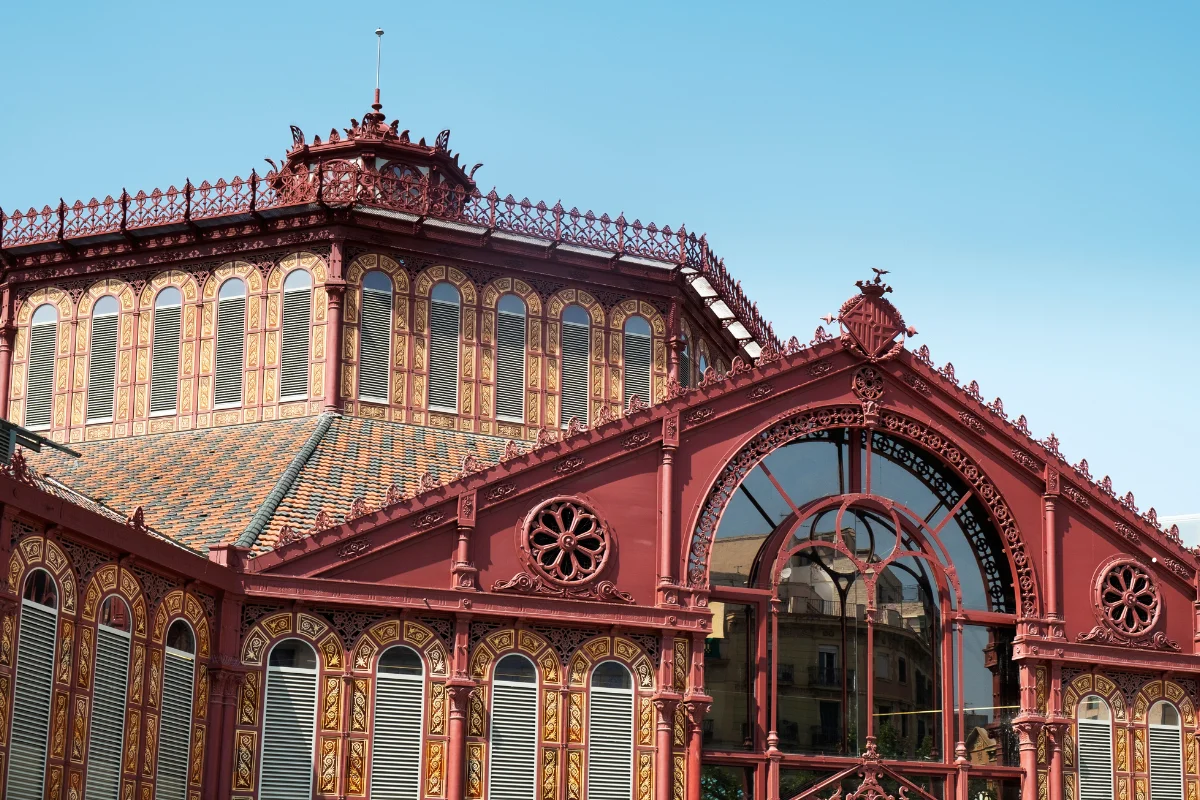

Under the floor of the Mercat de Sant Antoni there are Roman walls.
Not metaphorically. Literally: sections of the 1st-century Roman city wall (muralla romana) and segments of the Vía Sepulcral — the road that ran outside the walls of ancient Barcino, lined with funerary monuments — are preserved in the lower level of the 1879 iron market building. They’re not visible from the market floor; access is through specific guided visits organized through the market administration.
This is the most unexpected historical fact in a neighborhood that most visitors experience only as a pleasant place for vermouth and brunch. Sant Antoni sits on the southwestern boundary of the Roman city of Barcino, and the market that gives the neighborhood its character was built directly over the civic infrastructure of a 2,000-year-old settlement. The vendors selling fruit and vegetables are standing on top of history that predates the Visigothic period by five centuries.
That combination — the genuine daily life of a functioning neighborhood market on top of Roman archaeology — is the most specific thing about Sant Antoni that no other neighborhood in Barcelona replicates.
What should you do in Sant Antoni? Mercat de Sant Antoni — iron-structure 1879 market with lower-level Roman archaeology (guided visits). Sunday book market — secondhand books, comics, vinyl and collectibles around the perimeter (8:00–14:30, every Sunday). Carrer del Parlament vermouth — Bar Calders, Els Sortidors, Bodega d’en Rafel. Fàbrica Moritz — Jean Nouvel-redesigned brewery with bar and food (Ronda de Sant Antoni). Maleducat — the neighborhood restaurant with the most serious culinary ambition (book ahead). Primate Bakehouse — cardamom buns and specialty coffee from Nomad.
Quick Decision by Visit Type
- Sunday morning with the book market → Arrive at 9:00, circuit around the market perimeter, enter for the indoor market bar vermouth at 12:00, lunch at Carrer del Parlament
- Weekday gastronomy focus → Federal Café for brunch, Maleducat for lunch (reservation), Fàbrica Moritz for early evening
- Roman archaeology interest → Book the guided visit to the lower level of the Mercat de Sant Antoni specifically — this is a separate activity from visiting the market
- First visit to the neighborhood → Mercat de Sant Antoni interior (market hours) → Carrer del Parlament walk → vermouth at Bar Calders → dinner at Benzina or Maleducat
- Combining with El Raval → Sant Antoni naturally connects to El Raval to the east — the boundary between them is a 5-minute walk on Carrer de Sant Antoni Abat
The Market: Three Layers in One Building
The Mercat de Sant Antoni occupies an entire Eixample block. The 1879 iron structure — one of the most beautiful industrial-era market buildings in the city — was designed with a Greek-cross floor plan and an octagonal central cupola. The building was damaged during the Civil War and underwent a major rehabilitation between 2007 and 2009 that preserved the iron structure while adding photovoltaic panels that generate 40% of the building’s energy consumption.
Ground floor: approximately 50 fresh produce stalls (fruit, vegetables, fish, meat, charcuterie) plus bar counters serving coffee, vermouth and tapas. This is the functioning neighborhood market. The bar counters inside, facing the stalls, serve at prices consistent with what residents pay — not tourist pricing.
Lower level (guided visits only): the Roman archaeology. The city wall sections and Vía Sepulcral segments are from the 1st century AD, the same era as the archaeological sites visible at the MUHBA in the Gothic Quarter and in the lower levels of the Born CCM. Contact the market administration to arrange access. This is not a regular public attraction — it requires specific coordination.
Exterior (Sundays 8:00–14:30): the Mercat Dominical del Llibre (Sunday Book Market) wraps the perimeter with stalls selling secondhand books, comics, vinyl records, stamps, coins and collectibles. One of the largest markets of this type in Europe. The atmosphere is calm, the prices are reasonable and the seller knowledge is genuine — these are collectors and specialists, not generalists.
What the Superilla Changed
The superilla (superblock) pedestrianization program transformed several streets in the Eixample southwest by restricting through-traffic and reclaiming roadway as public space. Carrer del Parlament became the primary beneficiary — the most socially active street in this part of the city.
The street now has terrace seating that extends into the former roadway, a continuous flow of café and restaurant activity from morning until late evening, and a social mix of residents and visitors that feels closer to a neighborhood street than a tourist corridor.
This is not a small change. Before the superilla, Carrer del Parlament was a standard Eixample street with pavement and traffic. The pedestrianization created a street culture that didn’t exist in this form before 2019. The neighborhood benefited visibly and quickly.
For the broader context of how public space is being restructured across the Eixample, the best streets in Barcelona walking guide covers the full landscape of pedestrianized and architecturally significant streets across the city.
The Vermouth Culture: Specific Recommendations
Sant Antoni’s vermouth culture is real and not performed. The ritual of midday weekend vermouth — vermut, olives, patatas bravas, time — is practiced here by residents who have been doing it in the same establishments for years.
Bar Calders (Carrer del Parlament 25): terrace in a side passage, vermouth on tap, simple tapas. The most photographed bar in the neighborhood for good reason — the passage setting is genuinely pleasant. Locally consistent.
Els Sortidors del Parlament: wider terrace, slightly more restaurant-oriented, popular with residents for extended Sunday lunches.
Bodega d’en Rafel: the most traditional format — wine barrels visible, classic tapas, a clientele that has been coming for years. The least Instagram-optimized and the most genuine version of the Sant Antoni vermouth stop.
Bar Alegría: neighborhood-bar character, generous portions, regulars.
Food Beyond Vermouth
Maleducat is the most ambitious restaurant in the neighborhood — a small team focused on seasonal product, market sourcing and the Spanish concept of unhurried sobremesa (the after-meal conversation that extends lunch into the afternoon). The cooking operates at a level above what the Sant Antoni zip code typically signals. Reservation required.
Benzina: a former mechanics’ workshop converted into an Italian restaurant with serious fresh pasta. The industrial aesthetic and the pasta quality have made it one of the most-discussed new openings in the neighborhood.
Fàbrica Moritz (Ronda de Sant Antoni): the Jean Nouvel redesign of the historic Moritz brewery is worth seeing as an architectural object — the industrial heritage preserved inside a contemporary intervention. The bar and food operation runs at a scale and quality consistent with the building’s ambition. Moritz has been brewing in Barcelona since the 19th century; this building is the most visible contemporary expression of that history.
Federal Café: Australian-influenced brunch, Nordic-inflected design, early to the brunch trend in Barcelona and still executing it at a consistent level. For best brunch in Barcelona context, Federal is one of the reference points that shaped what “brunch” meant in the city.
Primate Bakehouse: cardamom buns, specialty coffee from Nomad roastery (the Direct Trade pioneer from El Born — covered in the specialty coffee Barcelona guide), sourdough. The most technically serious bakery café in the neighborhood.
Sirvent (Ronda de Sant Pau 3): horchata and artisan ice cream. It is a different company from the Sirvent at Parlament 56, the nougat house trading since 1920, despite the shared name. One of those establishments that older Barcelonans reference as a fixed point of their city memory. Worth a single visit for the product and the interior, which hasn’t changed significantly since mid-century.
The Cultural Layer
Llibreria Calders occupies a former button factory — an appropriate setting for a bookshop in a neighborhood whose Eixample blocks were once industrial. Carefully curated stock, a program of cultural events, and the possibility of a coffee among the shelves.
The street art in the streets adjacent to the market changes periodically through organized mural programs and informal interventions. The walls on Carrer de Manso and the surrounding area have some of the more considered street art outside the dedicated zones of Poblenou.
For cinema: the Filmoteca de Catalunya is in the adjacent El Raval, 10 minutes on foot, with programming of classic cinema, international contemporary film and a research archive. For the full independent cinema circuit: the best independent cinemas in Barcelona guide.
Who Is This Visit For
Visitors who want to understand what Barcelona’s neighborhoods look like before tourism restructures them → Sant Antoni is the most accessible example of a central neighborhood with genuine daily life still functioning alongside visitor interest. Come on a weekday morning.
Sunday visitors who want the book market plus neighborhood atmosphere → The combination of the exterior book market (9:00–14:00) and the interior market bar vermouth (from noon) is one of the best Sunday morning programs in the city.
Food-focused visitors → Maleducat + Benzina + Primate Bakehouse form a coherent culinary circuit within three blocks of each other.
Visitors combining with Eixample architecture → Sant Antoni is on the southwest corner of the Eixample. The Barcelona Modernisme route guide includes buildings within walking distance; the neighborhood provides the functional urban context that the Modernista circuit often strips away.
Mistakes to Avoid
- Going to the Sunday book market after 13:00 — vendors start packing up from 13:00 onward. The best selection is between 9:00 and 12:00.
- Expecting the Roman archaeology to be self-guided — the lower level is not a walk-in archaeological site. Contact the market administration in advance to arrange a guided visit.
- Eating at the restaurants immediately adjacent to the market entrance on weekend afternoons — these serve the overflow from the tourist trail rather than the neighborhood. The quality-to-price ratio improves as you move one block toward Carrer del Parlament.
- Not booking Maleducat — it’s a small restaurant with a serious kitchen. Walk-ins are difficult, especially on weekends.
- Visiting only on Sundays — the book market is Sunday-specific, but the neighborhood’s weekday character (calm, genuine, resident-focused) is different from the weekend energy and equally worth experiencing.
Final Insight
The Roman wall section under the Mercat de Sant Antoni floor is from the same century as the foundations visible under the Born CCM, the Templo de Augusto in the Gothic Quarter and the archaeological sites at the MUHBA. Barcelona’s Roman layer runs under the entire old city — and at Sant Antoni, it extends to the southwestern limit of ancient Barcino, preserved under an 1879 iron market that residents now use to buy fish and vegetables. The street above has changed completely in 2,000 years. The ground hasn’t.
For the broader picture of how Barcelona’s underground history is visible across the city, the hidden places in Barcelona guide covers the Refugio 307 (Civil War tunnels), the Templo de Augusto and the Born CCM in a single connected narrative.