
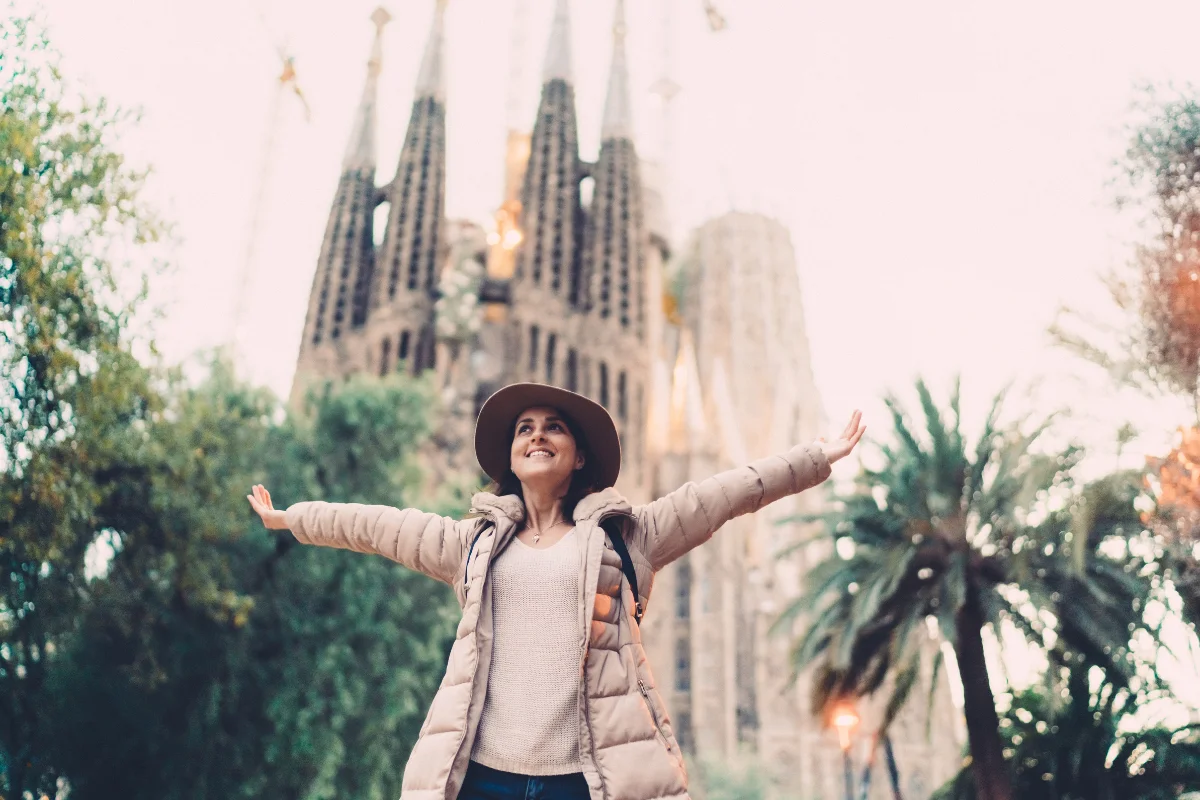

Solo travel in Barcelona has one structural advantage over group travel that is rarely named directly: you can change everything at 11am without negotiating with anyone. The city is the right size for this — walkable neighbourhoods, clear character differences between districts, and enough density of options that spontaneous pivots are always possible.
This guide organises the best solo experiences in three categories: plans designed for genuine solitude, plans with optional social interaction, and specific strategies for meeting people if that’s the objective. Each entry has the practical detail that determines whether it actually works alone.
Why Barcelona Works for Solo Travel
Three structural reasons. First: the central neighbourhoods — Gothic Quarter, El Born, Gràcia — are pedestrian-scale and contain enough density of interest for half a day each without transport. Second: most of Barcelona’s cultural infrastructure is designed for individual experience — audio-guided monuments, free-roam museums, market bar seating. Third: there is an active weekly calendar of social events — language exchanges, free tours, workshops — that enable interaction without the commitment of a multi-day organised tour.
The one plan that works less well alone than in a group: tasting menu dinner at a high-end restaurant. Barcelona’s best restaurants are built for two or more people, require weeks of advance booking, and are socially awkward to sit through solo. The alternative is more interesting anyway — market bar lunch, tapas at the bar, menú del día at a neighbourhood restaurant — which are the most authentic options regardless.
Plans for Genuine Solitude
The Gothic Quarter Before 9am
The Gothic Quarter before shops open and tours arrive is a different neighbourhood from the version most visitors experience. Plaça de Sant Felip Neri, Plaça del Rei, and the Cathedral cloister at 8am have a scale and silence that disappear by 10:30. Cats. The smell of the previous night. Actual silence.
The Cathedral is free until 12:30pm — worth arriving before 9am for the cloister with the thirteen geese, which becomes a crowded photograph location by mid-morning. The Temple of Augustus on Carrer del Paradís opens at 10am; arriving before opening to see the courtyard building from outside already has its own value.
The Gothic Quarter guide covers the shrapnel craters on Plaça de Sant Felip Neri, the 9th-century Hebrew inscription in El Call, and the Civil War history that most visitors walk past without reading.
Bunkers del Carmel: The Solo Sunset Standard
The free 360-degree viewpoint on the Turó de la Rovira — former Civil War anti-aircraft batteries — is the default solo sunset plan in Barcelona. The concrete battery structures function as natural seating. The panorama covers the Sagrada Família, Tibidabo, the port, and the Pyrenees on clear days.
Best timing: weekday afternoons, when the attendance is lower than weekends. Carry water — the final stretch is steep and exposed. Access free, always open within the seasonal hours. Bus line V17 or metro to El Carmel (L5) plus 15 minutes walking uphill.
Museum Time Without Compromise
Solo museum visits in Barcelona are the form the experience was designed for. No negotiating pace, no one waiting for you at the exit, no explaining what you’re looking at.
The three best for unhurried solo visits:
Museu Picasso (Carrer de Montcada) — the Las Meninas series alone requires 45 minutes if you’re actually looking at it. Free on Thursdays from 6pm — the lowest-attendance window of the week for a museum that otherwise has 60-minute queues.
MNAC — the Romanesque mural collection transferred from Pyrenean churches of the 11th and 12th centuries needs time to understand. The story of how those murals were rescued, transported, and reinstalled is as interesting as the painting itself. Free on Saturdays and Sundays from 3pm.
MACBA — the exterior plaza is as much part of the experience as the interior. Sit on the steps with the Gothic church behind you and the contemporary building in front. Free on Sundays from 4pm.
Specialty Coffee Alone in the Right Places
Barcelona’s specialty coffee bars are calibrated for solo presence: narrow bars, no large tables, controlled quiet. Satan’s Coffee Corner in El Call (no Wi-Fi, no syrups) and SlowMov in Gràcia (no Wi-Fi, explicit “please don’t bring laptops” signage) are the most deliberate about the format. Nomad Coffee in the Passatge Sert of El Born is the most technically focused for anyone who wants to understand what they’re drinking.
The specialty coffee Barcelona guide has the full circuit with addresses and what to order.
Plans With Optional Social Interaction
Free Tours: The Most Efficient Social Tool for Solo Travellers
Barcelona’s free tours (tip-only, minimum €5–10 convention) run from El Born and the Gothic Quarter every morning from around 10:30am. Duration: 2–2.5 hours. The composition of the group is predominantly solo travellers and couples. The social dynamic is the same at every free tour in every European city: the real opportunity is at the end, when the guide asks if anyone wants to continue somewhere for a drink.
The groups that form spontaneously at that moment are the most organic social connections available to a solo traveller in any city. No booking required — arrive at the meeting point 10 minutes early.
Specific to Barcelona: there are free tours focused on street art in El Raval, Modernisme, and Civil War history. The specialist versions attract more interesting groups than the generic Gothic Quarter tour.
Eating at Market Bars
The market bar format in Barcelona is one of the most comfortable solo eating environments in Europe. Wide bar seating, continuous movement, no pressure, your own pace. Nobody is looking at you.
Mercat de Sant Antoni (renovated, with bar seating running the full interior perimeter, busy on weekdays) and Mercat de Santa Caterina (the Miralles mosaic roof, less crowded than the Boqueria, better food) are the two best for solo lunch.
The Boqueria works for a standing breakfast or a juice — for sitting down to eat, the bar counters are priced for tourist traffic and the experience reflects that.
Intimate Concert Venues
Barcelona has an active circuit of small-format cultural events — bookshop concerts, rooftop film screenings, jazz in wine bars, performances in under-100-seat venues — announced on Time Out Barcelona, Fever, and the CCCB calendar. For solo travellers these formats are better than festivals: the scale facilitates conversation before and after.
The live music bars in Barcelona guide covers the venues where the programme is strong enough that showing up alone makes complete sense.
Meeting People: What Actually Works
Language Exchanges: Weekly Schedules by Neighbourhood
Barcelona’s language exchanges run on fixed weekly schedules and are the most organic way to meet people; the seven night plans with day, time and price run from the €4 exchange to Timeleft’s €12.99 dinner for six — locals wanting to practise English, French, or German; foreigners wanting to practise Spanish or Catalan. No registration, no pressure, pair-conversation format that makes contact natural.
The regular calendar (verify current status before going, as schedules change seasonally):
- Space Cowboy (Carrer dels Carders 31, El Born) — Mondays and Thursdays
- Verne/Soda Bus (Carrer d’Aribau 150, Eixample) — Wednesdays
- Trafalgar Pizza Club — Saturdays
Workshops With Natural Interaction
Trencadís mosaic workshops — Gaudí’s ceramic fragment technique — have a group dynamic that enables conversation without forcing it. Groups of 6–12, duration 2–3 hours, concentration level low enough to talk. The physical result (a small mosaic to take home) gives context to the conversation without requiring it.
The same dynamic applies to ceramic workshops in El Raval and Eixample studios, and paella or tapas cooking classes in several El Born locations. The weekend workshops in Barcelona guide covers the specific options with prices and how to book.
Sport Groups
The seafront running groups operate several days a week and are open — no pre-registration. Collserola hiking groups and organised cycling routes from Barceloneta work on the same basis. Physical activity in shared context produces natural conversation without the social pressure of a bar environment.
Safety: The Honest Assessment
Barcelona is safe for solo travellers. The actual risk is opportunistic theft in high tourist-density zones — not violence, not targeted crime. The specific precautions:
High-attention zones: Las Ramblas (pickpocket density is real), metro L3 central sections, beaches in summer (don’t leave valuables on sand while swimming), café terraces (don’t leave phones on the table).
Safe at night: Eixample, Gràcia, El Born, Sant Antoni — all completely safe well past midnight on their main streets. The Gothic Quarter is safe on its main axes (Carrer del Bisbe, Carrer de Ferran, the Cathedral area).
The one zone with a different character: the southern Raval below Carrer de Sant Pau after midnight. Not dangerous in an absolute sense, but the street economy changes after dark and standard urban vigilance applies more actively.
Emergency number: 112. Works for police, ambulance, and fire.
Who This Guide Is For
- First solo trip to Barcelona → Start with the Gothic Quarter early morning, Museu Picasso on a Thursday from 6pm (free), and the Bunkers del Carmel for sunset. Three days structured around those anchors cover the essential solo circuit.
- Introvert who wants culture without social pressure → MNAC, the Sagrada Família at first entry, specialty coffee at Satan’s or SlowMov, and the Filmoteca programme. All designed for solitary engagement.
- Solo traveller who wants to meet people → Free tour morning + language exchange evening on the same day. The most efficient combination available.
- Solo female traveller → Barcelona is consistently ranked among the safest European cities for solo female travel. The specific precautions (Las Ramblas at night, avoiding the southern Raval after midnight) apply regardless of gender.
- Extended stay → Add the Bicing subscription (requires padró, see the living in Barcelona guide), the library card with museum discounts, and the Gaudir Més programme. The city changes significantly when you’re accessing it as a resident rather than a visitor.
Best Strategy for Different Trip Lengths
3 days solo in Barcelona:
Day 1 — Gothic Quarter and El Born: start at the Cathedral before 9am (free until 12:30pm) → Temple of Augustus (free) → El Born CCM → lunch at Mercat de Santa Caterina bar → Museu Picasso Thursday from 6pm (free) → dinner at a Born tapas bar.
Day 2 — Gaudí and Eixample: Sagrada Família at 9am (booked weeks ahead) → Avinguda de Gaudí to Hospital de Sant Pau → Passeig de Gràcia walk → La Pedrera (book in advance) → Bunkers del Carmel for sunset.
Day 3 — Your choice: El Raval for MACBA, La Central del Raval bookshop, and multicultural lunch → free tour in the afternoon → language exchange evening if you want company.
The Barcelona travel budget guide breaks down what this kind of itinerary costs realistically, including which entry fees are avoidable and which aren’t.
The risk profile for women travelling alone here is pickpocketing rather than violence, and the resources that actually help are gathered in solo female travel in Barcelona.
Frequently Asked Questions
Is Barcelona good for solo travel?
Yes. Walkable neighbourhoods, extensive cultural infrastructure designed for individual experience, active social event calendar, and genuine neighbourhood character in each district. One of the most comfortable solo destinations in southern Europe.
How do you meet people travelling solo in Barcelona?
Free tours (El Born and Gothic Quarter, daily from ~10:30am — stay for the post-tour gathering). Language exchanges with fixed weekly schedules by neighbourhood. Trencadís and ceramic workshops with natural group interaction. Open running and cycling groups along the seafront.
Is Barcelona safe for solo female travellers?
Yes — consistently among the safer European cities for solo female travel. The main risk is opportunistic theft in tourist zones (Las Ramblas, crowded metros), not targeted crime. Standard urban precautions apply. The southern Raval below Carrer de Sant Pau warrants more attention after midnight.
What are the best free solo activities in Barcelona?
Bunkers del Carmel (360° viewpoint, always free), Gothic Quarter at dawn (Cathedral free until 12:30pm), Park Güell forest zone (free, the paid monumental zone is a separate ticket), Parc de la Ciutadella, and the seafront walk from Barceloneta to the Fòrum. Museum free windows on Sundays and Thursdays add several major institutions.
Where do you eat alone in Barcelona without feeling awkward?
Market bar seating at Mercat de Sant Antoni or Mercat de Santa Caterina (tapas at the bar, your own pace, normal). Neighbourhood menú del día bars (12–18€ for three courses, standard format for solo lunch in Spain). Tapas bars in El Born and Gràcia where standing at the bar is expected. High-end tasting menus are the only format that genuinely works better with two.