
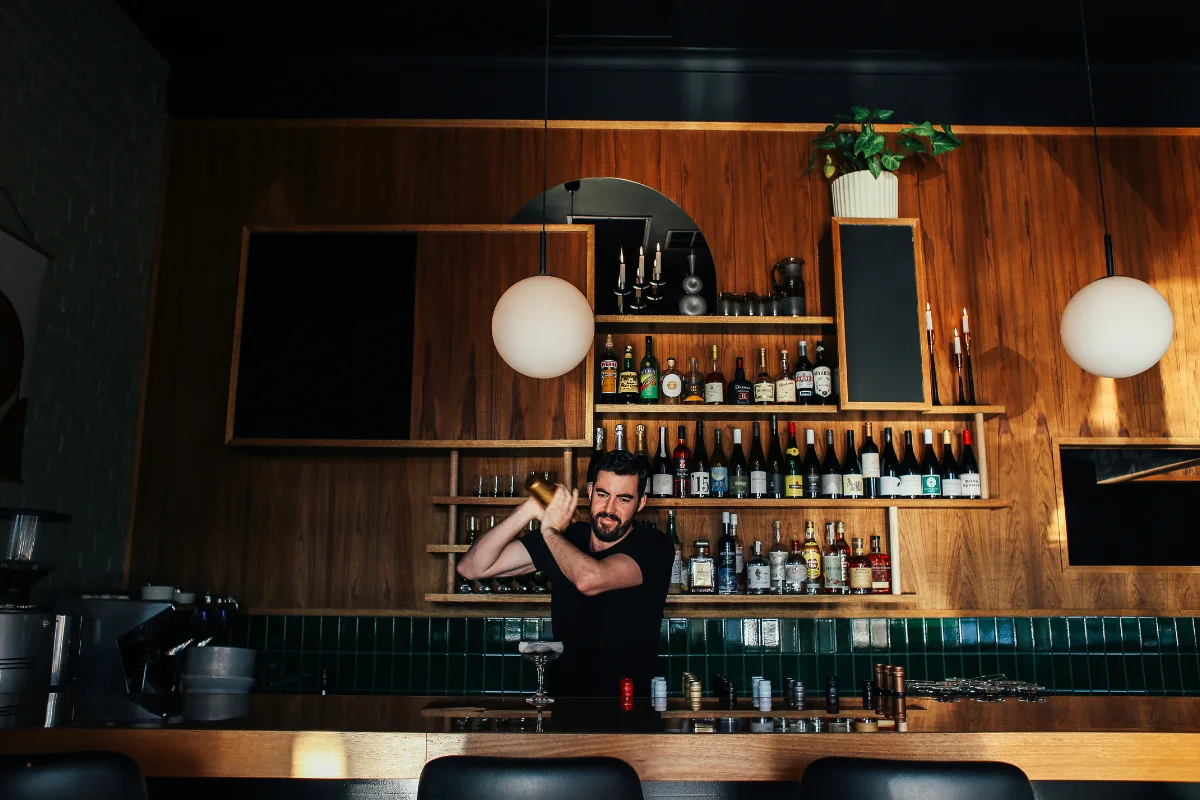

Barcelona didn’t invent the gin and tonic, but it rebuilt it. The city’s approach — large balloon glass, dense industrial ice, ratio-controlled pour, premium tonic matched to the gin, garnish that works with the botanical profile rather than decorating it — became one of the defining versions of the drink in the early 2000s and influenced bar programs across Spain and Europe. What that early enthusiasm left behind is a tier of genuinely serious bars that outlasted the trend. This guide maps them by what they actually do differently.
Bobby Gin and Elephanta — The Gràcia Standard
Bobby Gin (Carrer de Francisco Giner, 47, Gràcia) stocks over 200 gin references and operates on a flavor-profile service model: you describe what you want (citrus, floral, herbal, spiced, Mediterranean) and the bartender builds the glass accordingly — gin, tonic, and garnish chosen to function together rather than as separate elements. It’s the bar most cited outside Catalonia when serious cocktail drinkers discuss Barcelona. Open nightly from 19:00–02:00 (Fri–Sat until 03:00). For the full neighborhood context, the Gràcia Barcelona guide covers the bar district around it.
Elephanta (Carrer del Consell de Cent, 26, Gràcia) codes its menu by flavor color — citrus, floral, spiced, intense — with 40+ gins and matching tonics assigned to each category. Garnish gets unconventional: fresh berries, dried rose petals, ingredients that extend the botanical beyond the obvious. More accessible in price than Bobby Gin for a first technical approach. Open Mon–Wed 18:00–01:30, Thu–Sat 18:00–03:00.
Where to drink the best gin and tonic in Barcelona? Bobby Gin (Gràcia, 200+ references) for maximum selection and profile-based personalization. Dry Martini (Eixample, since 1978) for classical ritual with white-jacketed service. Xixbar (Poble Sec, 1900 dairy building) for the most specialized approach with an attached gin shop. Elephanta (Gràcia) for a color-coded flavor menu. All four are serious — the differences are in style, not quality.
Quick Decision
- Widest gin selection → Bobby Gin (Francisco Giner, 47) — 200+ references, bartender builds by flavor profile, open from 19:00
- Classical ritual, white-jacket service → Dry Martini (Aribau, 162-166) — since 1978, balloon glass protocol, opens 18:30 (earliest on this list)
- Most specialized, quietest atmosphere → Xixbar (Rocafort, 19, Poble Sec) — original 1900 tilework, attached gin shop, personalized tastings
- Flavor-coded menu → Elephanta (Consell de Cent, 26) — 40+ gins by profile, premium tonics matched per category
- No-menu, bartender adapts to your description → Negroni (Raval) — no written card, build described verbally, local regular crowd
- Visual presentation, award-winning serve → Boca Chica (Eixample) — tea-infused gin tonic served in an Aladdin lamp, won Spain’s best gin tonic award
- Classic elegance with broader bottle list → Ideal Cocktail Bar (Aribau, 89) — ~100 gins, traditional style, natural garnish ingredients
Dry Martini and Ideal — The Eixample Classics
Dry Martini (Carrer d’Aribau, 162-166) has been running the same service protocol since 1978. Javier de las Muelas built a bar where the gin tonic is assembled with surgical precision: the right glass temperature, controlled pour sequence, botanically matched garnish. Bartenders in white jackets — the uniform is part of the product, not decoration. This is not the bar for experimental gin exploration; it’s the bar for understanding what the classical gin tonic looks like when someone takes it seriously. Opens at 18:30, the earliest on this list. For the historic bar context, Barcelona speakeasies and historic bars covers Dry Martini alongside the city’s other institutional venues.
Ideal Cocktail Bar (Carrer d’Aribau, 89) stocks around 100 gins with a traditional aesthetic and natural garnish ingredients. It functions as the complement to Dry Martini for visitors who want broader label access within the same elegant register. Appears on every serious Eixample gin tonic itinerary.
Xixbar — The Pionero of Poble Sec
Xixbar (Carrer de Rocafort, 19) operates inside a 1900 dairy that still has its original ceramic tiling on the walls. It was among the first bars in Barcelona to treat gin tonic as a technical specialty — before the citywide boom. It has an attached gin shop with international references that don’t reach standard distribution, and runs personalized tastings for people who want to learn before choosing. The atmosphere is more intimate and less trafficked than Bobby Gin or Dry Martini — the clientele skews more knowledgeable and more local. For the neighborhood context, the Poble Sec Barcelona guide covers the bar area around it.
What Makes a Serious Gin Tonic in Barcelona
The five technical elements that separate the serious bars from the performance ones:
The glass. Balloon, 60–70cl, to hold enough ice without losing proportion. Industrial ice — dense, slow-melting, odorless — is non-negotiable. Regular freezer ice dilutes within 10 minutes and transfers freezer odors to the drink.
The ratio. 50–60ml gin to 150–200ml tonic preserves the botanical profile of the gin without drowning it. Bars with less rigor often invert this ratio or ignore it entirely.
The tonic. Fever-Tree, Schweppes Heritage, Thomas Henry, and 1724 are the premium references in Barcelona’s serious bars. Each has a distinct profile — drier, more citric, more mineral — and good bartenders choose based on the gin, not convenience.
The garnish. Rosemary amplifies herbal notes. Pink pepper activates capsaicin in the nose. Dehydrated citrus extends acidity without adding liquid. Arbequina olives with Gin Mare is the most recognizable Mediterranean combination in the local scene.
The price. €8–12 at most specialist bars. Boca Chica and Dry Martini reach €15–20 for more elaborate serves.
| Bar | Neighborhood | Gins | Profile | Price approx. |
|---|---|---|---|---|
| Bobby Gin | Gràcia | 200+ | Technical, profile-built | €10–14 |
| Dry Martini | Eixample | Curated classic | Classical ritual | €12–18 |
| Xixbar | Poble Sec | 100+ | Specialist, intimate | €9–13 |
| Elephanta | Gràcia | 40+ | Flavor-coded menu | €9–12 |
| Ideal Cocktail Bar | Eixample | ~100 | Traditional, purist | €10–14 |
| Negroni | Raval | Variable | No-menu, described | €9–12 |
| Boca Chica | Eixample | Curated | Visual, award-winning | €14–20 |
Where Gin Mare actually comes from
Bobby Gin and Dry Martini anchor every shortlist. The part worth knowing is where Gin Mare actually comes from.
Gin Mare is produced in Vilanova i la Geltrú, 40 kilometers south of Barcelona. Its botanicals are rosemary, thyme, basil, and Arbequina olive — all Mediterranean, all specific to the Catalan coast. The flavor profile is radically different from a London Dry: more herbal, more saline, with an oily finish from the olive. It’s served in Barcelona’s serious bars as the local alternative when the objective is something with a specific geographic identity — and it’s the clearest example of how the city’s gin culture shifted from importing British style to developing its own Mediterranean version.
When do these bars open?
Most open 19:00–20:00. Dry Martini opens at 18:30 — the practical choice for a pre-dinner drink. Bobby Gin and Elephanta follow Gràcia bar hours, typically 19:00–20:00 onwards. Xixbar has a more nocturnal schedule. None of these bars are midday options — the Barcelona gin tonic is an evening ritual, not an afternoon habit, which is itself a cultural distinction worth understanding before you plan around it.
Is the gin tonic scene in Barcelona still relevant?
The peak enthusiasm of the early 2010s has passed, and that’s actually good for the visitor. What remains are the bars that built their programs on real knowledge rather than trend-following. The places on this list are better now than they were at the peak — more focused, less crowded with casual interest. The ritual is intact and the quality is higher.
The owls at Xixbar are still there from 1900. Dry Martini has been pouring into the same glasses since 1978. Bobby Gin has been building profiles before it was a bar concept. What makes Barcelona’s gin scene worth taking seriously isn’t nostalgia — it’s that the best practitioners here have been working longer than the trend lasted.
For the broader nightlife context: best cocktail bars in Barcelona covers the full cocktail scene beyond gin. For bars that combine serious drinks with live music programming, best live music bars Barcelona maps the overlap. And for the historic bar culture that predates the craft movement, Barcelona speakeasies and historic bars provides the longer context.