
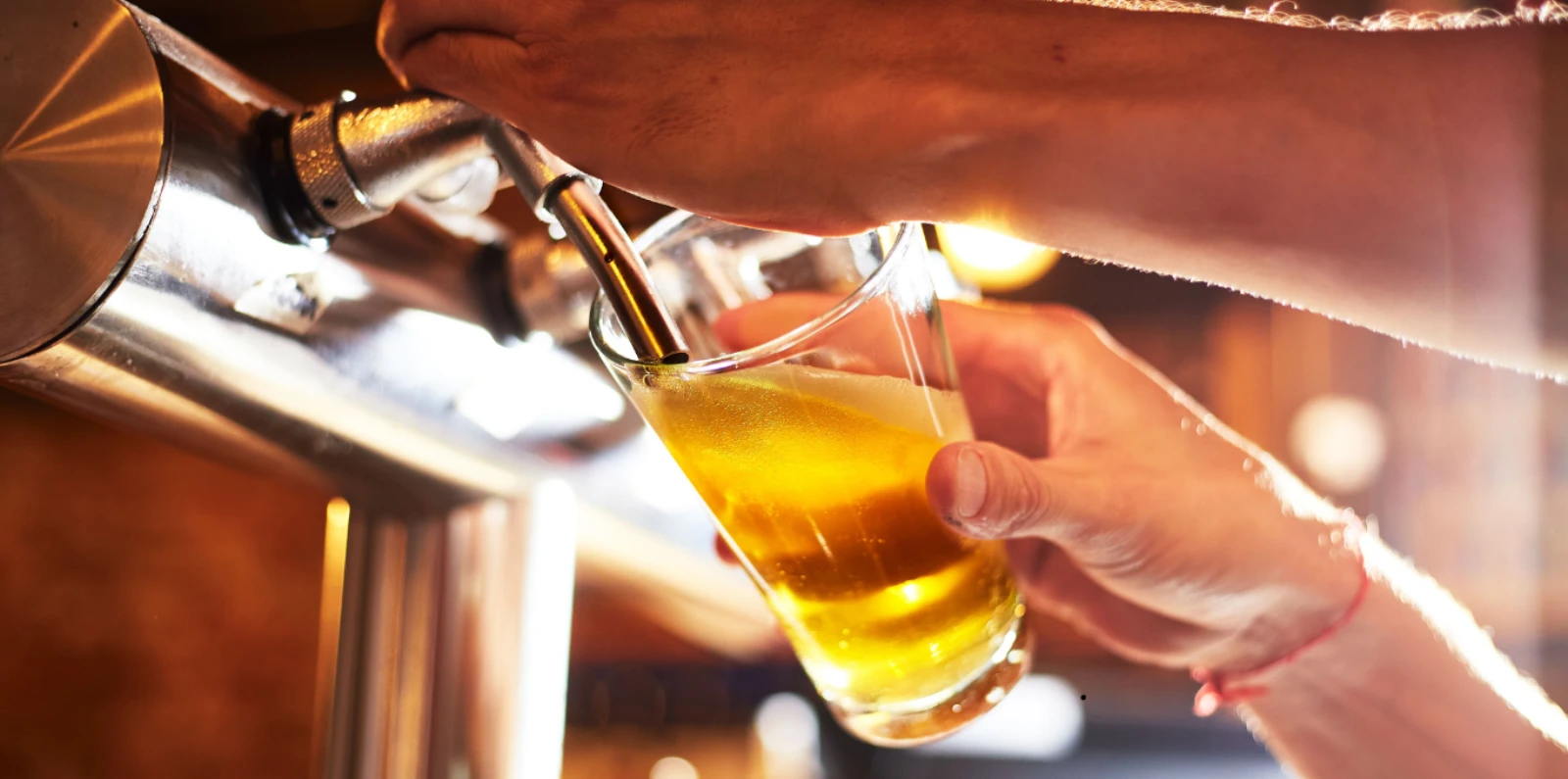

Ask a bartender in the Eixample what is on tap and you may get an imperial stout aged in bourbon barrels from Anaheim, a guava sour from Poland, and a pale ale brewed in Brussels, all on the same board, none of it there next month. Barcelona built the strongest craft scene in southern Europe in barely a decade, and it did so on rotation rather than tradition. The catch nobody mentions in the listicles: turn up at 2pm on a Tuesday and most of those doors are locked.
The opening-hours trap that ruins beer crawls
The most expensive mistake visitors make is not picking the wrong bar, it is picking the wrong hour. Most Barcelona brewpubs open at 5pm on weekdays, Garage Beer Co included, which runs 5pm to midnight Monday through Thursday at its Consell de Cent site. Travellers who build an afternoon around beer at 1pm find shutters down across the map.
Kælderkold in the Gothic Quarter is the single reliable early door, opening at 11am. After that, closing days matter as much as opening ones: BierCaB shuts Mondays and Sundays, which quietly wrecks badly planned long weekends. According to travel planners who cover the city, the workable rule is to start any crawl after 5:30pm and check each stop’s closing day the morning of, because hours shift more often than the taps do.
There is a second reality worth internalising before you arrive. Taps rotate constantly, so no published list of specific beers stays accurate for two weeks. What is stable is each venue’s judgement, which is why the productive question at the bar is “what did you just tap?” rather than hunting a bottle you read about.
Quick decision by what you drink
- You want the widest global selection → BierCaB (Muntaner 55, Eixample) — 30 rotating taps, closed Mon and Sun
- You came for hazy New England IPAs → Garage Beer Co (Consell de Cent 261) — brewed on-site, Soup IPA is the icon, opens 5pm
- You’re on a budget or starting early → Kælderkold (Cardenal Casañas 7, Gothic) — five-beer flight for €16, opens 11am
- You’re a group who wants dinner too → La Textil Collective (Casp 33b) — 1,100 m² with its own brewery, grill and pizza
- You want a neighbourhood local, no tourists → La Rovira (Rabassa 23, Gràcia) — 15 rotating taps and serious sandwiches
- You’re vegetarian or vegan → Ølgod (Hospital 74, Raval) — fully veggie kitchen, around 30 kegs
- You want beer with a sea view → BlackLab (Palau de Mar, Barceloneta) — brewed in-house, terrace facing the port
Brewpub or beer bar, the only distinction that matters
Barcelona’s scene splits cleanly into two models, and knowing which you want saves a wasted evening. A brewpub makes what it pours, on-site or at a linked facility: Garage Beer Co, La Textil, BlackLab and Ølgod all qualify. What you drink there exists nowhere else, and it has not suffered the stress of distribution. A beer bar curates what others make: BierCaB is the benchmark, with 30 taps that function as an entry point for limited-distribution labels and US imports rarely seen outside specialist circuits.
Neither is superior, because they answer different questions. Go to a brewpub for exclusivity and freshness. Go to a curated bar for breadth and discovery. The practical consequence: if you have one night and want to taste the widest range of what exists, BierCaB wins. If you want something you physically cannot drink in your home city, the brewpub wins. Pair either with the neighbourhood context in the Eixample guide and the evening plans itself.
The Beerxample, three venues and three models
The Eixample holds the highest tap density in Barcelona, enough that the trade calls it the Beerxample. Three addresses within a fifteen-minute walk demonstrate the full range.
BierCaB, at Muntaner 55, earned its reputation before thirty taps became a marketing line. It actually poured them, and the seriousness pushed the city’s beer conversation forward fast. The board mixes Catalan producers with European and American highlights, and the kitchen runs well above bar standard with wagyu burgers and tapas designed for pairing. The bottle shop sits next door at number 57 on separate hours from the bar, a detail that catches people out.
Garage Beer Co, at Consell de Cent 261, popularised hazy IPAs in Spain. You drink metres from the fermentation tanks, and the Soup IPA carries an international reputation. A second site sits at Passeig de Calvell 45 in Poblenou with different hours. Neither takes bookings, both run first come, first served.
La Textil Collective, at Casp 33b, is the large-format play: 1,100 m² in a former textile warehouse with an integrated brewery, a grill restaurant and New York-style pizza. It is the answer when the group is big or when beer is only part of the night.
What to order if you have never drunk craft
The order in which you taste changes what you perceive, so the sequence matters more than the specific beer. Start with a clean lager or a pale ale before jumping to a heavily hopped IPA, because a big hop hit flattens everything that follows it. The single best-value entry point in Barcelona is the Kælderkold flight: five beers for €16 lets you find your style before committing to a full pint, which typically runs €5 to €7 across the city.
According to experts who follow the Catalan scene, Barcelona’s local strength sits in four styles. Hazy New England IPAs are where the city competes internationally, with Garage Beer Co as the reference. Sours have a growing presence, slow-fermented lagers find their home in Scandinavian-inspired venues like Kælderkold, and mixed fermentations mark the frontier, with Cyclic Beer Farm hybridising beer with natural-wine minimal-intervention thinking. Catalan names worth spotting on a board: Garage and Espiga inside the city, La Pirata, Montseny and Cyclic beyond it, plus Naparbier, the Navarran brewery tied to BierCaB from the start.
Mistakes to avoid
- Planning a midday crawl. Most brewpubs open at 5pm on weekdays. Only Kælderkold opens at 11am.
- Assuming weekends are safe. BierCaB closes Mondays and Sundays, which removes it from most short-break itineraries.
- Trying to book Garage. No reservations at either location, ever. Arrive early or wait.
- Chasing a specific beer you read about. Taps rotate weekly. Ask what was just tapped instead.
- Ordering a pint first. A €16 flight of five teaches you more than a single €7 pint of something you may not like.
- Ignoring the bottle shop hours. BierCaB’s shop at Muntaner 57 runs different hours from the bar next door.
Beyond the centre, sea, neighbourhood and history
Poblenou balances industrial past with sea breeze, and its beer reflects that. La Cervecita Nuestra de Cada Día works as bar and shop at once, roughly 10 taps and a wall of bottles to take away, a quiet room minutes from the water. Garage’s Poblenou site at Passeig de Calvell 45 opens at 5pm on weekdays but 1pm at weekends, which is useful if the plan is beach then beer. BlackLab, facing the Port Vell at Palau de Mar, brews everything in-house and adds American barbecue and a broad terrace.
Gràcia offers the residential face. La Rovira on Rabassa 23 keeps 15 rotating taps, a sandwich menu with its own following, and meet-the-brewer events. La Cervesera Artesana, open since 1996, is the neighbourhood’s historic brewpub and one of the city’s true pioneers. If you want the streets around them, the Gràcia neighbourhood guide maps the squares between stops, and Barcelona’s nightlife bars cover where the night goes afterwards.
Then there is the pre-craft layer. Fàbrica Moritz on Ronda de Sant Antoni carries a local brewing line dating to 1856, in a building remodelled by architect Jean Nouvel. Its real value to a drinker is narrow and specific: it is the only place in Barcelona serving the unpasteurised version straight from the tank, livelier and more carbonated than the bottled counterpart. Estrella Damm, founded 1876, completes the industrial backdrop. Craft here did not emerge from nothing. It grew as a reaction to a century of volume, professionalised largely through the technical teaching of Briton Steve Huxley, who now has the city festival’s career award named after him.
Barcelona Beer Festival 2026, dates and practicalities
The Barcelona Beer Festival hits its 15th edition on 10 to 12 April 2026 at Fira de Montjuïc, Hall 2, with more than 100 breweries and around 500 different beers. A day pass costs €6 online plus booking fee, or €7 at the door, and includes the official glass and beer map. Tastings and workshops are paid separately and require the day pass to access.
Payment inside is cashless wristband only, with no cash or cards taken at the bar, and you can preload the wristband when buying online to skip a queue. Hours run 11am to 11pm Friday and Saturday, 11am to 7pm Sunday. Metro L1, L3 and L8 reach Plaça Espanya minutes away, the venue is adapted for reduced mobility, and minors enter free with an adult guardian. If the board overwhelms you, staff in yellow vests called Beer Informers will steer you by style. It slots naturally into the wider list of things to see in Barcelona if your trip lands in April, and the best time to visit guide helps if you are still choosing dates.
Frequently Asked Questions
What time do craft beer bars open in Barcelona?
Most brewpubs open at 5pm on weekdays, including Garage Beer Co on Consell de Cent. Kælderkold in the Gothic Quarter is the exception, opening at 11am. Planning a midday beer crawl on a weekday leaves you standing outside closed shutters at most addresses.
Is Barcelona good for craft beer compared to other European cities?
Barcelona is the leading craft scene in southern Europe, with over 100 specialist venues and the region’s biggest festival. It competes internationally on hazy New England IPAs in particular, though it has fewer historic beer traditions than Belgium, Germany or the Czech Republic.
How much does a craft beer cost in Barcelona?
A pint of local craft typically runs €5 to €7, with imported rarities reaching higher. The best value for tasting several styles is the flight at Kælderkold, five beers for €16. Chain bars near tourist areas charge around €7 for their cheapest pint.
Do I need to book a table at Barcelona brewpubs?
No, and at Garage Beer Co you cannot. Both their locations run strictly first come, first served with no bookings taken. BierCaB gets crowded on Friday nights and you may wait for a table, so arriving before 8pm improves your odds considerably.
When is the Barcelona Beer Festival and what does it cost?
The 2026 edition runs 10 to 12 April at Fira de Montjuïc, Hall 2, its 15th year. A day pass costs €6 online plus booking fee or €7 at the door, including the official glass. Payment inside is cashless wristband only, no cash accepted.
Barcelona did not inherit a beer tradition, it built one in ten years, and it still asks what you want rather than telling you.