
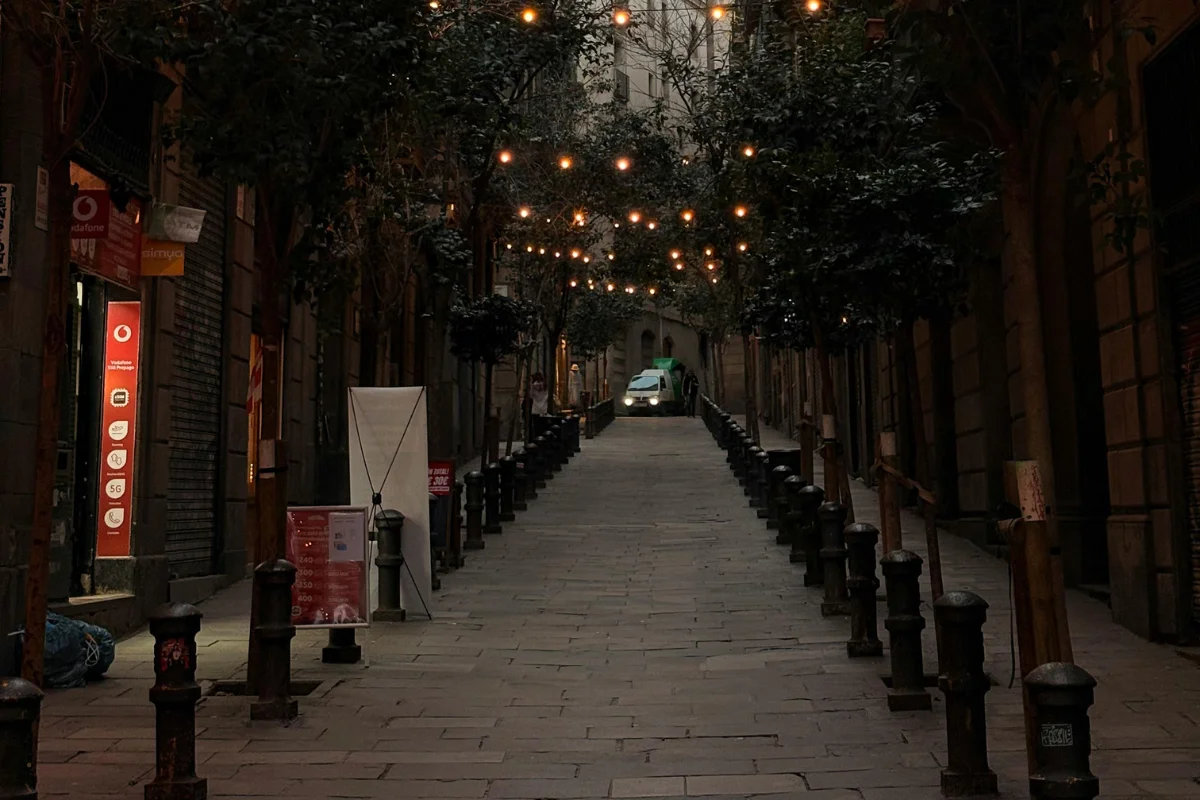

El Raval has over 53% foreign-born population and more than 200 languages spoken in its streets. That’s not a tourism statistic — it’s the explanation for why within three blocks you can eat genuine Indonesian rendang, Kurdish flatbread made to order, and elevated Catalan stew from a kitchen that’s been open since 1970. The difficulty isn’t finding good food. It’s distinguishing restaurants that have been here for decades with first-generation recipes from those that exist because they’re near Las Ramblas.
For the neighborhood context beyond food, the El Raval Barcelona guide covers the MACBA, the architecture, and the cultural scene that surrounds these restaurants.
Where to eat well in El Raval, Barcelona? Makan Makan (4.8, Indonesian) for Southeast Asian. El Pachuco (4.5, 5,500+ reviews) for real Mexican street food under €10. Bacaro for Venetian cooking with Boqueria market product and a Michelin Bib Gourmand. El Magraner Boig for Greek kitchen from 2015. Dos Palillos for Asian fusion with a Michelin star. Suculent or Ca l’Isidre for the most Catalan side of the Raval.
Makan Makan and Mirch — The Serious Asian Kitchens
Makan Makan (Carrer de la Lluna, 4) opened in 2018 when a chef decided the nostalgia for flavors from home justified opening a small Indonesian home-cooking restaurant. The result is the Southeast Asian reference in Barcelona — 4.8 with 568 reviews, with people who grew up in Indonesia confirming the rendang and soto are rigorously authentic. Small space, always full. Reservation essential. Tuesday–Saturday, evenings only.
Mirch (Carrer dels Àngels, 12) is the project of Iván Surinder, heir to the first family that brought Indian food to Barcelona. The format is modern Indian street food — vada pav (spiced potato fritter sandwich in artisanal bread), butter chicken burger, mango lassi. Half the menu is vegetarian. Very low prices for the product level.
El Pachuco and El Magraner Boig — Opposite Ends of Authenticity
El Pachuco (Carrer de Sant Pau, 110) has over 5,500 reviews at 4.5. The concept is explicit: “if it’s Mexican street food, you should be able to eat and drink for €10.” No card payments, customers write their own orders, open until 02:00. Carnitas, chilorio, and chicken tinga tacos alongside nachos are the dishes that appear in every review. It’s the reference point for popular Mexican cooking in Barcelona — no adaptations for European palates.
El Magraner Boig (Carrer d’en Robador, 22) has been doing Greek cooking since 2015 at the level of tavernas in Athens or Thessaloniki, far from Santorini postcard stereotypes. Moussaka, tirokafteri, arnaqui fricasé (lamb stew with avgolemono sauce), traditional music and ouzo cocktails. Rating 4.6 with over 1,900 reviews — the highest in the neighborhood for international sit-down cooking. Evenings on weekdays, also lunch on Saturdays and Sundays.
Quick Decision
- Best Southeast Asian kitchen in Barcelona → Makan Makan (Carrer de la Lluna, 4) — authentic Indonesian, rendang and soto at source level, 4.8/568 reviews, reservation essential
- Eat and drink for under €10 → El Pachuco (Carrer de Sant Pau, 110) — real Mexican street food, no adaptations, open until 02:00 daily
- Best Greek kitchen in the city → El Magraner Boig (Carrer d’en Robador, 22) — Athenian taverna style, moussaka and ouzo, 4.6/1,900+ reviews
- Venetian cooking with Boqueria market product → Bacaro (Carrer de Jerusalem, 6) — sardines in saor, artisanal pasta, Michelin Bib Gourmand, Mon–Sat
- Michelin-starred tasting experience → Dos Palillos (C/ Cardenal Casanyes) — Asian fusion, Albert Raurich, tasting menu ~€120–150, counter seating around open kitchen
- Best tasting menu value in the neighborhood → Suculent (Rambla del Raval, 45) — Repsol Sol, Toni Romero, menu ~€70, Mon–Fri only
- The Raval’s most historic Catalan kitchen → Ca l’Isidre (Carrer de les Flors, 12) — open since 1970, tripe, lamb brains, Albert Adrià’s stated irreplaceable
Bacaro and Venetian Cooking at the Boqueria
Bacaro (Carrer de Jerusalem, 6) holds the Michelin Bib Gourmand and buys directly at La Boqueria. The menu is not pasta and pizza — it’s Venetian tavern cooking: sardines in saor (sweet-sour pickle with pine nuts and raisins), popets alla Luciana (stewed baby octopus), artisanal pasta. Chef Marco Lecis has built an intimate space where conversation doesn’t require competing with the room. Rating 4.5 with over 1,600 reviews. Monday–Saturday. For the best food markets in Barcelona, Bacaro’s proximity to La Boqueria and its market-sourced menu is part of the same culinary geography that makes this corner of the Raval interesting.
Dos Palillos and Suculent — The Top of the Raval’s Range
Dos Palillos (Carrer dels Cardenal Casanyes) has a Michelin star. Albert Raurich — trained at elBulli — works the philosophy of Spanish tapas with Far Eastern techniques and flavors. The counter surrounding the open kitchen allows watching execution. Tasting menu €120–150. It’s the right choice when the occasion justifies the price and the objective is understanding why the Raval also has a place in international fine dining rankings. For best art galleries in Barcelona to complete a visit to the MACBA 100 meters away, the guide covers the cultural neighborhood surrounding the restaurant.
Suculent (Rambla del Raval, 45) has a Repsol Sol and Michelin recommendation with a tasting menu at around €70 — one of the most solid quality-to-price ratios in Barcelona haute cuisine. Chef Toni Romero trained at El Bulli and Arzak before opening here. His stews and stocks are the technical peak of elevated popular cooking: red prawn ceviche with the head passed through the grill, hare cannelloni with foie gras. Open Monday–Friday only — closed weekends.
Ca l’Isidre and the Catalan Raval
Ca l’Isidre (Carrer de les Flors, 12) has been open since 1970 as the neighborhood’s Catalan cooking temple. Albert Adrià has said publicly that if it closed, Barcelona would lose something irreplaceable. Veal tripe, lamb sweetbreads with black butter and capers, extensive wine list. Tuesday–Saturday. Rating 4.5.
Arume (in the Raval, near Vázquez Montalbán’s birthplace) applies contemporary Galician cooking with technical rigor: crispy octopus with yuzu parmentier, red prawn ceviche. More connected to the Atlantic and modern technique than Ca l’Isidre. Average €35–40.
| Restaurant | Cuisine | Rating | Price | Best for |
|---|---|---|---|---|
| Makan Makan | Indonesian | 4.8 (568) | €25–35 | Best Southeast Asian in the neighborhood |
| El Pachuco | Mexican | 4.5 (5,500+) | €8–15 | Real street food, open until 02:00 |
| El Magraner Boig | Greek | 4.6 (1,900+) | €20–30 | Athenian taverna style |
| Bacaro | Venetian | 4.5 (1,600+) | €25–35 | Venetian cooking, Bib Gourmand |
| Mirch | Indian | 4.6 (500+) | €8–15 | Street food format, vegetarian-friendly |
| Suculent | Catalan | 4.5 (1,600+) | ~€70 menu | Fine dining, Mon–Fri only |
| Ca l’Isidre | Catalan | 4.5 (670+) | €45–60 | Institution since 1970 |
| Dos Palillos | Asian fusion | n/a | €120–150 | Michelin star, open kitchen counter |
How to read the street before you read the menu
Sorting restaurants by cuisine tells you little here. What works is reading the neighbourhood as a quality signal before entering anywhere.
The restaurants in the Raval that have been operating for years on first-generation recipes share specific characteristics: they don’t have menus in eight languages, they don’t have staff standing outside recuiting customers, and they’re consistently full with people from the neighborhood rather than from hotel concierge recommendations. Makan Makan has twelve tables and is full every night — that’s the signal. El Pachuco doesn’t accept cards and is packed — also the signal.
The inverse is equally reliable: if a restaurant has laminated menus with photographs, is prominently located on Las Ramblas, and has staff actively inviting entry, it is operating on tourist proximity rather than culinary merit. The Raval rewards the visitor who walks two blocks away from the obvious axis.
How to navigate a day of eating in El Raval
Lunch at Makan Makan or El Magraner Boig (advance reservation). Late afternoon around the Boqueria with Bacaro or market stall product. Evening at El Pachuco for Mexican street food and no protocol — or, if the budget allows, Dos Palillos or Suculent with days of advance booking. The logic of the Raval is exactly this: from a €10 meal to a tasting menu, walking ten minutes.
The Raval isn’t Barcelona’s “exotic option” — it’s the neighborhood where the city eats honestly when it doesn’t want the tourist version. The culinary diversity is not marketing: it’s demographics. When more than half a neighborhood was born outside the country, the restaurants that survive are the ones that cook with the integrity of someone reproducing their mother’s recipe.
For the neighborhood beyond the restaurants: the El Raval neighborhood guide covers the MACBA, the architecture, and the cultural density of the Raval. For the best tapas in Barcelona as a comparative for what the city does at its most accessible, the guide maps the full tapas scene across neighborhoods. And for catalan food restaurants in Barcelona as the regional cooking context for Ca l’Isidre and Suculent, the guide covers the Catalan culinary tradition across the city.