

This guide is based on real visits and direct comparisons across Barcelona’s tapas scene — not aggregated reviews or sponsored lists. The goal is simple: help you decide which bars are worth your time, what to order when you get there, and how to structure a route that actually works.
Barcelona’s tapas culture has distinct layers that get flattened into a single list. There are the historic bars that have served four dishes for 70 years without updating anything. There are market-kitchen bars where the product quality is the argument. And there are chef-driven spaces where Michelin-level technique meets bar stools. Mixing them up leads to expensive disappointment or missed opportunities.
The practical context: Barcelona is not San Sebastián — the city doesn’t have the pintxos bar culture where you walk from counter to counter for hours. Tapas here work better as part of a neighbourhood logic, not a city-wide checklist.
Quick Answer: Best Tapas Bars in Barcelona Historic originals: La Cova Fumada (the Bomba, Barceloneta), El Xampanyet (anchovies + house cava, Born), Bar La Plata (fried fish, Gothic Quarter), Quimet & Quimet (conservas standing up, Poble Sec). Chef-driven: Mont Bar (Michelin star, bar format, Sant Antoni), Tapas 24 (Carles Abellán, Eixample). Best vermut neighbourhood: Sant Antoni. Best pintxos street: Carrer Blai, Poble Sec.
Quick Picks
The same counters have another life mid-morning: the fork breakfast is a full cooked meal served with cutlery between 9:00 and 11:00, built around stewed pig’s head and trotter.
- Best single dish in the city → La Bomba at La Cova Fumada (the original, no imitations)
- Best anchovies → El Xampanyet, Born (Cantabrian, with house cava in small porrons)
- Best Michelin-level tapas on a bar stool → Mont Bar, Sant Antoni (book 2–3 weeks ahead)
- Best for standing, eating, and leaving fast → Quimet & Quimet (no tables, noon only, closes in August)
- Best budget tapas street → Carrer Blai, Poble Sec (pintxos from €1–2 each)
- Best croquetas in the city → Tapas 24 (ibérico ham) or Bar Cañete (lobster)
Quick Decision: Which Tapas Experience Is Right for You?
- Want the most authentic historic bar → La Cova Fumada or Bar La Plata (no frills, no menus, no reservations)
- Want product quality as the main argument → Cal Pep (market-kitchen counter, Born)
- Want chef technique in a casual format → Mont Bar or Tapas 24
- Want vermut as the full plan → Sant Antoni (Bar Calders, Bodega Sepúlveda) or Gràcia bodegas
- On a tight budget → Carrer Blai pintxos (€1–2 per piece) or Bar La Plata (under €15 per person)
- Want to book in advance → Mont Bar, Bar Cañete, Ten’s (all require reservations for dinner)
Who Is This For?
- First-time visitors → Start with El Xampanyet (Born) and Bar La Plata (Gothic Quarter) — two classics within 10 minutes of each other
- Food-focused travellers → Mont Bar or Bar Cañete for technique; Cal Pep for product
- Budget travellers → Carrer Blai in Poble Sec, Bodega Quimet in Gràcia, or Bar La Plata
- Weekend visitors → Build the morning around vermut in Sant Antoni or Gràcia, then transition to lunch tapas
- Groups without reservations → Cervecería Catalana (high volume, consistent, accessible) or Carrer Blai
The Historic Originals — Bars That Don’t Change Because They Don’t Need To
These are the bars that have been serving the same things for decades without adapting to tourism, updating their menus, or installing a QR code system. That consistency is exactly their value.
La Cova Fumada — Where the Bomba Was Invented
Carrer del Baluard 56, Barceloneta. No exterior sign. No reservations. No afternoon service — the bar closes when the food runs out, which is usually before 14:00.
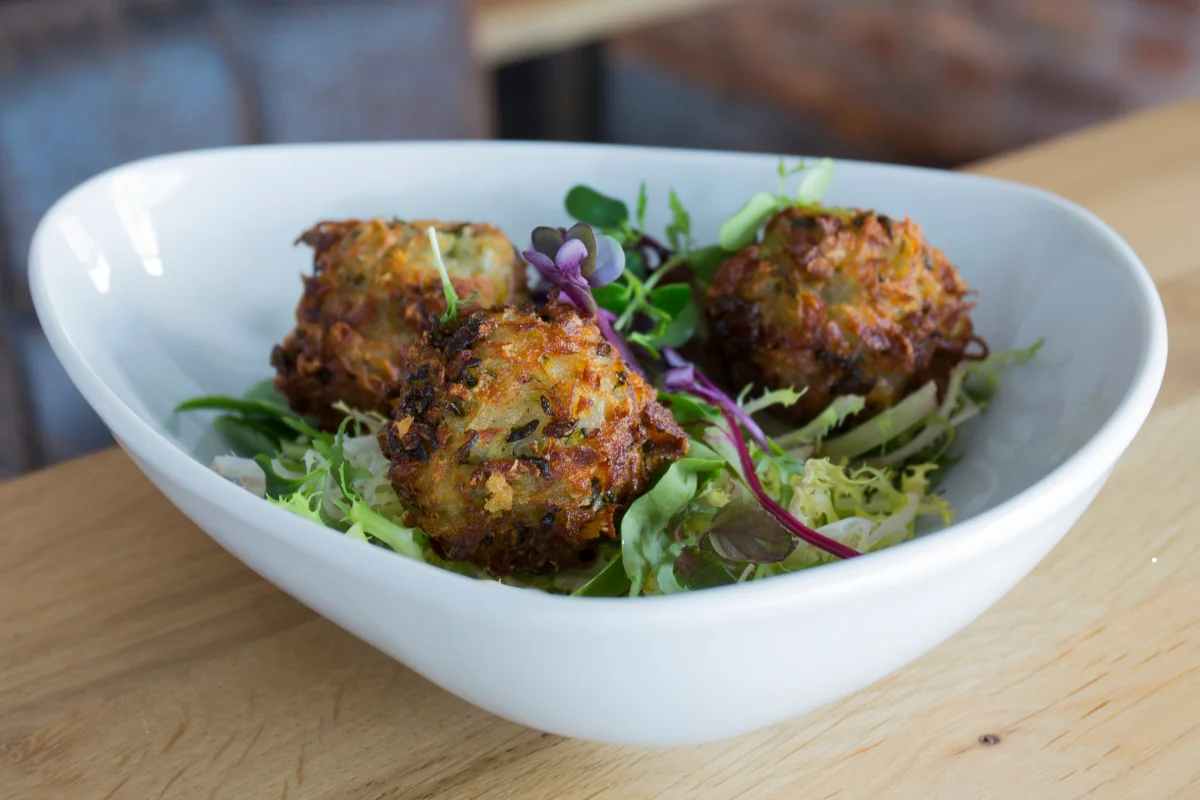
The Bomba: a sphere of potato filled with meat, fried and served with spicy sauce and alioli. The format replicated across half of Barcelona was invented here. Every other version you’ll find on the seafront promenade is a reproduction. The original is in the interior of Barceloneta, away from the tourist strip.
Also: calamari, octopus, and small fried squid (chocitos). Arrive before 12:30 to find everything available.
What to order: La Bomba, calamari rings, chocitos.
📍 Carrer del Baluard 56, Barceloneta. No reservations. Open mornings only.
El Xampanyet — Anchovies and House Cava Since the 1930s
Carrer de Montcada 22, Born — one of the most photographed medieval streets in the city. Historic tiles on the walls, narrow bar, high social density. Two reasons people come: Cantabrian anchovies and the house xampanyet — a semi-sweet sparkling wine served in small porrons.
Works better at opening time (noon–15:30 and 19:00–23:00) than during the mid-afternoon tourist peak. No reservations — first come, first served. The best live music bars in Barcelona guide covers the same neighbourhood for extending the evening.
What to order: anchovies, house xampanyet, cured meats from the bar selection.
📍 Carrer de Montcada 22, Born.
Bar La Plata — Four Dishes Since 1945, Nothing More
Carrer de la Mercè 28, Gothic Quarter. The menu: fried whitebait (chabis), tomato salad with anchovy and arbequina olives, anchovy montadito, and butifarra. Four things. Nothing else. The extreme specialisation is the proposition.
One of the smallest and purest bars in the old city. No reservations. Best at midday or in the pre-lunch vermut window before 14:00. Two minutes from Las Ramblas without the noise of Las Ramblas.
What to order: fried whitebait, tomato salad with anchovy.
📍 Carrer de la Mercè 28, Gothic Quarter.
Quimet & Quimet — The Conservas Temple
Carrer del Poeta Cabanyes 25, Poble Sec. No tables — you eat standing between floor-to-ceiling shelves of bottles. The smoked salmon with yogurt and black truffle montadito is the most reproduced dish in guides. Also: anchovy with piparra pepper, ventresca tuna.
Open midday only (noon–16:00) Tuesday to Saturday. Closed in August. No reservations. Arrive at noon to avoid the queue.
What to order: smoked salmon with yogurt and truffle, ventresca tuna montadito, anchovy with piparra.
📍 Carrer del Poeta Cabanyes 25, Poble Sec.
Market-Kitchen Bars — Product as the Argument
Cal Pep (Plaça de les Olles 8, Born) is the benchmark for market-kitchen counter cooking in the Born. Dishes vary with available product that day: clams, grilled prawns, butifarras, chipirones. The counter faces an open kitchen. There’s a dining room in the back, but the real experience is the bar. Counter: no reservation, expect 15–30 minutes wait at peak. Dining room: reservations required.
Bar del Pla (Carrer de la Montcada 2, Born) — metres from the Picasso Museum. Oxtail, carpaccio, croquetas, wider menu than the neighbourhood classics. High technical level for the format. Natural pairing with the best art galleries in Barcelona — Artevistas Gallery is on the same street.
Bar Mut (Carrer de Pau Claris 192, Eixample) — a 1930s taberna converted to a sophisticated tapas bar. Fried egg carpaccio with red prawns, hand-carved jamón ibérico de bellota, first-tier anchovies. A sense of exclusivity without formality. Counter available; dinner reservations recommended.
Chef-Driven Tapas — Michelin Technique on Bar Stools
Tapas 24 — Carles Abellán’s Accessible High Kitchen
Carrer de la Diputació 269, Eixample. The project of Carles Abellán, trained at El Bulli. The Bikini — a toasted sandwich of jamón ibérico and black truffle — is the most-reproduced dish in city guides and became a benchmark the moment it appeared. Also: McFoie burger and jamón croquetas.
Price accessible relative to technique: €15–25 per person. No reservation for counter seating; dining room takes reservations. Open daily. One of the most reliable answers to best tapas in Barcelona worth it for a first-time visit.
What to order: Bikini de jamón y trufa, croquetas de jamón, McFoie burger.
📍 Carrer de la Diputació 269, Eixample.
Mont Bar — Michelin Star, Bar Format, No Pretension
Carrer del Parlament 41, Sant Antoni. A Michelin star operating as a neighbourhood bar — stools, counter, informal atmosphere, high-cuisine technique. The foie bikini, tuna tartare, and croquetas reach gastronomy restaurant level.
This is where Barcelona’s own chefs go to eat on their nights off — a specific indicator of kitchen credibility. Strict cancellation policy: 72 hours, with the full menu charged. Reserve 2–3 weeks ahead for dinner. Counter without reservation: arrive at opening.
What to order: foie bikini, tuna tartare, croquetas.
📍 Carrer del Parlament 41, Sant Antoni.
Bar Cañete — The Most Technical Bar in El Raval
Carrer de la Unió 17, El Raval. Lobster croquetas, pularda cannelloni, cap i pota. Long bar with stools and dining room at the back. Ticket €35–50 per person — higher than a standard tapas bar, justified by product quality. Counter without reservation; dining room (best times: 13:00 or 20:00) takes bookings. For context on the neighbourhood, the El Raval guide covers everything around it.
What to order: lobster croquetas, cap i pota, cannelloni.
The Vermut Culture — By Neighbourhood
Vermut in Barcelona is a weekend ritual that starts between noon and 13:00 and runs until well past 15:00. It is not a pre-drink — it is the full plan.
Sant Antoni is the most active vermut neighbourhood right now. The renovated Mercat de Sant Antoni anchors it, with bars along the surrounding streets. Bar Calders, Bar Seco, and Bodega Sepúlveda are the reference points. Draught vermut, olives, boquerones, potato chips. Resident and creative crowd, not tourist-facing.
Gràcia maintains the traditional bodega format. La Pepita, El Ciclista, and Bar Electricitat serve vermut with a soda siphon to a clientele that has been coming for years. The neighbourhood squares — Plaça del Sol, Plaça de la Vila de Gràcia — are the natural extension after the bar.
Poble Sec / Carrer Blai — pintxos in Basque-country format: small portions on bread at €1–2 each, consumed standing, moving between bars. Different from Catalan tapas: faster, cheaper, itinerant. Good for a weekday midday or a Saturday pre-Montjuïc aperitivo.
Born and Gothic Quarter — vermut in old bodegas: El Xampanyet, La Vinya del Senyor (with views of Santa Maria del Mar), Bar Marsella (Barcelona’s oldest bar, founded 1820, famous for absinthe and dust-covered bottles of decades past).
The Dishes That Define the Standard
Patatas bravas — the reference in Barcelona is Bar El Tomàs (Carrer de Marià Cubí 149, Sant Gervasi): hand-cut artisan chips, double-fried, served with alioli made with pepper oil. This is the benchmark locals use to evaluate bravas everywhere else. Senyor Vermut (Eixample) has a multi-spiced sauce version. Maraña (Rambla de Catalunya) does a confit potato with creamy interior texture.
Tortilla de patata — Flash Flash (Carrer de la Granada del Penedès 25, Sant Gervasi) has served over 50 varieties since the 1970s in a pop design space. Bar El Pollo in El Raval has the most liquid-centred version. Mantequerías Pirenaicas slow-caramelises the onion for a result that reads completely differently from the quick-made version.
Croquetas — every reference bar has its version. Bar Cañete’s lobster croquetas are the highest level in informal format. Tapas 24’s jamón ibérico version is the most-cited in guides. Salt cod with romesco is the Catalan standard.
La Bomba — only at La Cova Fumada. Every other version on the seafront is a reproduction. The original closes before 14:00.
Is It Worth It?
Yes — if you approach it by neighbourhood rather than as a city-wide checklist.
Barcelona’s tapas scene delivers on its reputation when you commit to one zone per session. Trying to hit the Gothic Quarter, the Born, Barceloneta, and Poble Sec in a single night means spending more time on the metro than at the bar.
The honest caveat: Barcelona is more expensive than Seville or Granada for tapas. Drinks are charged separately (often €3–5 each), and the traditional culture of a free tapa with each drink doesn’t apply in most Barcelona bars. Budget €20–35 per person for a full tapas session with drinks in a historic bar; €40–60 at chef-driven venues.
For the full cost picture, the Barcelona travel budget guide covers food spending across all levels.
Mistakes to Avoid
- Arriving at La Cova Fumada after 13:00. The kitchen closes when the food runs out — often before 14:00. Arriving at 13:30 and finding it empty is a common experience. Go before 12:30.
- Treating Carrer Blai as a tapas route. Carrer Blai is Basque-style pintxos — different format, different rhythm, consumed standing and moving. It is not a sit-down tapas experience.
- Planning Quimet & Quimet for dinner. It only opens at midday (noon–16:00) Tuesday to Saturday. It closes entirely in August. Check before you go.
- Booking Mont Bar without reading the cancellation policy. Cancellations within 72 hours are charged the full menu. This is not standard for a bar — it reflects the reservation demand they manage.
- Assuming vermut happens in the evening. The Barcelona vermut ritual is a midday-to-afternoon event (noon–15:00 on weekends). Showing up at 19:00 looking for vermut culture means the moment has passed.
- Ordering the Bikini at Tapas 24 without checking the queue. The counter has no reservations — at peak times (13:00–14:30 and 21:00–22:30) the wait can be 30 minutes. Go at opening time or off-peak.
What Most Tapas Guides in Barcelona Get Wrong
They conflate all tapas bars as the same. A historic bar like Bar La Plata (four dishes, no changes since 1945) and a chef-driven space like Mont Bar (Michelin star, strict cancellation policy) require completely different approaches. One you show up for spontaneously; the other you plan weeks in advance.
Barceloneta’s seafront bars get recommended for the Bomba. The original Bomba is at La Cova Fumada, in the interior of the neighbourhood. The seafront reproductions are fine — but they’re not the original.
They ignore the vermut culture as a standalone plan. Most international guides treat vermut as a warm-up to lunch. For Barcelonese residents, particularly in Sant Antoni and Gràcia, it is the plan — the whole morning, from noon to 15:00, with no particular destination after.
Best Strategy: How to Plan a Tapas Session
Got 2 hours (lunch window): La Cova Fumada for the Bomba → walk to Barceloneta beach → metro to El Xampanyet for anchovies and cava. Done.
Half-day (Saturday morning into afternoon): Vermut at Sant Antoni (Bar Calders or Bodega Sepúlveda, from noon) → Quimet & Quimet at 12:30 for conservas → Bar Cañete for lunch (13:00 counter). Old city neighbourhood walk connecting all three.
Full evening (dinner route, with bookings): Reserve Mont Bar for 20:30 → walk to Carrer Blai for post-dinner pintxos → El Xampanyet for a final glass. Three very different formats in a two-hour circuit.
1-Day Tapas Plan:
- Morning (12:00): Vermut in Sant Antoni — Bar Calders, olives, boquerones
- Midday (12:30): Quimet & Quimet — standing, conservas, 30 minutes maximum
- Lunch (13:00): Cal Pep counter or Bar del Pla, Born — market product, open kitchen
- Afternoon: Walk the Born neighbourhood; see the best Barcelona walking streets
- Evening (20:30): Tapas 24 counter (no reservation needed) or pre-booked Mont Bar
Frequently Asked Questions
Where was the Bomba invented in Barcelona?
At La Cova Fumada, Carrer del Baluard 56, in the interior of Barceloneta — no exterior sign, no reservations, closes when food runs out (before 14:00). Every other Bomba on the seafront promenade is a reproduction of the original.
What is the best tapas bar in Barcelona?
Depends on what you’re looking for. For historic originals: La Cova Fumada, El Xampanyet, Bar La Plata. For chef technique: Mont Bar or Tapas 24. For conservas: Quimet & Quimet. There is no single best — there is the best for each profile.
Where to have vermut in Barcelona?
Sant Antoni is the most active vermut neighbourhood right now (Bar Calders, Bodega Sepúlveda). Gràcia has the most traditional bodegas. Born has El Xampanyet and La Vinya del Senyor. The ritual starts between noon and 13:00 on weekends.
What is Carrer Blai and is it good for tapas?
Carrer Blai in Poble Sec is Barcelona’s Basque-style pintxos street — small portions on bread at €1–2 each, consumed standing and moving between bars. It’s a different format from Catalan tapas: faster, cheaper, itinerant. Good for a weekday midday or a Saturday before heading to Montjuïc.
Do I need reservations for tapas in Barcelona?
Depends on the bar. Historic classics (La Cova Fumada, El Xampanyet, Bar La Plata, Quimet & Quimet) work without reservations, first come first served. Chef-driven bars (Mont Bar, Bar Cañete, Ten’s) require reservations weeks ahead for dinner. Cervecería Catalana and Tapas 24 take counter walk-ins with a wait.
Is tapas in Barcelona expensive?
More so than Seville or Granada. Drinks are charged separately (€3–5 each), and the free tapa with each drink tradition doesn’t apply in most Barcelona bars. Budget €20–35 per person in a historic bar; €40–60 at chef-driven venues. The Barcelona travel budget guide has full food cost breakdowns.
Final Insight
Barcelona’s tapas scene rewards the visitor who understands one thing: the best experiences are not scattered across the city — they’re concentrated in specific neighbourhoods with their own internal logic. Pick one zone, commit to it for a session, and follow the neighbourhood rhythm. The bars that have been running for 50 or 70 years are still running because they got something fundamentally right. The job is to find them before they close for the day.
Continue the Food Route
For the broader Barcelona food picture, the best paella in Barcelona guide covers the restaurants within walking distance of several of the tapas neighbourhoods above. The best sushi in Barcelona guide is the natural complement for planning a week-long food itinerary across different cuisines.
For wine to go with the tapas session, the best wine bars in Barcelona guide covers the natural post-tapas stop — particularly in the Born and Eixample, where most of the bars above are concentrated.
The Basque format works on a different rhythm entirely: at Taktika Berri, open since 1995 with only ten recipes, the hot pintxos sell out in minutes, which the best pintxos in Barcelona guide explains bar by bar.
And if you’re building a full neighbourhood day around one of these routes, the best neighbourhoods to stay in Barcelona guide covers the logistics of being based where the food actually is.