

Forty-eight hours in Barcelona is enough for the essential version of the city — if the itinerary respects geography. Most weekend itineraries fail at the same point: they put Sagrada Família and Park Güell in the same morning slot. The two monuments are 3 kilometres apart with significant uphill involved. The transit between them erodes the time the combination was supposed to save, and neither gets the attention it deserves.
The itinerary below solves this. Saturday is the compact historic core — Gothic Quarter, El Born, Barceloneta — walkable and entirely on foot. Sunday is the Gaudí and Eixample circuit, which requires transport but follows a clear geographic sequence.
This is also the first-time visitor structure. If you’ve already seen the main monuments, the variants section below offers a completely different 48 hours.
Before Anything: The Booking Sequence
The weekend’s success depends on booking done before arrival. In order of priority:
- Sagrada Família — book at sagradafamilia.org weeks in advance in high season. Basic entry €26, with towers €36. First available slot (9am Sunday in this itinerary) is mandatory — later slots are busier and the light is worse.
- La Pedrera — book at lapedrera.com. Less advance notice needed than Sagrada Família, but 3–5 days minimum.
- Park Güell monumental zone — book at parkguell.barcelona. €18. The forest zone surrounding it is free and doesn’t require booking.
- Born CCM — no booking required. Free on first Sunday of month, €6 otherwise.
- Cathedral — no booking required, free until 12:30pm.
Saturday: The Historic Core
Morning — Gothic Quarter Before the Crowds
Start no later than 9am in the Gothic Quarter. The neighbourhood before shops open and tours arrive is a completely different place from the version that appears in most photographs. Plaça de Sant Felip Neri at 8:30am has the silence to notice the shrapnel craters on the church walls — the physical record of a 1938 bombing that killed 42 people, mostly children. By 10:30am the same square is a tour group photograph location.
The Cathedral is free until 12:30pm. The cloister — with its thirteen white geese, one for each year of Santa Eulàlia’s martyrdom — is the reason to be here early, before it becomes the day’s most photographed spot. The Pont del Bisbe can be photographed without people before 8:30am or after 8pm; no other window works.
For the full reading of what you’re looking at in the Gothic Quarter — what’s genuinely medieval, what’s 20th-century reconstruction, and what the El Call Jewish quarter represents — the Gothic Quarter guide covers the layers that most first visits miss.
Mid-Morning to Lunch — El Born
Cross Via Laietana (5 minutes on foot from the Cathedral) into El Born. The neighbourhood has a different logic: less medieval density, better gastronomy, more design.
Born CCM — the old iron market from the 19th century, with the preserved archaeological ruins of the 1714 Barcelona neighbourhood demolished by Bourbon troops visible under the glass floor. Free on the first Sunday of the month; €6 otherwise. The building alone is worth the entry.
Mercat de Santa Caterina — the Enric Miralles undulating mosaic roof, the fresher and less crowded alternative to La Boqueria for buying anything or just walking through.
Lunch: the menú del día bars in the blocks around Carrer del Rec and Carrer de la Ribera (€12–18 for three courses) or the Santa Caterina market bar. Both are local formats, both work well.
Afternoon — Choose Your Register
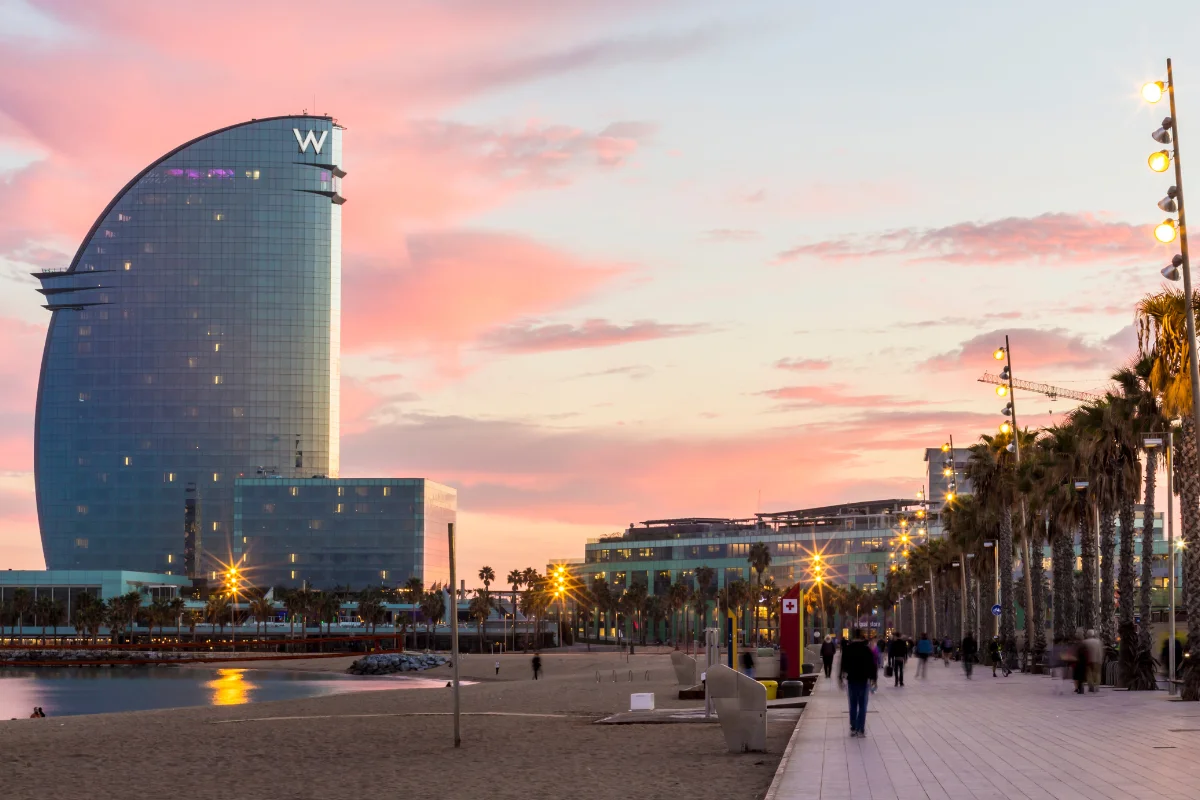
Option A: Barceloneta and the seafront — 15 minutes on foot from El Born. The beach in spring and autumn (outside summer peak) is walkable without the July/August saturation. The Passeig Marítim runs 4.5 flat kilometres from Barceloneta to the Fòrum with rental bikes at multiple points.
Option B: Montjuïc — funicular from Paral·lel metro (L2 and L3) or cable car from the port. The Montjuïc Castle costs €12 (free first Sunday of month and Sundays from 3pm). The MNAC exterior terrace gives views over the Eixample and sea without paying museum entry. The Montjuïc Castle guide covers the military history that makes the location more than just a viewpoint.
Evening
Gràcia is where Barcelona residents eat on weekend evenings. Plaça del Sol and Plaça de la Virreina have terraces from late afternoon. Restaurants don’t fill until 9pm minimum; aim to arrive at 9:15pm for the most local experience of a Saturday dinner service.
For a more active evening: the Barcelona nightlife guide covers the sequence from cocktail bars (8pm–1am) to the later options — Sala Apolo (Nou de la Rambla 113) and BARTS for live music, Razzmatazz in Poblenou from 2am for the largest serious club in the city.
Sunday: The Gaudí Circuit
First Entry: Sagrada Família at 9am
The 9am first entry is not about beating crowds (though it does that). It’s about the light. The Nativity façade stained glass — east-facing, cool blues and greens — projects best between 9am and 11am. The Passion façade glass — west-facing, warm oranges — builds through the afternoon. Arriving at 9am means you get the full morning register on entry and the warm register beginning by the time you exit.
Budget 1.5–2 hours inside. The nave, the apse, and the crypt (where Gaudí is buried) are the three anchors. The towers require a separate booking within the same purchase and add 45 minutes. Do the tower booking if you have it; if not, the interior at this scale is complete without the ascent.
For the structural reading — what the tree columns are doing, how the geometric forms interact, what Gaudí actually solved — the Sagrada Família inside guide is the preparation that makes the visit make sense rather than just impress.
Avinguda de Gaudí to Hospital de Sant Pau
Walk south from the Sagrada Família on Avinguda de Gaudí — the axis Gaudí designed — to the Hospital de Sant Pau. The two buildings at opposite ends of a 10-minute walk represent the full range of Catalan Modernisme: Gaudí’s organic symbolism and Domènech i Montaner’s rationalist ornament. Sant Pau is UNESCO-listed, architecturally equal to La Pedrera, and significantly less crowded. Entry €16. The exterior and gardens are free.
Passeig de Gràcia Sequence
Walk or metro south to Passeig de Gràcia. The Block of Discord (Casa Batlló, Casa Amatller, Casa Lleó Morera) covers the three major Modernista architects in one block. Seeing the façades from the street is free; entering Casa Batlló costs from €29.
La Pedrera (Casa Milà) — 400 metres north on Passeig de Gràcia. Entry from €25. The rooftop is the reason: Gaudí’s warrior chimneys and ventilation sculptures, the Mediterranean light in the afternoon, and the view back toward the Sagrada Família. Book in advance. If you’ve already visited Casa Batlló, La Pedrera is the stronger architectural argument. If choosing one: La Pedrera.
Park Güell Afternoon (Optional)
If you have energy and a booked ticket: metro L3 to Lesseps or Vallcarca, 10–15 minutes uphill to the monumental zone. The monumental zone (booked in advance, €10) is best in the afternoon when the light is softer and the morning tour groups have dispersed. The Calvary summit in the free zone — 15 minutes further uphill — gives a panorama equal to the monumental terrace without the entry fee.
Alternative to Park Güell: the Bunkers del Carmel. Free, 360-degree panorama from 262 metres, 15 minutes from Park Güell on foot (continuing uphill) or metro to El Carmel. The best sunset viewpoint in the city. No booking, no entry fee.
Cost Breakdown for the Weekend
| Activity | Price | Free alternative |
|---|---|---|
| Sagrada Família (basic) | €26 | None — book it |
| La Pedrera | from €25 | Walk past the façade |
| Park Güell monumental zone | €18 | Free forest zone + Calvary |
| Born CCM | €6 | Free 1st Sunday of month |
| Montjuïc Castle | €12 | Free Sundays from 3pm |
| Barcelona Cathedral | Free until 12:30pm | — |
| Bunkers del Carmel | Free | — |
| Metro T-Casual (10 trips) | €11.35 | — |
Realistic weekend total in entry fees: €70–90 per person (Sagrada Família + La Pedrera + Park Güell). That number is accurate. The free window strategies (Montjuïc Castle Sunday afternoon, Born CCM first Sunday) reduce it by €11–15.
Variants: If You’ve Already Done the Main Circuit
Architecture and hidden spaces: Replace Sunday’s Gaudí circuit with the Hospital de Sant Pau exterior (free), the Jardins de la Torre de les Aigües interior block garden (free), the Fundació Antoni Tàpies (€12), and the Carrer d’Enric Granados walk. The Eixample guide covers the interior block gardens that most visitors never find.
Culture and art: MACBA or CCCB in El Raval (free Sunday from 3-4pm), La Central del Raval bookshop in the 18th-century chapel, Filmoteca de Catalunya programme. The El Raval guide organises the neighbourhood’s cultural infrastructure into a coherent half-day.
Off the tourist circuit: Poblenou on Sunday morning — the Rambla del Poblenou with local terrace atmosphere, the Wall Spot street art on Carrer de Pere IV, the waterfront at Bogatell and Mar Bella with less saturation than Barceloneta. Then the Bunkers del Carmel for late afternoon.
Rain plan: Museu Picasso (€14 online, €15 at the door, or free Thursday evenings), Palau de la Música Catalana guided tour (€22, 55 minutes, spectacular regardless of weather), CCCB or MACBA. The best museums in Barcelona guide covers the full options by interest type.
Mistakes to Avoid in a Barcelona Weekend
- Putting Sagrada Família and Park Güell in the same morning — covered above. They don’t share a logical geographic sequence. Do them on separate days or accept that one will be rushed.
- Not booking anything in advance — the “sold out” gate experience at Sagrada Família is one of the most common Barcelona disappointments. There is no on-site workaround.
- Trying to add a day trip to Montserrat or Sitges — a full day trip requires a third day. Montserrat takes 4 hours minimum (transit + the mountain). Adding it to a 48-hour weekend means something in Barcelona gets sacrificed without being replaced by something as good.
- Eating near Las Ramblas — the restaurant strip adjacent to Las Ramblas is priced for tourist traffic and the quality reflects that. Moving one block into El Raval or the Gothic Quarter for the same meal at two-thirds the price is a five-minute walk.
- Missing the Bunkers del Carmel — it’s free, it requires effort to reach, and it produces the best view of the city. Every extra minute of uphill walk is paid back by the panorama at the top.
Frequently Asked Questions
Can you see Barcelona properly in 2 days?
The essential version, yes — if the itinerary respects geography and the key entries are booked in advance. What doesn’t fit: Montserrat, Sitges, the Tibidabo, deep-dive museum visits, and the peripheral neighbourhoods (Sants, Horta, Sant Andreu). Better to do fewer things at the right pace than more things at a sprint.
Where should I stay for a Barcelona weekend?
The Eixample is the most balanced: central, good metro connections, restaurant and bar access at street level. El Born is the most lively but also the noisiest late at night. Gràcia is the most neighbourhood-feeling and the quietest. Avoid the immediate Las Ramblas corridor if noise at night is a concern — it runs until 3–4am regardless of season.
How much does a Barcelona weekend cost?
Entry fees: €70–90 per person (Sagrada Família + La Pedrera + Park Güell). Food: €15–30 per meal depending on format (menú del día €12–18, restaurant dinner €25–45). Accommodation: €80–200/night in central areas depending on season. Total for 2 nights: €300–500 per person is a realistic mid-range budget.
Is Saturday or Sunday better for the Gothic Quarter?
Saturday morning before 9am is slightly better — Sunday morning also works but the free museum Sunday crowds arrive earlier. The key variable is time of day, not day of the week: before 9:30am the Gothic Quarter is genuinely quiet; after 11am it’s genuinely crowded regardless of the day.
Are the Bunkers del Carmel open on weekends?
Yes, free and open both days within seasonal hours (typically 9am–7:30pm summer). Weekday late afternoon is less crowded than Saturday or Sunday sunset, which draws significant numbers. No booking required, no entry fee.