
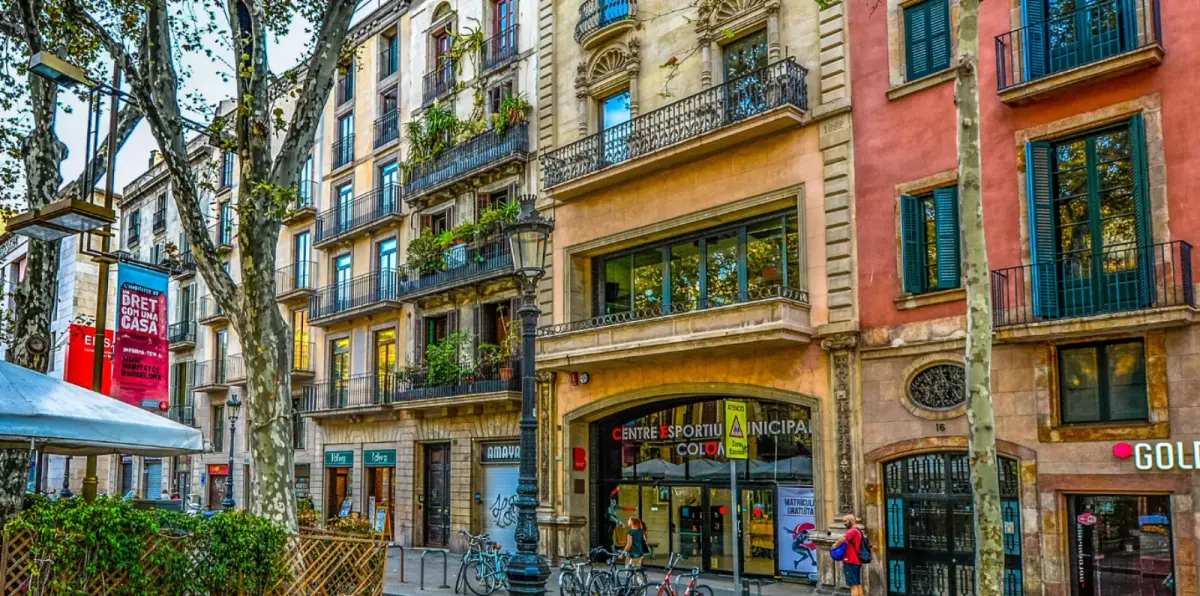

Barcelona holds the oldest magic shop in the world, and it does not hide the fact: the facade of El Rey de la Magia reads house founded in 1881, and the shop itself admits that line is its first trick, though the date happens to be true. That wink sums up a kind of business the city preserves like few others: strange, century-old shops that sell an atmosphere rather than a product, and that work as museums still ringing up sales at the till.
What is Barcelona’s most curious and oldest shop? The oldest still trading is Cereria Subirà, from 1761, which still supplies candles to the Sagrada Família. The most unusual is El Rey de la Magia, from 1881, the oldest magic shop in the world. Almost all sit in Ciutat Vella, a few minutes’ walk apart. Many survive thanks to a city catalogue protecting over 200 emblematic shops.
It helps to separate two things guides tend to blur. A design concept store is a contemporary space of aesthetic curation, and there are plenty in El Born and Gràcia, as the Barcelona local fashion brands guide covers. This guide is about the other sense of the term: the shop that is strange, one of a kind, or over a century old with verifiable history. Not a list of photogenic facades, but of shops with a real fact behind them.
Why they survive, the tax shield behind the shutters
Behind these shops staying open sits a framework that rarely gets named. According to official data, roughly a decade ago the city council approved the Emblematic Establishments catalogue, a protection plan that now covers more than 200 listed shops. Listing shields the fittings and the facade and, above all, grants exemption from property tax, a decisive counterweight to rents that in the area can run from €6,000 to €12,000 a month according to the shopkeepers themselves.
The origin was a municipal campaign from the late last century that placed plaques on the pavements marking historic shops. The main threat is not a lack of customers but rising rents and the lack of a next generation to take over. In an old town full of chains, these shops are anchors that steady a neighbourhood’s identity, a value you appreciate walking the prettiest streets in Barcelona. The table below sorts the essential ones by what each is really for.
| Shop | Founded | Area | What to buy |
|---|---|---|---|
| Cereria Subirà | 1761 | Gothic Quarter | Decorative candles |
| Herboristeria del Rei | 1818 | Gothic Quarter | Herbs, teas, remedies |
| El Rey de la Magia | 1881 | El Born | Magic tricks, kits |
| Sabater Hnos | 2006 | Gothic Quarter | Artisan soaps |
The 1761 candle shop that lights the Sagrada Família
The oldest shop still trading in Barcelona is Cereria Subirà, founded in 1761 by candle maker Jacint Galí on Carrer Corders, now at Baixada de la Llibreteria 7. Three families have run it, Galí, Prat and Subirà since 1939, and since the early 20th century it has occupied premises decorated in 1847 for the textile shop La Argentina. That is where its most photographed feature comes from: the grand double staircase and the two iron female statues that once held gas lamps.
Beyond the beauty, the fact that makes it unique is functional. According to experts in the city’s heritage trade, Cereria Subirà is the main candle supplier to the Sagrada Família, a direct link between the oldest shop in the city and its most visited monument. It is a listed Emblematic Establishment, with an average spend of around €20, and still works at a frantic pace at Christmas. It falls on the way during any walk through the Gothic Quarter, a step from Plaça de Sant Jaume.
The 1818 herbalist and the mistake almost everyone repeats
A few streets away, at Carrer del Vidre 1 by Plaça Reial, stands the Herboristeria del Rei, the oldest in Catalonia. And here a widely repeated error needs correcting: it was founded in 1818, not 1338, and neither Cervantes nor Saint Teresa were customers. The myth sounds good, but official sources place its origin at the start of the 19th century. In 1857 the queen named it a supplier to the Royal Household, hence the name del Rei, meaning of the King.
Its interior is an Isabelline refit with a marble fountain crowned by a bust of Linnaeus, where leeches were once kept for medical bloodletting. Salvador Dalí was a customer. The shop closed early this decade due to retirement and rent pressure, and reopened two years later under new management, also working as a museum. It is an example of how the city’s commercial heritage holds on, something that echoes across the first-time visitor guide to Barcelona and its older corners.
The oldest magic shop in the world
The most unusual business of all opened in 1881. El Rey de la Magia, at Carrer Princesa 11, was founded by conjuror Joaquim Partagàs and is, at over 140 years old, the oldest magic shop still trading anywhere. It works as the magicians’ hardware store: beginner and professional gear, with tricks they make themselves, from children’s magic sets with marked cards to cups and balls. Photos of Leonardo DiCaprio and the magician Teller hang on its walls.
Here is the field detail almost no tourist guide flags up front: it closes in July and August. A summer visitor going out of their way will find the shutter down, so it is worth planning around. The rest of the year it opens in split hours, morning and afternoon, and Saturday mornings. It is an ideal stop for anyone travelling with children, in the spirit of the things to see in Barcelona guide, since magic hooks any age.
Soaps sold like fruit, and the shop the city lost
Not everything curious is century-old. On Plaça de Sant Felip Neri, in the Gothic Quarter, stands Sabater Hnos, an artisan soap workshop presented as a greengrocer: vegan, cruelty-free bars sold loose like fruit, shaped like the panot de Barcelona, Gaudí’s flower paving tile. The family line began in Buenos Aires in the 1930s and the third generation runs it now, with a factory in a former textile works in Poblenou. It has a loyal Korean clientele that competes with K-beauty.
It is worth remembering the one that is gone, because it shows how fragile this heritage is. On Plaça Reial, El Taxidermista traded for decades as the largest natural-history shop in Spain, where animals from around the world were stuffed. It closed in 1991 under the urban pressure before the Olympic Games, and the premises are now a restaurant that keeps the original sign. Its most famous anecdote says it all: Dalí once ordered a vast quantity of ants stuffed there, along with a crab, a tiger and a lion. Without protection, shops like this vanish.
Not every specialist shop is a century old. Norma Comics holds 700 m² and won the Eisner Award for best comic shop in the world, and sits in the comic and manga shops guide.
Frequently asked questions about Barcelona’s curious shops
What is the oldest shop still open in Barcelona?
Cereria Subirà, founded in 1761 by candle maker Jacint Galí, is the oldest shop still trading in Barcelona. It sits at Baixada de la Llibreteria 7 in the Gothic Quarter, in premises decorated in 1847 with staircases and female statues. It remains the main candle supplier to the Sagrada Família.
What is the oldest magic shop in the world?
El Rey de la Magia, at Carrer Princesa 11 in Barcelona, founded in 1881 by conjuror Joaquim Partagàs. At over 140 years old, it is the oldest magic shop still trading anywhere, where they make their own tricks. It closes in July and August, a detail that catches out many summer visitors.
Is the Herboristeria del Rei as old as they say?
It was founded in 1818, not 1338 as some blogs repeat, and is the oldest herbalist in Catalonia. In 1857 it became a supplier to the Royal Household, hence its name. It closed in September 2021 and reopened on 21 July 2023 under new management, also working as a museum. Salvador Dalí was a customer.
Why are Barcelona’s historic shops still open?
Many survive thanks to the Emblematic Establishments catalogue, approved by the city council in 2016, which now protects more than 200 businesses. Listing shields the fittings and the facade and grants exemption from property tax, a counterweight to rents that in the area can run from €6,000 to €12,000 a month.
Which neighbourhood has Barcelona’s curious shops?
Most of the historic ones are in Ciutat Vella, especially the Gothic Quarter and El Born, a few minutes’ walk from each other. It is the area with the most protected century-old shops in the city, which lets you see almost all of them on a single walk through the old town.
In Barcelona, the most curious shops do not imitate a museum: they have been one for two centuries while still selling.