
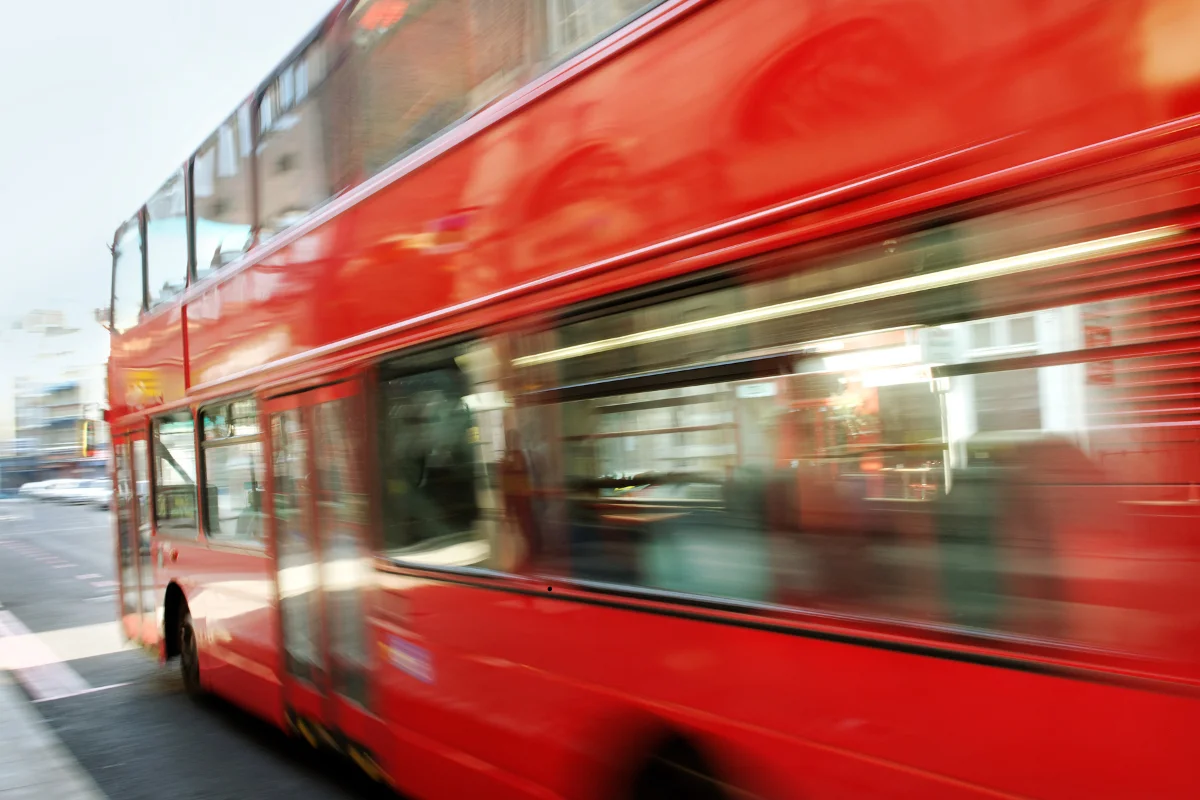

The Barcelona tourist bus is neither a bad option nor the best one in every case. There are visitor profiles for whom the cost is clearly justified, and profiles for whom the same money delivers substantially more value in a different direction. The problem is that almost nobody explains this with real numbers before you’ve already decided.
Is the Barcelona tourist bus worth it? Depends on the profile. A 24-hour ticket costs €29.70 online (€33 at the stop). The Hola Barcelona 48-hour travel card costs €17.50. The gap is worth it if you visit at least two paid attractions using the included discounts — up to €7 off Casa Batlló, 15% off the Montjuïc cable car. For first-time visitors with 1–2 days, the equation works. For everyone else, public transport is faster and cheaper.
Quick decision: which transport option fits your visit?
- First visit to Barcelona with 1–2 days → Tourist bus 48h (€39.60 online) — covers Sagrada Família, Park Güell, Montjuïc and the waterfront across two days without planning routes
- Travelling with children under 4 → Tourist bus — under-4s ride free; the open upper deck eliminates metro fatigue for small children
- Reduced mobility or travelling with elderly companions → Tourist bus — 100% of the fleet is adapted; avoids metro interchanges with incomplete accessibility
- Already know Barcelona or staying 3+ days → Hola Barcelona Travel Card (€17.50/48h) + bus 24 for Park Güell — reaches the same places at half the price
- Tight budget → T-Casual (€13 for 10 journeys) + free walking tours — covers the whole city including Barceloneta and the Gothic Quarter at less than half the tourist bus price
- Want Montjuïc only → TMB bus 150 from Plaça d’Espanya (€1.30 with T-Casual) — identical route to the tourist bus red line at standard public transport cost
- Want the visual city overview without the price → TMB line 24 — passes the Passeig de Gràcia in front of La Pedrera and Casa Batlló, reaches Park Güell, for €1.30
The two operators: what’s actually different between them
Two companies operate under official licence in Barcelona with hop-on hop-off systems:
Barcelona Bus Turístic is the institutional option: managed jointly by Transports Metropolitans de Barcelona (TMB) and Turisme de Barcelona. Three routes — red (south and west), blue (north and upper zone), green (waterfront, seasonal April–November) — with 44–45 stops total. Audio guide in 17–18 languages. Official guides on some lines.
Barcelona City Tour operates as a private company and was the first in Spain to introduce 100% electric buses — currently 15 electric units in service. Two routes (east and west) with 30–35 stops. Real-time GPS tracking via app. TripAdvisor Traveller’s Choice award.
In practical experience, the differences are minor. Bus Turístic has better coverage in the Gràcia and Sarrià upper zone. City Tour has better transit times on the coastal axis. Prices are identical.
| Feature | Bus Turístic (official) | City Tour (private) |
|---|---|---|
| Routes | 3 (red, blue, green seasonal) | 2 (east and west) |
| Total stops | 44–45 | 30–35 |
| Audio guide | 17 languages | 15 languages |
| Electric fleet | Partial | 15 buses 100% electric |
| Real-time GPS app | No | Yes |
| Included discounts | Extensive booklet | App-based discounts |
| Best zone coverage | Gràcia / upper zone | Coastal axis |
Prices and when the ticket pays for itself
Current prices with online booking (10% discount vs. on-bus purchase):
- Adult 24h: €29.70 (€33 at stop)
- Adult 48h: €39.60 (€44 at stop)
- Child 4–12, 24h: €14.40 (€16 at stop)
- Under 4: free
- Reduced (65+ and disability): €25–35
The 48h ticket reduces the daily cost from €29.70 to €19.80 per day. If using the bus on two full days, the 48h option is always better value.
The discount booklet is the strongest argument for the tourist bus: up to €7 off Casa Batlló, 15% off the Montjuïc cable car, 20% off Poble Espanyol, 10% off Moco Museum. If you visit two of these attractions regardless, the price gap with public transport closes.
The practical calculation: tourist bus 24h at €29.70 vs. Hola Barcelona 48h at €17.50. Difference: €12.20. If the discount booklet generates more than €12.20 in savings on attractions you were going to visit anyway, the tourist bus comes out equal or cheaper overall.
When it’s worth it: specific criteria
First visit with 1–2 days: if you arrive in Barcelona knowing nothing about the city’s geography and want to orient yourself before going deeper, the bus does exactly that. Riding the blue route gives a visual overview of the Passeig de Gràcia, Sagrada Família, Park Güell and the upper zone that the metro can’t provide — the metro is underground and gives no visual city context. That orientation value is real for someone arriving without prior knowledge.
For a one-day Barcelona itinerary, combining the tourist bus in the morning with walking exploration in the afternoon is more efficient than trying to navigate the metro from a standing start.
Families with young children: the open upper deck eliminates the stroller-in-metro-staircase problem, children sustain interest better with the moving panoramic view, and the stops allow pauses without pressure. Under-4s ride free, which changes the economic calculation for families significantly.
Visitors with reduced mobility: 100% of the fleet is adapted and guarantees access without surprises. Barcelona’s metro is 94.5% accessible by station, but specific interchanges have incomplete lift coverage. The tourist bus is the most predictable option for anyone who needs certainty of access.
When it isn’t worth it: concrete alternatives
Staying 3+ days: the tourist bus is useful for orientation, not exploration. With three or more days, the city is better experienced on foot and by metro. The Barcelona 3-day itinerary shows how to distribute the neighbourhoods without any tourist bus dependency.
Working with a tight budget: the Hola Barcelona 48-hour Travel Card at €17.50 includes unlimited metro, bus and tram. For someone who will move frequently, it’s the most cost-effective option. The Barcelona travel budget guide breaks down the real cost of a trip with each transport option.
If the goal is neighbourhoods, not monuments: the tourist bus doesn’t cover the interior of the Gothic Quarter, El Born, inner Gràcia or Poblenou. Those areas are done on foot. If the plan prioritises neighbourhood exploration over emblematic monuments, the bus has limited useful routing.
Montjuïc specifically: TMB bus 150 from Plaça d’Espanya to Montjuïc Castle covers the same route as the tourist bus red line at standard public transport cost — passing the MNAC, the Olympic Ring, Poble Espanyol and the Castle. €1.30 with T-Casual vs. €29.70 for the tourist bus.
Comparison table: all transport options
| Option | Price | Speed | Best for |
|---|---|---|---|
| Tourist bus 24h | €29.70 | Medium (traffic-affected) | First visit, families, reduced mobility |
| Tourist bus 48h | €39.60 | Medium | First visit with 2 days |
| Hola Barcelona 48h | €17.50 | High (metro) | Independent traveller |
| T-Casual (10 journeys) | €13.00 | High | Stays of 3+ days |
| TMB line 24 (single) | €1.30 | Medium | Park Güell from Plaça Catalunya |
| TMB bus 150 (single) | €1.30 | Medium | Full Montjuïc route |
| Bicycle rental (day) | ~€15 | High on flat | Coastal axis, Barceloneta |
The Hola Barcelona card covers the airport metro
The Hola Barcelona Travel Card includes the metro L9 airport line, which eliminates the Aerobús cost (€11.60 return). If you arrive by plane and buy the Hola Barcelona from the airport, the card covers the journey into the city and all subsequent transport for 48 or 72 hours. That changes the price comparison considerably — the €17.50 card effectively costs €6 less if you would have bought the Aerobús anyway.
The tourist bus does not cover airport transport.
Does the tourist bus reach Park Güell?
The blue route stops at Av. Mare de Déu de Montserrat, approximately 15 minutes’ uphill walk to the Park Güell entrance. TMB line 24 stops at Carretera del Carmel — the access that Park Güell itself designates as having the lowest gradient. For anyone with reduced mobility or travelling with young children, line 24 resolves the Park Güell logistics better than the tourist bus despite costing €28.40 less.
How long are the waits at stops?
Frequency ranges from 5 to 25 minutes depending on season and time of day. In peak season (July–August) and at high-demand stops, waits at Sagrada Família and Park Güell can exceed 20 minutes. From 2026, certain critical nodes (Sagrada Família, Park Güell, La Pedrera) have time-slot reservation systems for tourist operators, which can create cascading delays in specific windows. Buying online gives the 10% discount but doesn’t guarantee immediate boarding at saturated stops.
Does the 24h ticket last exactly 24 hours?
It depends on the purchase channel. Some platforms count strictly from the first scan; others validate by calendar day (expiring at service close on the activation day). Worth checking on the operator’s website before purchasing, particularly if activating the ticket in the afternoon of day one and planning to use it first thing on day two.
Who is this for?
First-timers with 1–2 days → Tourist bus 48h; the visual city orientation it provides in the first hours has real value that no metro journey can replicate; buy online for the 10% discount
Families with children under 8 → Tourist bus; free under-4s, open-top deck entertainment, stop-anywhere flexibility; the physical logistics of the metro with a stroller across peak tourist sites is genuinely harder
Visitors with reduced mobility → Tourist bus; guaranteed accessibility across all stops; more predictable than metro interchange accessibility
Everyone else staying 3+ days → Hola Barcelona Travel Card; faster, cheaper, more flexible; add free walking tours for the cultural context the audio guide provides
The honest summary: the tourist bus’s actual value proposition is visual city orientation on a first visit, and the discount booklet if you’re visiting paid attractions anyway. For the Montjuïc route specifically, bus 150 undercuts it entirely at 1/23rd of the price. For Park Güell, line 24 is cheaper, drops you at a better entrance and doesn’t require buying a full-day pass.
The decision comes down to one question: is it your first time in Barcelona and do you have only 1–2 days? If yes, the tourist bus 48h ticket at €39.60 online probably pays for itself through the discounts and the orientation value. If the answer to either part is no, the Hola Barcelona Travel Card is almost certainly the better spend.
For planning the actual route once you’ve decided on transport, the Barcelona 2-day itinerary covers the most efficient order for visiting the main sites regardless of which transport option you choose. And for getting from the airport into the city before any of this applies, the guide covers all options with real prices and transit times.