
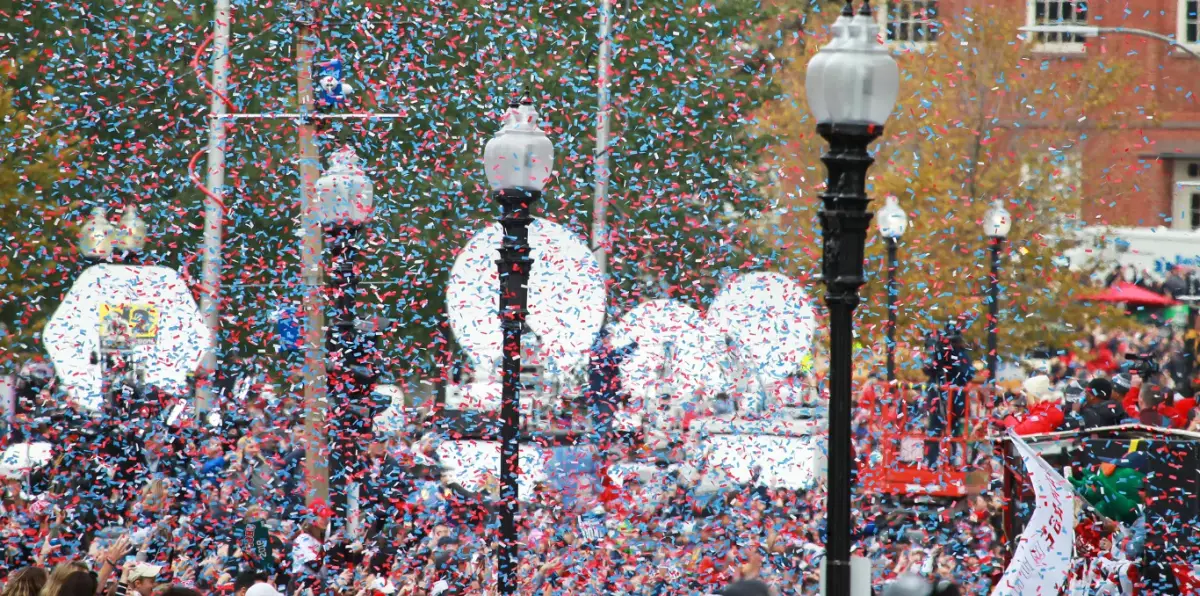

You are walking through Barcelona in mid-August and the streets suddenly close in. Above your head, an entire block is roofed with a handmade jungle, or a pirate ship, or a critique of the housing crisis built from recycled cardboard. Later, men dressed as devils run past throwing sparks. You have not gotten lost; you have walked into the Festa Major de Gràcia, the most distinctive neighbourhood festival in the city. This guide explains what you are seeing and how to do it well.
What is actually happening here
The Festa Major de Gràcia is the annual street festival of the Gràcia district, and its defining feature is a competition in which around 23 streets transform themselves into immersive themed worlds, built entirely by hand by the residents. It runs from 15 to 21 August, it is completely free, and the neighbourhood committees spend months in secret preparing decorations from recycled materials.
When is the Festa Major de Gràcia? The Festa Major de Gràcia runs from 15 to 21 August, with the opening pregó speech on 14 August at 7pm from the district balcony. The decorated streets are unveiled at midday on the 15th and stay up until the 21st. It follows the Mare de Déu d’Agost holiday and the pattern repeats every year.
What you are looking at is not a council decoration or a commercial event. Each street picks a secret theme and competes for a first prize judged during the week, with the public also voting through the festival’s official app. The themes range from science fiction to sharp social commentary, and some streets, like Verdi, Progrés and Joan Blanques, are repeat winners. To place the festival in the wider calendar, the things to see and do in Barcelona guide covers the rest of the city.
Setting expectations, what this is and is not
Here is the honest framing to set before you go: this is a neighbourhood building art by hand, not a stadium-scale production. If you arrive expecting Las Fallas in Valencia or a polished paid music festival, you will misread it. The charm is in the handmade craft and the community effort, not in spectacle or budget.
That distinction matters because it changes how you experience it. The decorations are genuinely impressive given they are volunteer-made from cardboard and plastic, but the scale is human, not industrial. The concerts are local bands and DJs on plaza stages, not headline acts. Arrive ready for craft rather than production and the festival rewards you, which is also exactly why it has resisted turning into a commercial event. For a sense of the neighbourhood beyond the festival, the Gràcia neighbourhood guide covers it year-round.
When to go, hour by hour
The festival is a completely different experience depending on the time you visit, and choosing the right hour is the single biggest planning decision. Mornings are quiet with perfect light for photos; late afternoons bring the concert atmosphere; nights transform the decorations but pack the streets so tightly you move at a crawl.
The table breaks down the strategy by what you want, with concrete time windows.
| Goal | Time window | What you get |
|---|---|---|
| Photos without crowds | 9-11am | Intact decorations, natural light, empty streets |
| Family-friendly | 12-6pm | Kids’ workshops, walkable streets |
| Concert atmosphere | 6-10pm | Plaza stages active, street buzz |
| Late-night party | 10pm-2.30am | Peak crowds, music into the early hours |
| Quiet walk | Night of the 18th | Nit Tranquil·la, no amplified music |
One tip few visitors know: go on a weekday if you can. Weekends multiply the crowds, and the heaviest nights run Friday to Sunday. The festival happens in a pedestrian radius around Plaça de la Vila de Gràcia. For walking the area properly, the Gràcia walking route maps a circuit through its squares.
How to get there and move around
Arriving by public transport is not a suggestion but the only realistic option, because many streets are closed to traffic and parking is effectively impossible during the week. The metro stops are L3 Fontana or Lesseps, L4 Joanic, which is often affected by works, and FGC Gràcia at Plaça Gal·la Placídia.
Once you are in the neighbourhood, everything moves on foot through the pedestrian grid, and on the heaviest nights the NitBus reinforces lines N0, N4, N6 and N24 at roughly 15 to 20 minute frequencies. Any of the three stations leaves you close to the heart of the action. For getting around the city in general, the Barcelona public transport guide covers passes and lines.
The correfoc, what it is and how not to get burned
If you see people in devil costumes running through a crowd under a shower of sparks, that is a correfoc, a fire run, and it is one of the most intense moments of the festival. Groups of diables move through the public with fireworks, dragons and drums, first in a children’s version and then an adult one. The fire is real, and the right clothing is the difference between enjoying it and getting burned.
The basic rule is long-sleeved cotton clothing, closed shoes, a cap and eye protection, and always follow the organisers’ instructions. There is one critical rule visitors often miss: throwing water at the participants is strictly banned, because it makes the ground slippery for the runners and ruins the gunpowder, putting everyone at risk. The closing correfoc on the 21st usually starts around 9.30pm. Standing at the edge rather than in the thick of it is the sensible call for a first-timer.
Why this neighbourhood does it differently
The festival has roots documented to 1817, when residents organised a procession to return an image of the Virgin from a farmhouse to its altar, after it had been hidden during the Peninsular War. It was originally held in May for Sant Isidre, when Gràcia was a farming village, and later moved to 15 August to coincide with the Assumption.
The neighbourhood’s independent character explains much of the festival’s tone. Gràcia was a town with its own council until 1897, when it was annexed by Barcelona, and that municipal pride is still strongly felt. Under the Franco dictatorship, the street decorations and communal dinners worked as a space of Catalan cultural resistance. The regional government declared it a Festival of National Interest in 1997. For the language context behind these traditions, the guide to what language is spoken in Barcelona explains it, and the first-time visitor guide frames the rest of a city trip.
Street food and the atmosphere
During the festival, many streets set up bars and food stalls run by the neighbourhood committees themselves, and the offering is recognisable Catalan street food. Grilled botifarra sausage, pa amb tomàquet, patatas bravas, fideuà and homemade sweets are typical, with open-air communal paellas in some squares.
For drinks, vermouth, craft beer, cava and sangría flow throughout the day, creating a continuous low-key drinking atmosphere. Some squares, like Plaça Manuel Torrente, specialise in food activities with local products and a family feel. The communal element is the key: these are neighbour-run bars, not corporate food trucks, and the money supports the committees. For vermouth outside the festival, the vermouth in Barcelona guide covers the best spots in the area and the city.
The festival falls in the month when half the city closes, and what stays open plus how to time a trip around the heat is set out in the Barcelona in August guide.
Frequently asked questions about the Festa Major de Gràcia
When is the Festa Major de Gràcia?
The Festa Major de Gràcia runs from 15 to 21 August, with the opening pregó speech on the evening of 14 August at 7pm from the district balcony in Plaça de la Vila. The dates follow the Mare de Déu d’Agost holiday each year. The decorated streets are officially unveiled at midday on 15 August and stay up until the 21st.
Is the Festa Major de Gràcia free?
Yes, the festival is completely free and open to the public. There are no tickets, no gates and no closed venues: the streets, concerts and activities are all open access. The only optional cost is the official guide booklet at 1 euro, which funds the next year’s decorations. The vast majority of the 600-plus scheduled events cost nothing.
What is the best time to see the decorated streets?
The best time is in the morning between 9 and 11am, when the decorations are intact, the natural light is good for photos and the crowds have not arrived. At night the built-in lighting transforms them, but you have to move slowly along the one-way pedestrian routes the city imposes to manage the flow of people through narrow streets.
How do you get to the festival without a car?
Come by metro or FGC and move on foot, because many streets are closed to traffic. The stops are L3 Fontana or Lesseps, L4 Joanic, which is often affected by works, and FGC Gràcia. Driving is not an option: parking is effectively impossible during the festival week and the area is pedestrianised.
What is a correfoc and how do you stay safe?
A correfoc is a fire run where groups dressed as devils move through the crowd with fireworks, dragons and drums. The fire is real, so wear long-sleeved cotton clothing, closed shoes, a cap and eye protection. Throwing water at the participants is banned: it makes the ground slippery and ruins the gunpowder, putting everyone at risk.
Is the Festa Major de Gràcia worth changing plans for?
Yes, if you value community craft over spectacle. This is not Las Fallas or a paid music festival with big production: it is a neighbourhood building art by hand for free. Set expectations accordingly and it is one of Barcelona’s most distinctive experiences. If you want a polished stadium-scale show, this is not that, and that is the point.
A council could fund a bigger show, but it could never buy this: a whole neighbourhood choosing, every August, to hand its year of work to whoever wanders past.