

If La Mercè is the only Barcelona festival you know, you are missing half the story: almost every neighbourhood has its own. The city holds close to 90 festes majors spread across the year, residents’ celebrations that temporarily transform streets and squares with fire runs, giants, human towers and free concerts. Knowing which neighbourhood celebrates each month is the difference between stumbling on a festival by chance and planning your trip around the one you most want to see.
When are Barcelona’s neighbourhood festivals? There are nearly 90 festes majors across the year. Sant Antoni opens the calendar in mid-January and Sant Andreu closes it in late November, but the bulk runs June to September. The two citywide ones are Santa Eulàlia in February and La Mercè in September. The vast majority are free and open to all.
Quick decision by when you visit
- You want the most spectacular → Gràcia, mid-August, with the decorated streets
- You want a real neighbourhood feel → Sants, around 24 August, right after Gràcia
- You come in September → La Mercè, the city’s great festival with over 500 activities
- You come in deep winter → Santa Eulàlia, around 12 February, the winter festa major
- You want fire and night → any correfoc, present at almost every festa major
- You travel with kids → almost all have giants, big-heads and free children’s workshops
What a festa major is and what you will find
Before the calendar it helps to know what defines these festivals, since they share one skeleton. According to official data, the neighbourhood festes majors are celebrations organised by residents’ associations, with city support, and the vast majority are free and open to all. Almost all combine the same 6 or 7 elements of Catalan popular culture: correfocs, the fire runs with devils; giants and big-heads; castellers, the human towers; sardanas and havaneres; plus open-air concerts, popular vermouth sessions and butifarra barbecues.
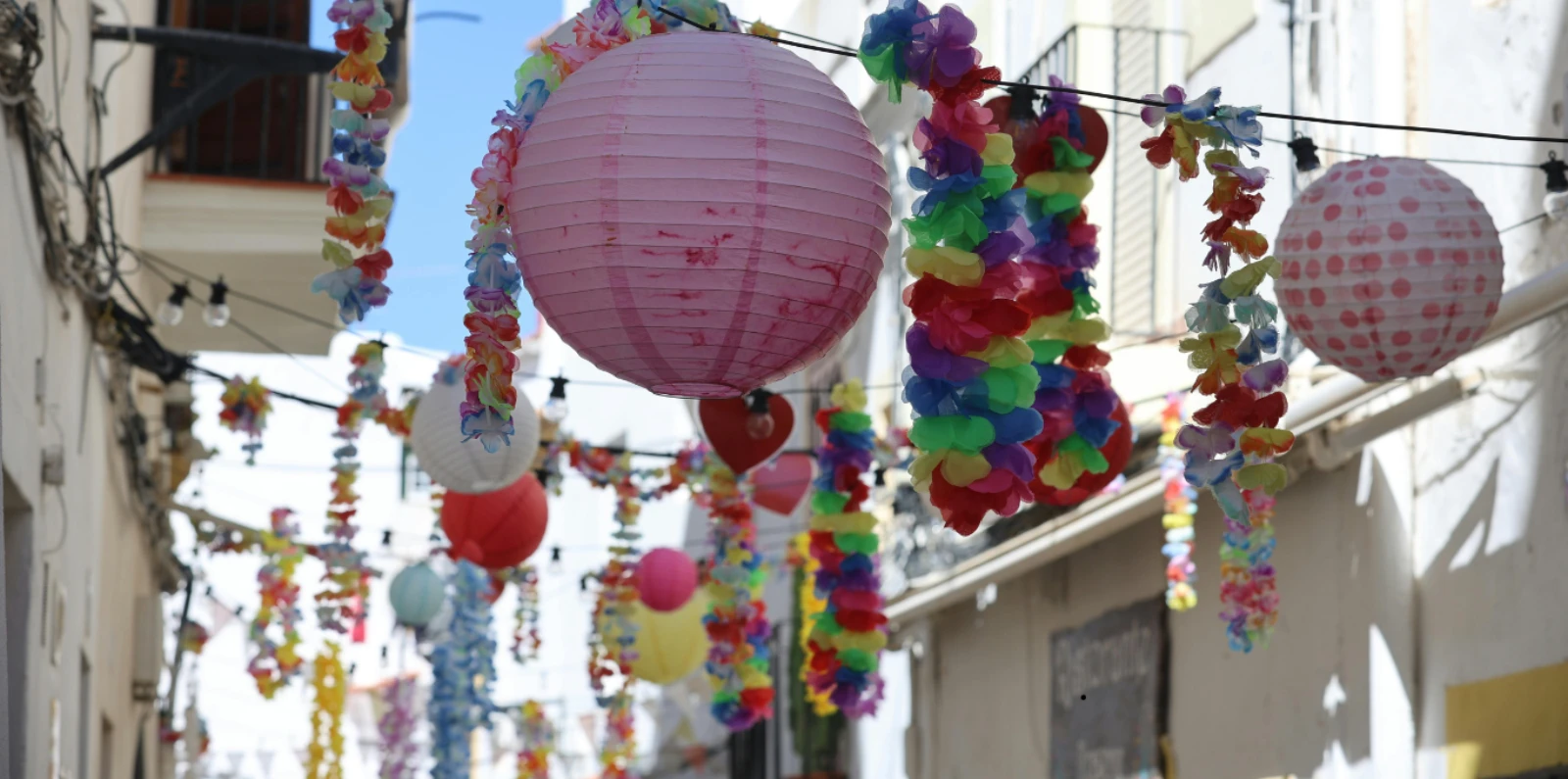
The big difference between them is the decoration. Only some neighbourhoods, led by Gràcia and Sants, hold the carrers guarnits competition, where residents work all year creating immersive decorations from recycled materials. According to experts in popular culture, this street-dressing tradition is what turns certain festivals into a mass visual phenomenon. It is a facet of the city that complements the best time to visit Barcelona guide when choosing when to come.
The big festivals at a glance
Five festivals carry most of the weight, and each rewards a different visitor. The table below sorts them by what sets each apart, so you can match the festival to your trip rather than the other way round.
| Festival | When | What sets it apart |
|---|---|---|
| Gràcia | Mid-August | Decorated-streets competition, huge crowds |
| Sants | Around 24 August | Same street-dressing, more local feel |
| La Mercè | Around 24 September | Citywide, 500+ activities, mapping |
| Santa Eulàlia | Around 12 February | Citywide winter festival |
| Sant Roc | August | Oldest, held since 1589 |
The two citywide ones stand apart from the rest. Santa Eulàlia, around 12 February, is the winter festa major, and La Mercè, around 24 September, is the great festival of the whole city. Neither is tied to a single neighbourhood, unlike the dozens of local festes majors, which makes them the easiest to catch on a short trip, much like the highlights in the first-time visitor guide to Barcelona.
From January to May, the calendar starts slow
The year opens with few festivals but very traditional ones. Sant Antoni, in mid-January around the 17th, opens the calendar in the Eixample neighbourhood of the same name, with its most photogenic act, the Tres Tombs cavalcade, a parade of horse-drawn carriages and animal blessing held since 1825. In February comes Santa Eulàlia, around the 12th, the winter festa major of the whole city, with human towers, sardanas and shows through the Gothic Quarter, coinciding with Carnival.
Spring gradually picks up the pace. In March, Sant Josep Oriol stands out at Plaça del Pi, and above all Sant Medir in Gràcia and Sants, famous for parades where tonnes of sweets are thrown. In April, the Sagrada Família neighbourhood holds its festival in the weeks around Sant Jordi, with fire runs against the lit basilica. May fills up, with the Festa Major de la Dreta de l’Eixample and its Modernista Fair, where residents dress in late-19th-century style and buildings like Casa Batlló become the natural stage.
June to August, the heart of summer
June officially lights the festive summer. The neighbourhoods around the Arc de Triomf take over, and the festivals merge with the Revetlla de Sant Joan, the night of 23 to 24 June, when bonfires, street parties and fire runs dominate beaches and squares across every neighbourhood. July keeps the pace high with strongly popular festivals: the Festa Major del Raval, around 10 to 13 July, showing its multicultural side with dance and music from Bolivia, the Balkans or Morocco; Poble-sec, with its giants parade at the foot of Montjuïc; and the Carmel. Most run between 4 and 10 days.
August is the star month, with the city’s two most famous festivals. The Festa Major de Gràcia, mid-August around the 15th to 21st, is world-famous for its decorated-streets competition, drawing hundreds of thousands of visitors. Right after, the Festa Major de Sants, from 23 to 31 August around Sant Bartomeu’s day, repeats the street-dressing tradition with a more local feel. It is the time to see Gràcia and Sants completely transformed.
September to December, La Mercè and the close of the cycle
September is the second great month, with the most important festival of all. Poblenou sees off summer early in the month with a fire run from the Rambla to the beach and fireworks at Bogatell. Late in the month, around the 24th, the whole city celebrates La Mercè, the great festa major of Barcelona, with more than 500 activities, building mapping, pyromusical shows and popular culture on a massive scale. The Festa Major de la Barceloneta, around the 29th, closes it with sardanas and havaneres by the sea.
Autumn winds down the cycle with more local festivals. October brings Sarrià, with its giants parade and paella contests, and the Roser festival on the Rambla, known as the flower festival, which opens buildings like Palau Güell for free. November belongs to the Clot and Sant Martí, and the calendar closes definitively with the Festa Major de Sant Andreu de Palomar, in late November and early December. A note for tradition lovers: the Sant Roc festival, in Plaça Nova by the cathedral, has been held since 1589 and is the oldest uninterrupted celebration in the city, part of what the Gothic Quarter guide covers.
The autumn date works differently: roasted chestnuts, EU-protected panellets and 65 stalls across the city from 31 October, explained in the Castanyada and All Saints guide.
Frequently asked questions about Barcelona’s neighbourhood festivals
How many neighbourhood festivals does Barcelona have and when are they held?
Barcelona has nearly 90 festes majors across its neighbourhoods. Traditionally Sant Antoni opens the calendar in mid-January and Sant Andreu closes it in late November, but the bulk runs between June and September. There are also dozens more at sub-neighbourhood level that fill the summer gaps.
What is the most famous neighbourhood festival in Barcelona?
The Festa Major de Gràcia, in mid-August, is the best known internationally for its decorated-streets competition, where residents adorn the streets with elaborate themed designs. Right after, around 24 August, the Festa Major de Sants repeats the tradition with a somewhat more local atmosphere.
What do you usually find at a neighbourhood festa major?
Almost all include correfocs (fire runs), giants and big-heads, castellers (human towers), sardanas, free open-air concerts, popular vermouth sessions, butifarra barbecues, children’s workshops and, in some neighbourhoods, decorated streets and fireworks. They are organised by residents’ associations and the vast majority are free and open to all.
What are the two citywide festivals of Barcelona?
Santa Eulàlia, around 12 February, is the winter festa major of the whole city; and La Mercè, around 24 September, is the great festa major of Barcelona, with more than 500 activities. Unlike the neighbourhood festes majors, these two are not tied to a single neighbourhood.
In Barcelona, the real festival is not on the city’s official calendar but in knowing which square gets dressed the week you arrive.