

Most visitors hitting Barcelona in a July heatwave never learn that the city quietly opens more than 500 air-conditioned public spaces where anyone can walk in and cool down for free. They are called climate shelters, and they are the smartest first move on a brutal day. Beyond them, the city has water, shade and indoor plans in abundance; the trick is not hiding from the heat but knowing where each option is and what hour to use it.
How do you handle Barcelona’s summer heat? Start with the climate shelters: over 500 free, air-conditioned public spaces, the largest network in Spain, findable on an official city map. Then work by the clock. Avoid 12pm to 5pm outdoors, hit the beach before 10:30am or after 6:30pm, and use indoor culture for the midday peak. The city stays livable even at 35 degrees if you plan around the hours.
The climate shelters, the free resource visitors miss
The other free summer resource is simpler still: tap water is safe to drink, there are 1.760 public fountains, and since 2022 every bar must serve it free if you ask.
Barcelona’s most valuable summer resource is official, free and almost unknown to visitors. According to official city data, the network runs to more than 500 climate shelters in summer, over 300 in winter, the most extensive system in Spain. They are indoor spaces held at a comfortable 26 degrees, with seating and water, and entry is free except at municipal pools, which charge a public fee.
The coverage is what stands out. On Sundays in August, the hardest moment because many venues close, 92.3 percent of the population has a shelter within a ten-minute walk, up from 74 percent five years ago. An official map on barcelona.cat lets you filter by location, type and features such as accessibility, toilets or whether pets are allowed. For a visitor, it is the way to cross the city in a heatwave without suffering, and it pairs with any free things to do in Barcelona.
The shelter types at a glance
The network is not one type of place but several, and knowing the differences helps you pick on the move.
| Shelter type | What it offers | Cost |
|---|---|---|
| Libraries and civic centres | Air conditioning, seating, long stays | Free |
| Museums | Cool halls plus a full visit | Free entry as shelter; some charge admission |
| Municipal pools | Water plus shade | Public fee, with subsidies |
| Parks and gardens | Shade, fountains, breeze | Free |
| Micro-shelters (shops, pharmacies) | A seat, often water, for a short pause | Free |
The micro-shelters, shops and pharmacies to step into
The newer layer of the same network is finer-grained. Alongside the big venues, more than 60 micro-shelters, pharmacies, bookshops, food stores and association premises, offer a free cool indoor space, a seat and often water for a short break. You do not have to buy anything; you just step in to recover from the heat for a few minutes.
They work especially well in neighbourhoods with fewer large facilities and for anyone running errands on foot. They are marked at the door and keep their normal business, so you enter as you would any shop. Backing all this are more than 1,740 public drinking fountains across every neighbourhood and a free heat-information phone line open all summer.
Working by the clock, when to move and when to stop
Barcelona’s heat is managed by the clock as much as the map. The critical stretch is 12pm to 5pm, when it pays to be indoors or in shade; early morning and after 6:30pm are the best windows for the street, the beach or any walk. According to official data, the municipal heat plan runs from 15 June to 15 September, escalating to alert when the day passes 34 degrees or the night stays above 25.9.
This timing logic changes the whole experience. Shifting walks to early morning and saving midday for air-conditioned indoor plans is not just more comfortable, it is safer. The official recommendation is to spend at least two hours a day in a cooled space during heat episodes, which fits neatly with a museum visit or a pause in a library. To plan travel dates around the heat, the best time to visit Barcelona guide breaks it down month by month.
Beaches and pools, water early in the day
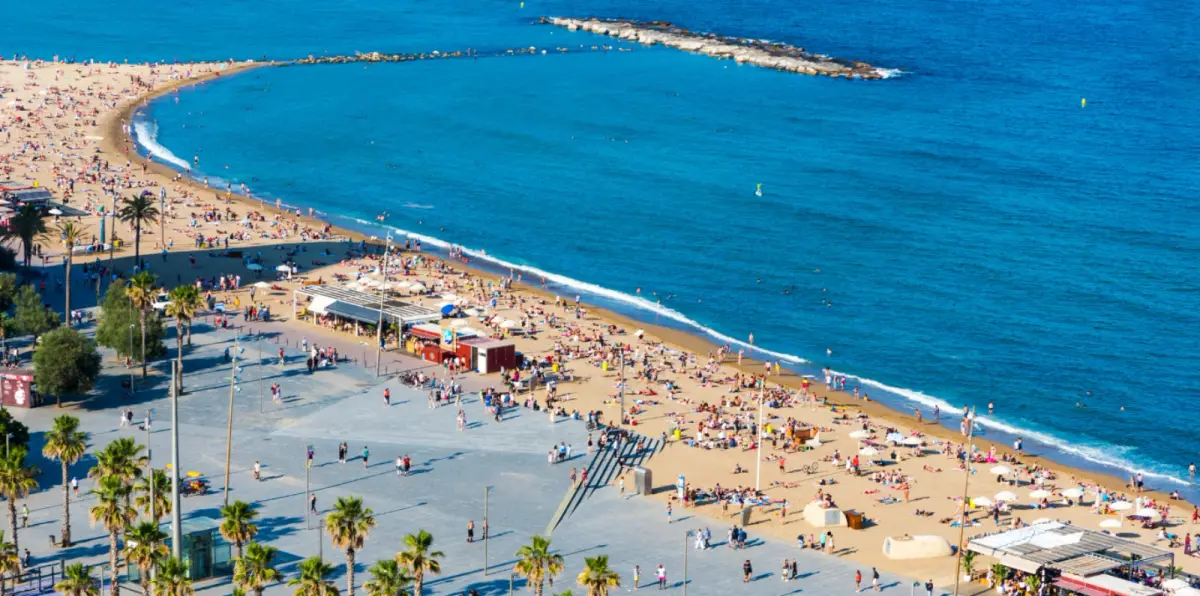
The most direct plan is still water, with a twist of timing and choice. The beach works best before 10:30am, when the water is calm and crowds are thin, or after 6:30pm as the sun drops. To escape the crush at Barceloneta, locals head to Nova Icària, Bogatell or Mar Bella, or take a train to beaches under 30 minutes away. Every Barcelona beach is smoke-free, a welcome detail in summer.
Municipal outdoor pools are the freshwater alternative and tend to be less packed. Some have spectacular views, like those on Montjuïc, with affordable public prices across the city — the outdoor pools guide lists all fourteen with what each one charges, and the rooftop pools with a day pass covers the hotel terraces that actually let non-guests into the water. The Barcelona beaches guide helps you choose sand, and for the bigger picture of a beach day, the Barcelona travel budget guide sets out the costs.
Shade, parks and the cool courtyards of the old town
Greenery creates microclimates that drop the temperature several degrees below the asphalt. Parc de la Ciutadella is one of the best shade refuges in the centre, with trees, paths and rowing boats, and Parc del Laberint d’Horta, open since 1794 and the oldest historic garden in the city, is ideal early in the day for its cypress walls and water channels. The Montjuïc gardens add cascades and shaded staircases.
There is a trick almost no visitor knows. The inner courtyards of many old buildings in the Gòtic and El Raval, former palaces and monasteries, offer a free cool break thanks to their thick walls and protected orientation. To link several green spaces into one shaded walk, the best parks in Barcelona guide maps the route.
Museums and indoor culture for the midday peak
In the central hours, air-conditioned culture is probably the best plan, and it doubles as a climate shelter at 26 degrees. Big museums like the MNAC on Montjuïc combine cool halls with spectacular views, and many venues officially serve as shelters in the municipal network. The local trick is simple: visiting a museum or a Gaudí landmark gives you culture and a multi-hour break from the heat at once.
The indoor offer goes beyond the classics. The CCCB, CaixaForum, the Moco Museum or the Maritime Museum give long routes with no sun exposure. For a cultural pause with the basilica as context, the Sagrada Família inside guide is worth a read, and for the wider list, the best museums in Barcelona covers the rest.
The night, when the city shifts its hours
As the sun drops, Barcelona becomes another city and the best part of a summer day opens up. Open-air cinema is the nocturnal star, with seasons on Sant Sebastià beach, the Sala Montjuïc at the Tres Xemeneies, and screenings at the Mies van der Rohe Pavilion. Add terraces, concerts and seafront walks with the sea breeze.
Sunset has its own viewpoints. The Turó de la Rovira, the well-known Bunkers del Carmel, gives the definitive 360-degree panorama as the city turns warm shades of terracotta, with Montjuïc and Port Vell rounding off the evening. For the best spots by hour, the Barcelona viewpoints guide maps the route.
A hot day done right, hour by hour
Pulling the pieces together, here is how a scorching day strings into a sequence you can actually follow, matching each hour to what it allows.
- 8:30am — Beach → calm water and thin crowds before the sun bites and the masses arrive.
- 11am — Horchata or coffee → a cool stop in an air-conditioned spot as the temperature starts to climb.
- 1pm — Museum or indoor culture → the central hours under cover, at 26 degrees, in a space that doubles as a climate shelter.
- 4pm — Climate shelter or pool → the heat peak, 12pm to 5pm, spent in a free cool space or in fresh water.
- 7pm — Sunset viewpoint → the Turó de la Rovira or Montjuïc as the sun drops and the city turns warm shades.
- 9pm — Terrace or open-air cinema → the night, summer’s best window, with the sea breeze and a gentler temperature.
The city lists 550 climate shelters, but on an August Sunday only 79 are an open indoor room and four districts keep two or three: the breakdown is in climate shelters.
Frequently asked questions about Barcelona in the heat
What are Barcelona’s climate shelters and are they free?
They are public indoor spaces kept at a comfortable temperature, free to enter except for municipal pools. Barcelona runs over 500 in summer, the largest such network in Spain, including libraries, museums, civic centres and shops. An official map shows the nearest one, with filters for accessibility, toilets and pets.
What time should you avoid being outside in Barcelona in summer?
Between 12pm and 5pm, the hottest stretch of the day. Official advice is to spend at least two hours in an air-conditioned space during heat episodes. Early morning and after 6:30pm are the best windows for the beach, walks or sightseeing, when the sun eases off.
Where can you cool off with water in Barcelona besides the beach?
Municipal outdoor pools, often less crowded than the beach, with some offering panoramic views like those on Montjuïc. The city also has over 1,740 public drinking fountains spread across every neighbourhood, plus children’s water-play areas mapped on the official city website.
A Barcelona heatwave is something to route around, not endure: find the nearest shelter, move with the clock, and 35 degrees stops running your day.