
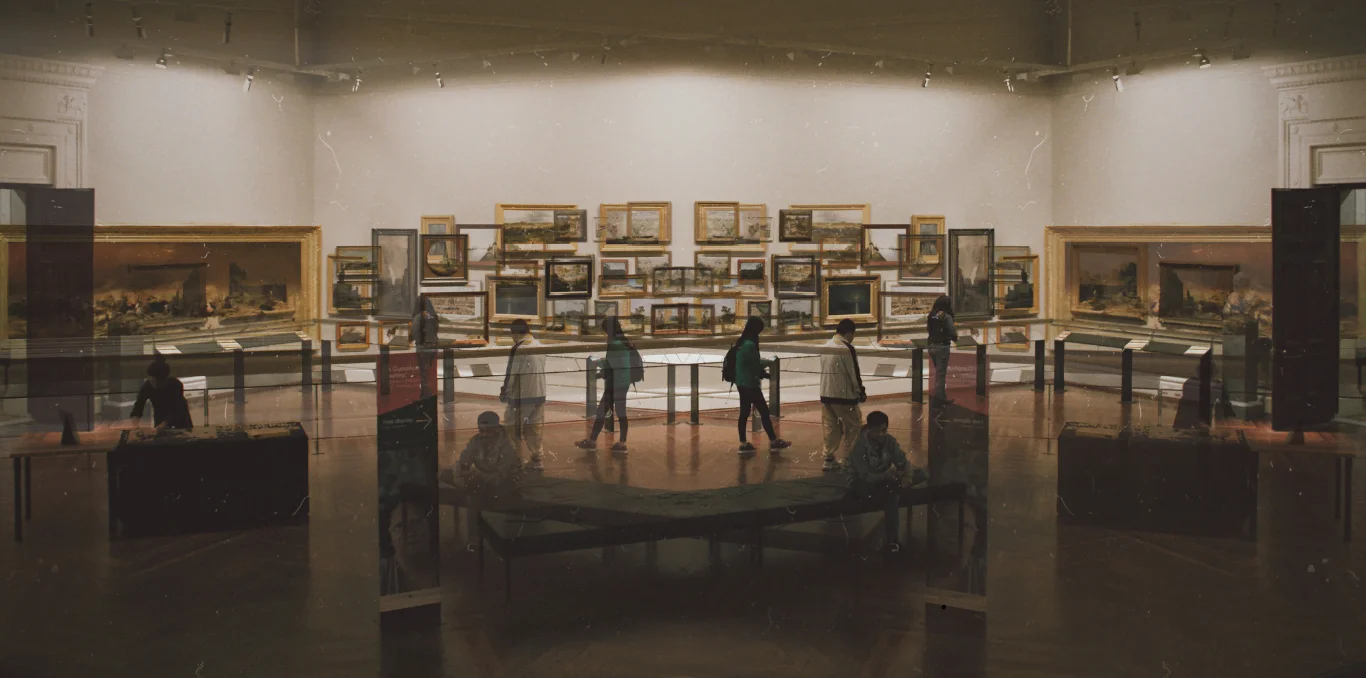

The most talked-about thing at Barcelona’s Museum of Contemporary Art in 2026 isn’t a painting — it’s a leadership change. In June 2026 the museum named Valentín Roma its new director, eleven years after it had fired him. That twist captures what makes the MACBA unlike any other museum in the city: it is never just a place to see art. Opened on 28 November 1995 in a luminous white building by Richard Meier, with general admission at €12 and a collection of nearly 6,000 works, the MACBA is the institution Barcelona used to rewrite El Raval — and the friction that comes with that has never gone away.
A Director the Museum Once Fired
In June 2026 the General Council of the MACBA Consortium unanimously appointed Valentín Roma (born Ripollet, 1970) as director on a five-year contract, renewable for three more. He replaces Elvira Dyangani Ose, who led the museum from 2021 to April 2026 and was the first Black woman to do so; she left after the Consortium deemed her continued tenure incompatible with the artistic direction of the Public Art Abu Dhabi Biennial.
The appointment carries a remarkable backstory. Roma was the museum’s chief curator until 2015, when he was dismissed over the fallout from the exhibition “The Beast and the Sovereign,” which included a controversial sculpture. Eleven years later, he returns to the institution that ousted him. Several professional associations and the museum’s works council signed a statement criticising the lack of transparency in the selection process — a reminder that at the MACBA, even a hiring decision becomes a public debate.
Why the MACBA sits exactly where it does
Meier’s building is easy to file away as white and modern. The detail worth knowing is why it sits where it does. The MACBA was never an isolated commission — it was the centrepiece of the “Del Liceu al Seminari” urban plan, which used a technique Barcelona planners called esponjamiento, or “sponging”: demolishing decayed blocks of the old Barrio Chino to open up light and air. Plaça dels Àngels, the vast granite forecourt, is the empty space those demolitions created.
The American architect Richard Meier, the 1984 Pritzker laureate, built the museum between 1991 and 1995 on a footprint of 120 by 35 metres, 23 metres tall, with 14,300 m² of usable space. White lacquered aluminium panels, glass and a 120-metre glazed facade flood the galleries with filtered daylight, while an internal ramp wraps a cylindrical core so that visitors see the art inside and the life of the square outside at the same time. The pristine minimalism deliberately clashes with the 16th-century Gothic Convent dels Àngels beside it — one of the most photographed architectural contrasts in the city, and a counterpoint to the essential things to see in Barcelona that lean Modernista.
The Collection, Nearly 6,000 Works of Critical Art
The MACBA collection holds nearly 6,000 works and was formally created in 1997, two years after the museum opened with around 1,100 pieces. It is not a purely aesthetic gallery: its focus is institutional critique, politics, visual poetry and urban culture, which sets it apart from every other museum in Barcelona.
The holdings span three broad periods — postwar material abstraction (Calder, Klee, Tàpies, Fontana), the critical conceptualism of the 1960s and 1970s (Rauschenberg, Broodthaers, Mario Merz), and more contemporary production (Zush, Juan Muñoz, Rosemarie Trockel). A major recent addition is the Rafael Tous Collection, donated in 2020, one of the most complete bodies of conceptual art in Catalonia. The single work to seek out is Rinzen by Antoni Tàpies, which presides over the entrance — he presented it at the 1993 Venice Biennale as an anti-war statement and won the Golden Lion for painting. Just outside, on a nearby wall, is Keith Haring’s restored anti-AIDS mural, street art turned into heritage.
The Square That Became a Skateboarding Mecca
Plaça dels Àngels is the part of the MACBA the architect never planned for. The smooth granite, ledges and gentle steps turned the forecourt into what skateboarders worldwide call a mecca, a status it has held since the 1980s and 1990s. Skaters have official permission to skate on Tuesday and Sunday afternoons, and the result is a rare public grandstand where locals, neighbourhood residents, tourists and skaters from across the globe share the same stone.
That street energy pressed against a contemporary art museum is unusual, and it is central to how the El Raval neighborhood reads today. The square is also a node, not an endpoint: the CCCB sits metres away on Carrer Montalegre, and independent galleries like àngels barcelona cluster nearby. Anyone interested in the wider scene can pair the visit with the city’s street art route, which begins just steps from the entrance.
Is It Worth It
Yes — but for a specific kind of visitor. If you want to understand the most current, most critical side of Barcelona, the MACBA is the single best place to do it, and the combination of collection, Meier building and skater square exists nowhere else in the city. The month-long ticket also makes it unusually good value.
It is not worth it if you came for classical or Modernista art — the MNAC collection or the Picasso Museum serve that far better — or if you expect a fixed permanent display, because the MACBA rotates its holdings heavily and the piece you saw online may not be hanging. And if conceptual art leaves you cold, be warned: this museum trades in questions, not answers.
Mistakes to Avoid
A few specific missteps cost visitors time, money or the best of the experience.
- Buying a single-entry mindset — the ticket is valid for a full month, so treating it as one-and-done wastes a 31-day pass better used over several short visits.
- Paying when you could go free — entry is free every Saturday from 4pm with booking, so an unplanned weekday visit can mean paying needlessly.
- Skipping the Capella — the MACBA chapel, dedicated to video art, is always free to enter, and many visitors never realise it.
- Expecting the famous works to be up — heavy rotation means star pieces are sometimes in storage; check the current displays before building your visit around one work.
- Treating it as a quick stop — rushing through misses the point of Meier’s ramp, designed to be walked slowly with the square in view.
2026 Context, the Year Thirty and an Expansion Under Way
The museum is living its busiest stretch in decades. It is marking its 30th anniversary under the banner “The Year Thirty,” anchored by the collection show Like a Dance of Starlings (28 November 2025 to 28 November 2026), which moves through more than 6,000 works. The recent “Project a Black Planet” exhibition on Pan-African art and culture ran until 6 April 2026.
Physically, the MACBA is in the middle of a transformation. The winning expansion project, “Galería,” by the UTE of Harquitectes and Christ & Gantenbein, adds close to 3,000 m² — 2,110 m² of galleries plus a 349 m² rooftop terrace — on a budget of €16.2 million. Work on the Convent dels Àngels began in February 2025 and is expected to finish in the first quarter of 2027. The plan also remodels the 1,105 m² of Plaça dels Àngels, replacing the asphalt ramps with greenery and seating — which displaces the skaters. Mayor Collboni spoke of ending the “monopolisation” of the space by one group, and in March 2024 residents and skaters protested together against the privatisation of around 1,000 m² of public square, an unlikely alliance that is still active. For visitors planning a budget trip around it, much of the surrounding area is free, as the guide to free things to do in Barcelona lays out.
Who Is This For
- Conceptual and contemporary art lovers → the core collection — Tàpies, Brossa, the Tous conceptual holdings
- Architecture travellers → Meier’s ramp and 120-metre glazed facade — best at midday when light crosses the glass
- Budget visitors → Saturday from 4pm — free entry with prior booking
- Families → under-18s free, ticket valid a month — easy to return without paying again
- Urban culture fans → Plaça dels Àngels on a Tuesday or Sunday afternoon — sanctioned skating and the Haring mural next door
- Repeat visitors → the month-long pass — see one show, come back for the next
Its neighbour on the same square charges €6 per exhibition and opens free on Sundays from 15:00 to 20:00: the CCCB guide explains why it works as a think tank rather than a museum.
Frequently Asked Questions
How much does MACBA cost and when is it free?
General admission is €15 at the door and €13.50 online. Under-16s enter free. Entry is free every Saturday from 4pm with prior booking and, from July 2026, on the first Sunday of each month all day.
Who designed the MACBA building?
American architect Richard Meier, the 1984 Pritzker laureate. He built it between 1991 and 1995 using white aluminium panels, glass and a 120-metre glazed facade. The main building has 14,300 m² of usable space and opened on 28 November 1995 with around 1,100 works.
Why is the MACBA square full of skateboarders?
Plaça dels Àngels has been considered a global skateboarding mecca since the 1980s and 1990s thanks to its polished granite and clean ledges. Skaters are officially allowed to skate on Tuesday and Sunday afternoons, though the planned square remodel threatens this use.
What is the must-see work at MACBA?
Rinzen by Antoni Tàpies, which presides over the entrance. He showed it at the 1993 Venice Biennale as an anti-war statement and won the Golden Lion for painting. Also notable are Keith Haring’s anti-AIDS mural and Eduardo Chillida’s ceramic piece Barcelona.
How long do you need to visit MACBA?
Around 1.5 to 2 hours to see the collection and temporary exhibitions at a relaxed pace. Because the ticket stays valid for a month, many local visitors prefer several short visits over one long one, returning whenever a new show opens.
Is the MACBA collection permanent or does it change?
It rotates frequently. The museum holds nearly 6,000 works but reinterprets its holdings through changing displays, so a piece you saw in a photo may not be on view. The 30th-anniversary show Like a Dance of Starlings runs until 28 November 2026.
The MACBA proves a museum doesn’t end at its walls — it starts in a square where the art hangs inside and gets skated outside.