
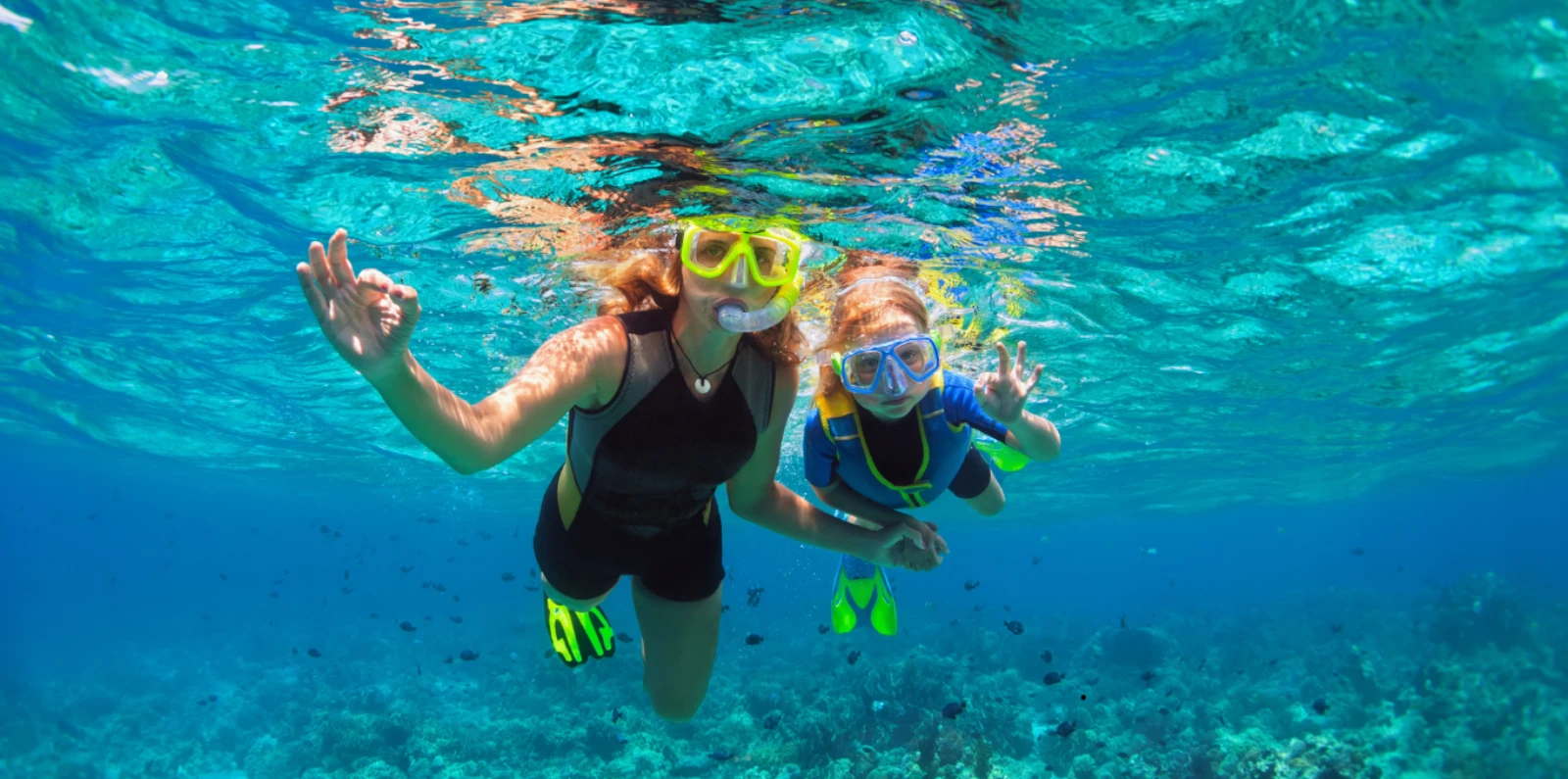

There is an awkward truth no “best Barcelona beaches” list tells you straight: in the sand at Barceloneta, you will see nothing underwater. The bottom is sand, visibility is low, and the marine life amounts to a stray goby. Real snorkeling, the kind with clear water and shoals of fish, starts where the city ends. And one thing beyond distance decides whether your day works out: the wind. This is the real guide, cove by cove, ranked by what you will actually see.
Where do you snorkel near Barcelona? Not at the city beaches, which are sandy. The best is outside: in the Garraf, 35 minutes out, Cala Ginesta and Cala Morisca; on the Costa Brava, 1 to 2 hours away, gems like Aiguablava, Sa Tuna and above all the Medes Islands, a marine reserve with the best visibility in Catalonia. The key to the day is the wind: the Tramuntana clears the water, the Garbí clouds it.
The city beaches are not it, and here is why
Let us say it plainly so you do not waste the day: Barcelona’s city beaches are not good for snorkeling, and that is not opinion. Barceloneta, Nova Icària and Mar Bella have mostly sandy bottoms, visibility under 2 metres, limited biodiversity, and heavy swimmer and boat traffic that stirs the water. You will see a starfish, gobies and anemones, not much more. They are great for a swim and for a first go with a snorkel, but not for seeing marine life.
That does not make them useless for snorkeling: they are the ideal place to test your gear, get comfortable in the water and teach kids to breathe through a snorkel before the real trip. If your plan is city-based and you want to know which urban beach suits you, the Barcelona beaches guide compares them one by one. But for snorkeling with a payoff, a car or train toward the Garraf, the Maresme or the Costa Brava is non-negotiable.
The factor that decides the day, that nobody mentions
Before you pick a cove, understand why the water is crystal-clear some days and murky others at the very same spot, and the answer is the wind. It is not luck or pollution: it is sea physics. The Tramuntana, the northerly wind, pushes surface water out to sea and draws up deep, cold, transparent water. The Garbí, from the southwest, does the opposite: it drags sediment and debris toward the shore and clouds the whole water column. On the same day, with the wrong wind, the best cove on the list looks grey.
From that comes the golden rule of timing: snorkel from 8 to 11 a.m., before the midday thermal wind picks up and stirs the fine sediment. Early on, the sea is usually flat and the light reaches clean to the bottom. As for season, June and September are the sweet spots: warm water, good visibility and fewer people than in peak August. With this in mind, picking a cove stops being a lottery.
What you will actually see, by zone
Snorkeling near Barcelona is not one experience but three, and knowing what each zone holds saves disappointment. In the Garraf, 35 minutes out, expect rocky sides with calcareous flora, crabs and small rock fish, in water far clearer than the city but not turquoise. It is the everyday option, good for a first look at a real seabed.
The Maresme, reachable by R1 train, adds seagrass: around Cala Roca Grossa in Calella there are accessible posidonia meadows with thousands of silver fish circling the rock, though the granitic sand keeps visibility a notch lower. The Costa Brava is the leap in quality: octopus, sea bream, wrasse, starfish and, in the Medes reserve, groupers, gilthead and the occasional barracuda over perfectly preserved seagrass. The rule of thumb: the farther you go, the more you see, but the wind and the hour still rule over all of it.
The Garraf, the closest rocky bottom
If you do not want to travel far from Barcelona, the Garraf is your zone, because 35 to 40 minutes out you already get a rocky bottom and water much clearer than the city. It is the calcareous coast to the south, with coves boxed in by cliffs that act as sediment traps and keep the water cleaner. The benchmark is Cala Ginesta, beside Sitges: shallow, calm water with 5 to 10 metres of visibility, ideal to start snorkeling without stress near the marina.
A few minutes away sits Cala Morisca, wilder, wedged between the Garraf park cliffs and shielded from urban noise. Its bottom has broad rocky sides with calcareous flora and crabs, and it is usually calm. It is also a naturist cove, so be warned if you go as a family. Both are best reached by car, with paid parking in season. To round off the day, Les Casetes del Garraf, with its fishermen’s huts, has a rocky bottom at the edges and is a good spot for light snorkeling. If you pair the day with the town, the Sitges day-trip guide covers the land side.
The Maresme, clear water by train
Heading up the Maresme, to the north, you find snorkeling coves reachable without a car on the R1 commuter line. The best for swimming with visibility is the Sant Pol de Mar area: a very photogenic coastal village with clear water and a pebbly bottom from about a metre and a half deep, where marine life starts to appear. The station sits right on the beach, which makes it the most convenient option for a snorkeling day by train.
Farther south, in Calella, Cala Roca Grossa stands out for its rocky outcrops and accessible posidonia meadows, with thousands of silver fish around the stone. It is one of the best posidonia areas on the nearby coast in an easily reached setting. The Maresme lacks the Costa Brava’s transparency, because its granitic sand clouds things a little more, but for a quick train escape it does the job. It fits the logic of the beaches near Barcelona by train guide, which details the access.
The Costa Brava, the quality leap
When you really want to see the bottom, the Costa Brava is another level, because its granite profile and sheltered coves give a transparency the rest of the coast cannot match. It is 1 to 2 hours away, but the difference underwater justifies it. According to experts who dive the area, the best season runs from spring to autumn, when the sea is calmer and visibility better. The most famous cove for snorkeling is Aiguablava, in Begur: intense turquoise water, a mixed bottom of white sand and posidonia meadows, with octopus, sea bream, wrasse and starfish, and conditions gentle enough for beginners and families alike.
A few kilometres away, Cala Sa Tuna keeps its original fishermen’s houses and hides one of the prettiest bottoms in the area: small caves, algae-covered rock and rock fish, with excellent visibility, better if you have some practice. And the coves around Calella de Palafrugell hold rocky bottoms with shoals of fish, urchins, starfish and octopus among the stones. For these trips, the town guides help plan the day: Begur and Pals. Another scenic option is Tossa de Mar, with its warm, shallow Mar Menuda.
The Medes Islands, the undisputed jewel
If you only snorkel once near Barcelona, make it the Medes Islands, because nothing in Catalonia compares. It is an archipelago of seven islets off L’Estartit, a protected marine reserve for over four decades and now a Natural Park, and that long protection has built a biodiversity no open beach can match. Nutrients from the river Ter feed large posidonia meadows that shelter hundreds of species visible from the surface.
Visibility is the best in Spanish Mediterranean waters: 10 to 25 metres depending on the season, letting you see from above large shoals of fish, groupers, gilthead, octopus and, with luck, a barracuda. According to official data, the reserve’s protection has recovered a marine richness that makes it the best snorkeling zone in Catalonia. You reach it by boat from L’Estartit port, a crossing of about ten minutes, with guided snorkel trips of roughly an hour, suitable from age 6 or 7, gear included. It is 1h45 from Barcelona, so it is a full-day plan, but it is the one that turns a morning’s snorkeling into a memory. For more open-water access to coves, the kayak coast guide is another way in.
The practical bits that save the trip
Three notes round off the day. Gear: a good mask, snorkel and short fins cover almost all these coves; add water shoes for the rocky ones, to avoid cuts getting in, and a rash guard or thin wetsuit outside summer, when the water can drop below 18 degrees. Ethics: do not touch or take marine life, starfish or urchins, and do not step on the posidonia meadows, the lungs of the sea; and use biodegradable sunscreen, because the regular kind harms the bottom. And safety: never snorkel alone, and check the flags and sea state before getting in.
One last reminder so you do not come up empty: the order of priorities is to check the wind and the hour first, then choose a cove. The best cove with a Garbí at midday looks worse than a modest one with a Tramuntana at nine in the morning. To get the month right, the best time to visit Barcelona guide helps plan, and for a broader coast escape, the Costa Brava from Barcelona guide opens more towns and coves for the day.
Frequently asked questions about snorkeling near Barcelona
Can you snorkel at Barcelona’s city beaches?
You can, but it is basic. City beaches like Barceloneta or Mar Bella have sandy bottoms, low visibility and limited marine life, so you will see the odd goby, starfish or anemone and little else. For rocky bottoms and real fish, you need to leave the city, toward the Garraf, the Maresme or the Costa Brava.
Where is the best snorkeling near Barcelona?
The Medes Islands, off L’Estartit, about 1h45 from Barcelona. A protected marine reserve since 1983, with the richest biodiversity and best visibility in Catalonia, 10 to 25 metres depending on the season. You reach it by boat from L’Estartit, with guided snorkel trips suitable from age 6. For something closer, Cala Morisca or Cala Ginesta in the Garraf.
Which snorkeling cove is closest to Barcelona?
In the Garraf, about 35 to 40 minutes away: Cala Ginesta and Cala Morisca, both beside Sitges, with rocky bottoms and clear water. Cala Ginesta is the easiest to start in thanks to its shallow water; Cala Morisca is wilder, tucked between cliffs. They are the best option if you do not want to travel far.
When is the water clearest for snorkeling near Barcelona?
Early, from 8 to 11 a.m., before the wind picks up and stirs the sediment. Wind is the deciding factor: the northerly Tramuntana clears the water, while the southwesterly Garbí clouds it. June and September are the best months, with warm, clear water and fewer people.
What gear do I need to snorkel the coves near Barcelona?
The basics: a good mask, a snorkel and short fins. In rocky coves, water shoes prevent cuts getting in. Outside summer, a rash guard or thin wetsuit helps with the cold. And biodegradable sunscreen, so you do not harm the seabed.
With snorkeling, the best cove is not the prettiest in a photo, it is the one where wind and hour let you see the bottom.