
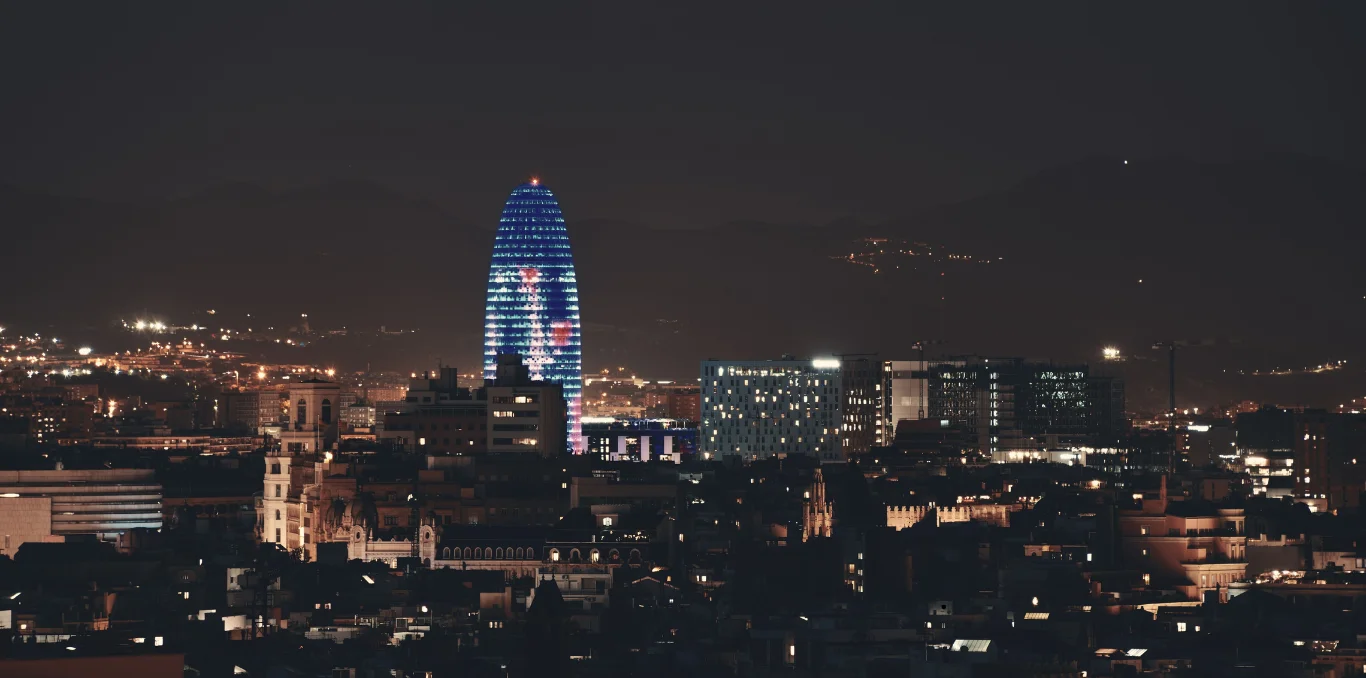

The tallest building in Barcelona is a question with a new answer since 2026. After the final piece of the cross was placed on the Tower of Jesus Christ on 20 February, the Sagrada Família reached 172.5 metres and overtook the Hotel Arts and the Torre Mapfre, which had shared the title at 154 metres since the 1992 Olympics. Barcelona has never been a city of skyscrapers, with tightly controlled vertical growth, but its skyline holds a handful of towers that became landmarks, and they are worth knowing with exact figures.
The tallest building in Barcelona changed in 2026
The Sagrada Família is, since 2026, the tallest building in Barcelona at 172.5 metres and, at the same time, the tallest church in the world. The milestone arrived in stages. The lower arm of the cross was placed on 27 October 2025, taking the temple to 162.91 metres and overtaking Ulm Minster, which had held the world record since 1890. The upper piece went up on 20 February 2026 to reach the final height, and the tower was inaugurated and blessed on 10 June 2026, marking the centenary of Gaudí’s death.
There is an important technical caveat that almost no list spells out. The Sagrada Família is the tallest construction in the urban fabric, but it is not a skyscraper in the strict sense, since it is neither an office tower nor a hotel. Gaudí deliberately designed the temple so it would not exceed the 177 metres of Montjuïc hill, out of respect for what he called “the work of God”. The interior of the basilica, with its new central tower, is covered in the Sagrada Família inside guide, a visit that has changed scale with this finishing piece.
What is the tallest building in Barcelona? Since 2026, the tallest building in Barcelona is the Sagrada Família, at 172.5 metres after the Tower of Jesus Christ was completed. It is also the tallest church in the world. Among conventional skyscrapers, the tallest are still the Hotel Arts and the Torre Mapfre, both 154 metres, at the Port Olímpic.
The tallest skyscrapers in Barcelona
If we stick to conventional skyscrapers, meaning offices and hotels, the podium has not changed with the Sagrada Família. The tallest are still the Hotel Arts and the Torre Mapfre, both 154 metres, followed by the Torre Glòries at 144 metres. Below them sits a group of towers between 110 and 116 metres, split between Barcelona and neighbouring L’Hospitalet de Llobregat. The table gathers the tallest habitable buildings in the area, with approximate figures.
| Building | Height | Floors | Year | Use | Area |
|---|---|---|---|---|---|
| Hotel Arts | 154 m | 44 | 1992 | Hotel / residential | Port Olímpic |
| Torre Mapfre | 154 m | 40 | 1992 | Offices | Port Olímpic |
| Torre Glòries | 144 m | 34 | 2005 | Offices / viewpoint | 22@ Poblenou |
| Meliá Barcelona Sky | 116 m | 31 | 2008 | Hotel | Poblenou |
| Hotel Porta Fira | 113 m | 26 | 2010 | Hotel | Plaça Europa, L’Hospitalet |
| Torre Realia BCN | 112 m | 24 | 2009 | Offices | Plaça Europa, L’Hospitalet |
| Edifici Colón | 110 m | 28 | 1970 | Offices | Drassanes |
| Diagonal ZeroZero | 110 m | 24 | 2011 | Offices | Seafront |
Hotel Arts and Torre Mapfre, the 154-metre twins
The Hotel Arts and the Torre Mapfre are the two tallest skyscrapers in Barcelona at 154 metres each, guarding the entrance to the Port Olímpic since 1992. They are twins in height but opposites in design and function. According to the city’s architectural records, both were built for the Olympic Games and established the seafront as Barcelona’s first major high-rise zone.
The Hotel Arts, 44 floors and the work of Bruce Graham (SOM), stands out for its white steel exoskeleton wrapping a tinted glass facade, and houses a luxury hotel run by Ritz-Carlton. The Torre Mapfre, around 40 floors, is an office prism whose mirrored facade reflects the sea, and at the time it was the second tallest building in Spain. At its foot stands Frank Gehry’s golden Peix, one of the most photographed sculptures in the city, which also features on the Barceloneta to Port Olímpic walking route.
Torre Glòries, the colour-shifting icon of 22@
The Torre Glòries, at 144 metres, is the third tallest skyscraper in Barcelona and the most recognisable contemporary building in the city. Designed by Jean Nouvel and known for years as Torre Agbar, it has 34 floors and transformed Plaça de les Glòries in 2005. According to the architect, its silhouette draws on the rounded profiles of Montserrat and on the spires Gaudí designed for the Sagrada Família.
Its concrete structure is clad in thousands of lacquered aluminium panels in many colours and adjustable glass louvres, fully lit at night by an LED system. In 2024 it joined the World Federation of Great Towers, and inside it holds a panoramic viewpoint that makes it one of the few skyscrapers in the city open to the public. It sits at the heart of the tech district covered in the Poblenou guide, the neighbourhood that concentrates much of the recent vertical architecture.
From Meliá Sky to the Fira Towers
Below the three big towers sits a group of skyscrapers between 110 and 116 metres that complete the metropolitan skyline. Four of them deserve a mention of their own, for their design or their historic role, spread across the seafront, the 22@ and Plaça Europa in L’Hospitalet.
- Meliá Barcelona Sky — 116 metres and 31 floors, by Dominique Perrault, completed in 2008, with cantilevered volumes and the Dos Cielos restaurant, holder of a Michelin star
- Hotel Porta Fira — 113 metres and 26 floors, by Japan’s Toyo Ito, winner of the Emporis Skyscraper Award for the world’s best skyscraper in 2010 for its curved red-tube silhouette
- Edifici Colón — 110 metres and 28 floors, built in 1970, it was the first building in Barcelona to break the 100-metre barrier, with a retro exposed-concrete look
- Diagonal ZeroZero — 110 metres and 24 floors, the Telefónica headquarters by Enric Massip-Bosch, with a lattice facade built in just eight months in 2011
The Torre Realia BCN, at 112 metres, completes the Plaça Europa cluster alongside the Porta Fira, a concentration of highly photogenic towers within L’Hospitalet that forms an essential part of the city’s skyline.
The Collserola Tower, the structure that beats them all
The tallest structure in Barcelona is none of its skyscrapers but the Collserola Tower, at 288 metres. Designed by Norman Foster and opened in 1992 above Tibidabo, it rises on a ridge of around 400 metres, so its tip visually dominates the entire Barcelona valley from any angle in the city.
It rarely appears in building rankings because its function is telecommunications and it is not habitable, but as a landmark it has no rival. It has its own observation deck around 115 metres up its base, offering one of the widest panoramas of the metropolitan region. The tower crowns the mountain covered in the Tibidabo guide, the highest accessible point in the city and the natural counterpoint to the steel verticality of the seafront.
Why Barcelona has almost no skyscrapers
Barcelona has never gone for height, and that is precisely the key to its skyline. Unlike other major capitals, the city has deliberately capped vertical construction to protect its historic profile, its sea views and the prominence of its landmarks. By current planning standards, the result is a city with barely two buildings above 150 metres and none over 200.
Four factors explain this model. The Eixample grid, designed by Ildefons Cerdà, favours a fairly uniform height across much of the fabric. The visual protection of landmarks like the Sagrada Família holds back towers in the centre. Proximity to the sea imposes scenic restrictions. And strong planning control has concentrated vertical growth in very specific areas, the Port Olímpic, the 22@ district and Plaça Europa. That low vertical density sits alongside the Modernista architecture in the Modernisme beyond Gaudí guide, built on a far more contained scale.
Where to see the Barcelona skyline best
The Barcelona skyline is better seen from a distance than from its own base, because its towers are split across three separate clusters rather than one compact downtown. According to local guides, the most complete panoramas combine the seafront skyscrapers with the silhouette of the Sagrada Família and the backdrop of Collserola, something only visible from elevated viewpoints.
Three spots stand out. The Bunkers del Carmel offer the most cited 360-degree view in the city, with the skyline, the sea and the Sagrada Família in one frame, as detailed in the Bunkers del Carmel guide. The castle and gardens of Montjuïc give the classic perspective of the port and the Olympic towers, covered in the Montjuïc complete guide. And for photographing the towers up close, the seafront and 22@ angles also appear among the best sunset spots in Barcelona.
Is it worth going up the viewpoints
Yes, but it depends on the viewpoint. The Torre Glòries is the only one of the big skyscrapers with a panoramic deck open to the public, and going up pays off for the perspective over 22@ and the city. According to visitor information, the Sagrada Família now adds its own viewpoint in the Tower of Jesus Christ, at great height, which completely changes the visitor’s relationship with the skyline.
It is not worth it if your aim is to see the whole urban profile. From inside a tower you see the city, but not the tower itself or the full skyline, so for the iconic horizon shot an outdoor viewpoint like the Bunkers del Carmel or Montjuïc works better, both free or low cost. If you only plan to go up one high point, the skyscrapers sit as one more chapter within the best things to see in Barcelona guide, not as the main reason to visit.
The Barcelona skyline in 2026
In 2026 the Barcelona profile is going through its biggest transformation in thirty years, marked by the centenary of Gaudí’s death and the completion of the Sagrada Família. The new Tower of Jesus Christ includes a high viewpoint and a glass lift, and the basilica, which sold 4.8 million tickets in 2024, has cemented its place as the absolute dominant element of the skyline. The cross crowning it, lit at night, is visible across much of the metropolitan area.
The rest of the skyline stays stable, with no new skyscrapers threatening the 154-metre podium at the Port Olímpic. Recent activity is concentrated in the 22@ district and Plaça Europa, where mid-height corporate headquarters keep being added. To place all these landmarks on a first trip, the first-time visitor guide combines the vertical architecture with the street-level Modernista jewels.
Frequently asked questions about the tallest buildings in Barcelona
What is the tallest building in Barcelona?
The tallest building in Barcelona is the Sagrada Família, which reached 172.5 metres after the Tower of Jesus Christ was completed in 2026. It is also the tallest church in the world, ahead of Ulm Minster. It is not a conventional skyscraper but a basilica, and it stays below the 177 metres of Montjuïc hill by Gaudí’s own decision.
What is the tallest skyscraper in Barcelona?
The tallest skyscrapers in Barcelona are the Hotel Arts and the Torre Mapfre, both 154 metres, built at the Port Olímpic for the 1992 Olympics. The Hotel Arts has 44 floors and is a hotel, while the Torre Mapfre has around 40 floors of offices. They have shared the title of tallest skyscraper for more than three decades.
How many skyscrapers does Barcelona have?
The Barcelona metropolitan area has around sixteen buildings above 100 metres and more than eighty above 70 metres, but none over 200 metres. It is the third Spanish city with the most buildings above 100 metres, after Benidorm and Madrid, with the towers split across three distinct clusters rather than one downtown core.
Why does Barcelona have so few skyscrapers?
Barcelona has historically capped height to protect its skyline, its sea views and the prominence of landmarks like the Sagrada Família. Cerdà’s Eixample grid favours a uniform height, and vertical growth is concentrated in three specific areas, the Port Olímpic, the 22@ district and Plaça Europa in L’Hospitalet.
What is the tallest structure in Barcelona?
The tallest structure in Barcelona is the Collserola Tower, at 288 metres, designed by Norman Foster and opened in 1992 above Tibidabo. It rarely appears in skyscraper rankings because it is a telecommunications tower rather than a habitable building, but it visually dominates the entire Barcelona valley.
Where can you see the Barcelona skyline best?
The three best clusters to see the skyline are the Port Olímpic, with the Hotel Arts and Torre Mapfre by the beach, the 22@ district, with the Torre Glòries, and Plaça Europa in L’Hospitalet. For the full panorama, the viewpoints of Montjuïc, the Bunkers del Carmel and the Torre Glòries observation deck are the most rewarding.
For more than thirty years Barcelona’s ceiling was two Olympic towers; now it is a temple its architect never lived to see finished.